Dupuis Sunnyjoy, Lingappa Usha F, Purvine Samuel O, Chiang Lauren, Gallaher Sean D, Nicora Carrie D, Lipton Mary S, Merchant Sabeeha S
Department of Plant and Microbial Biology, University of California, Berkeley, CA 94720, USA.
California Institute for Quantitative Biosciences, University of California, Berkeley, CA 94720, USA.
bioRxiv. 2025 Jul 26:2025.07.22.666210. doi: 10.1101/2025.07.22.666210.
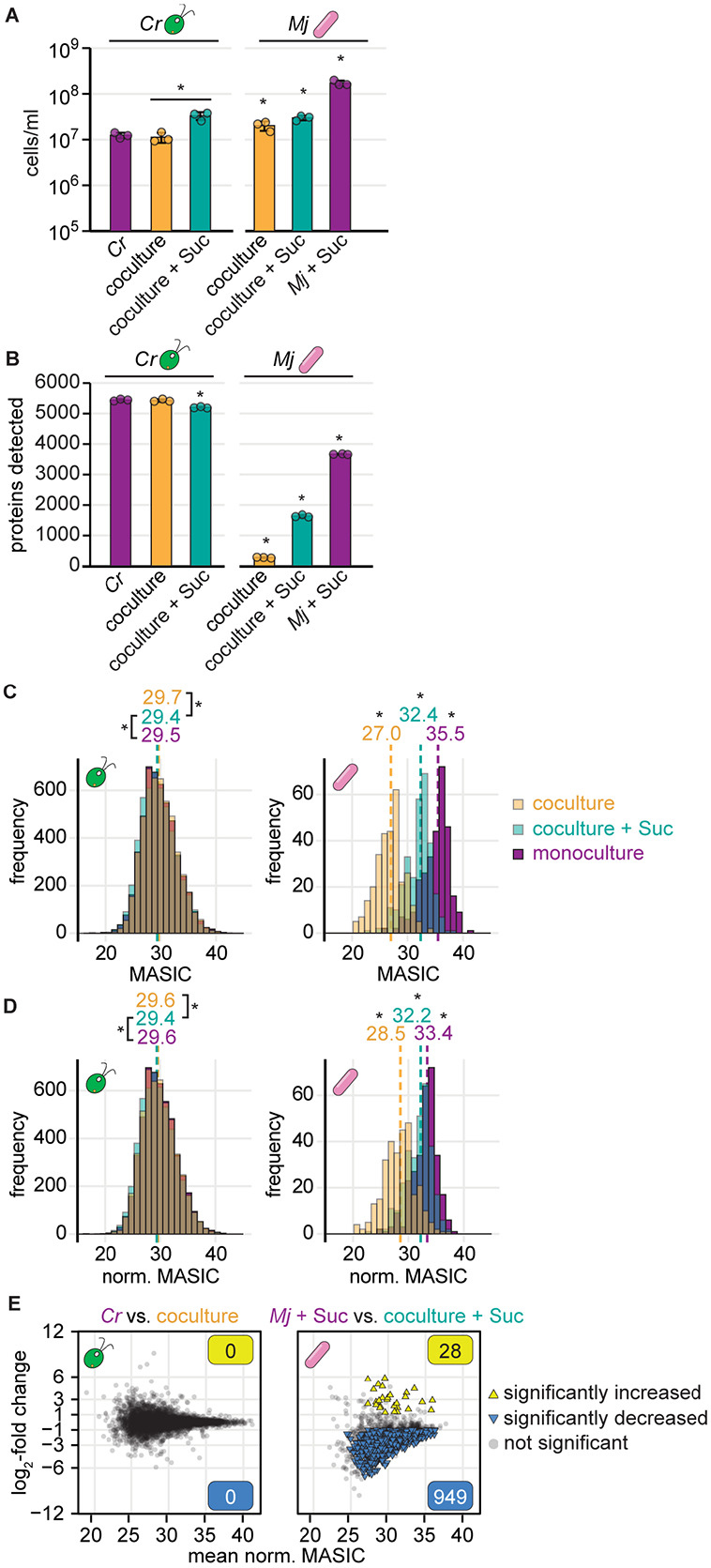
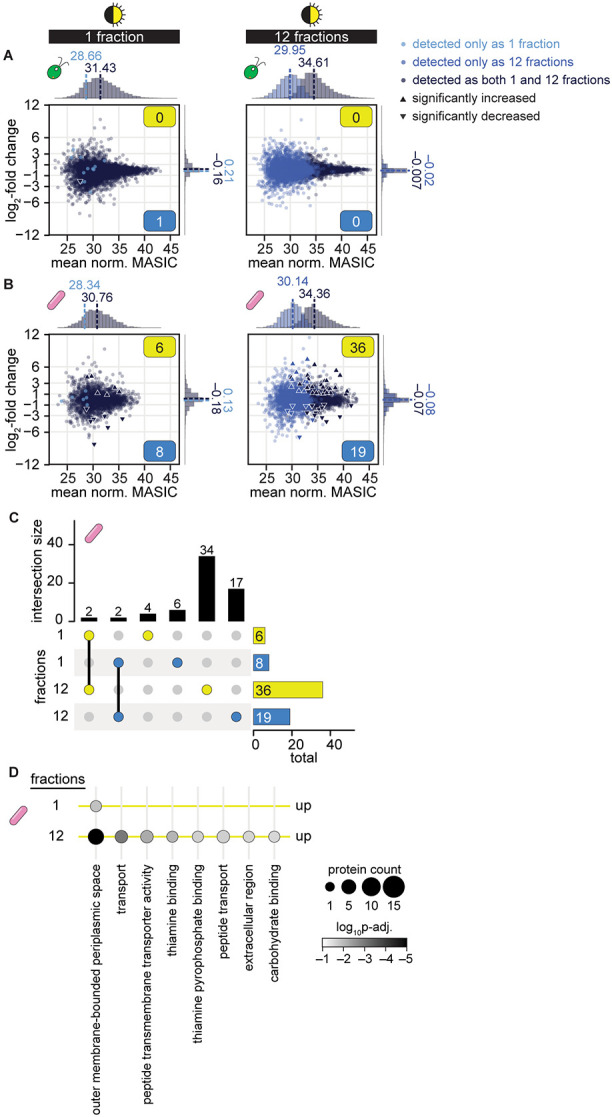
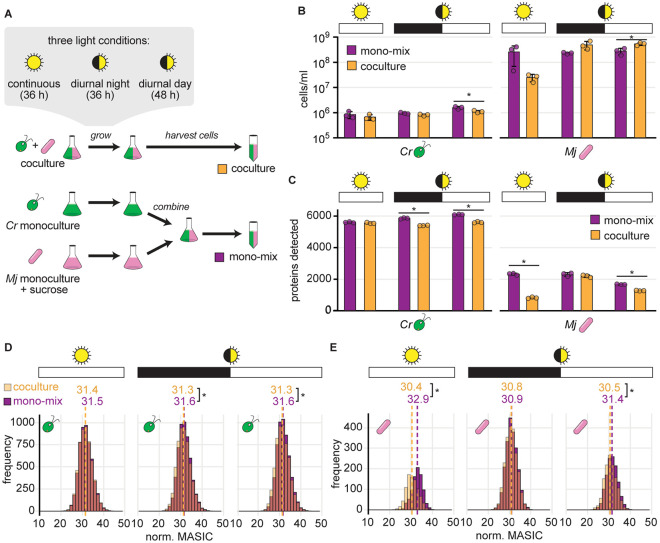
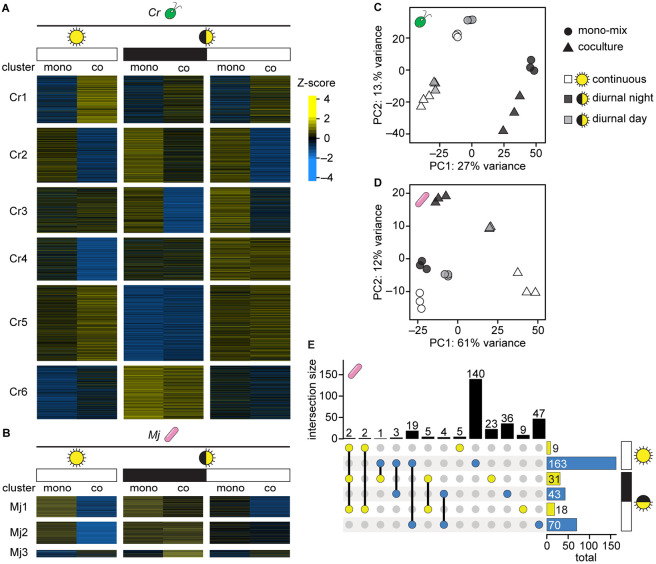
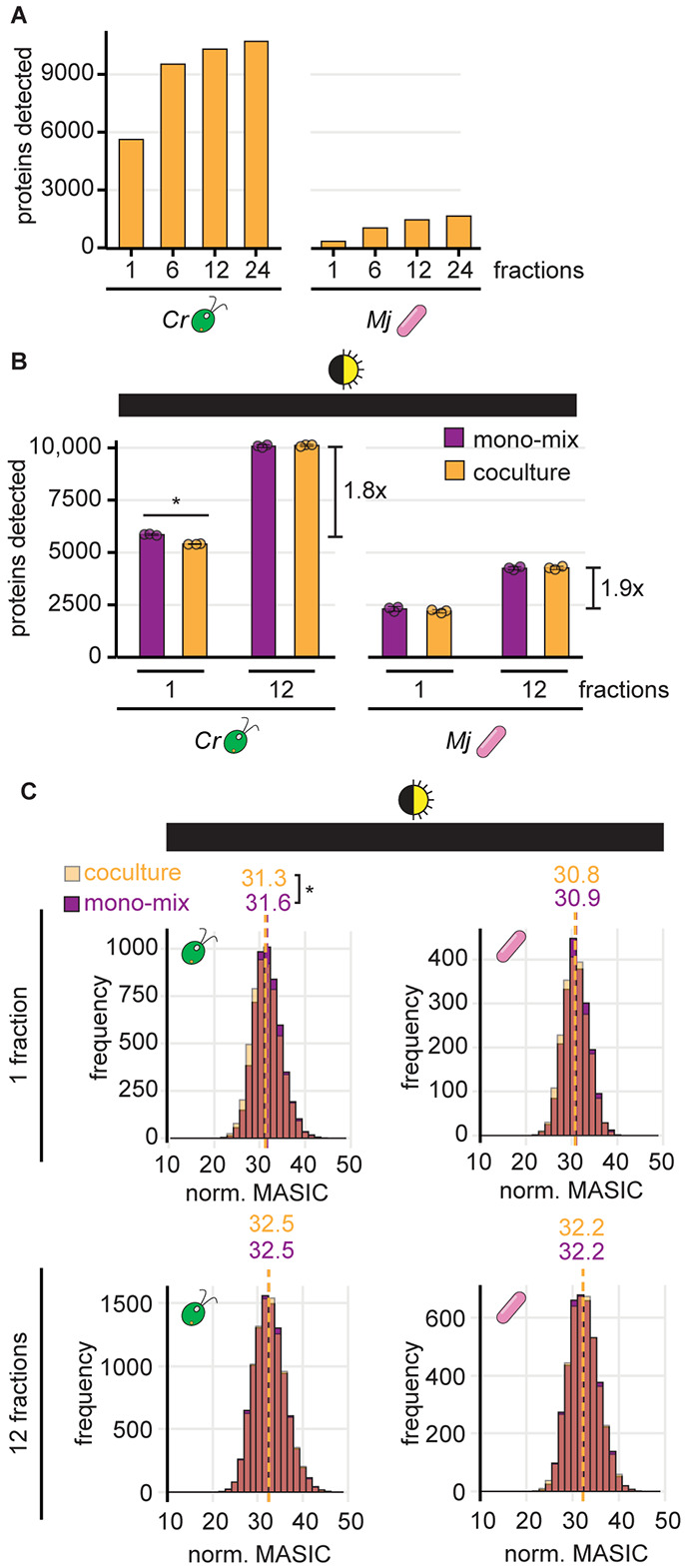
Cross-kingdom microbial symbioses, such as those between algae and bacteria, are key players in biogeochemical cycles. The molecular changes during initiation and establishment of symbiosis are of great interest, but quantitatively monitoring such changes can be challenging, particularly when the microorganisms differ greatly in size or are intimately associated. Here, we analyze output from data-dependent acquisition (DDA) LC-MS/MS proteomics experiments investigating the well-studied interaction between the alga and the heterotrophic bacterium . We found that detection of bacterial proteins decreased in coculture by 50% proteome-wide due to the abundance of algal proteins. As a result, standard differential expression analysis led to numerous false-positive reports of significantly downregulated proteins, where it was not possible to distinguish meaningful biological responses to symbiosis from artifacts of the reduced protein detection in coculture relative to monoculture. We show that data normalization alone does not eliminate the impact of altered detection on differential expression analysis of the cross-kingdom symbiosis. We assessed two additional strategies to overcome this methodological artifact inherent to DDA proteomics. In the first, we combined algal and bacterial monocultures at a relative abundance that mimicked the coculture, creating a "mono-mix" control to which the coculture could be compared. This approach enabled comparable detection of bacterial proteins in the coculture and the monoculture control. In the second strategy, we enhanced detection of lowly abundant bacterial proteins by using sample fractionation upstream of LC-MS/MS analysis. When these simple approaches were combined, they allowed for meaningful comparisons of nearly 10,000 algal proteins and over 4,000 bacterial proteins in response to symbiosis by DDA. They successfully recovered expected changes in the bacterial proteome in response to algal coculture, including upregulation of sugar-binding proteins and transporters. They also revealed novel proteomic responses to coculture that guide hypotheses about algal-bacterial interactions.
跨界微生物共生关系,如藻类与细菌之间的共生关系,是生物地球化学循环中的关键参与者。共生开始和建立过程中的分子变化备受关注,但对这些变化进行定量监测可能具有挑战性,尤其是当微生物在大小上差异很大或紧密相关时。在这里,我们分析了数据依赖型采集(DDA)液相色谱-质谱/质谱蛋白质组学实验的输出结果,该实验研究了藻类与异养细菌之间经过充分研究的相互作用。我们发现,由于藻类蛋白质的大量存在,共培养中细菌蛋白质的检测在全蛋白质组范围内下降了50%。因此,标准的差异表达分析导致了大量关于蛋白质显著下调的假阳性报告,在这种情况下,无法将对共生的有意义生物学反应与共培养相对于单培养中蛋白质检测减少的假象区分开来。我们表明,仅数据归一化并不能消除检测变化对跨界共生差异表达分析的影响。我们评估了另外两种策略来克服DDA蛋白质组学固有的这种方法假象。第一种方法是,我们以模拟共培养的相对丰度将藻类和细菌单培养物混合,创建一个“单培养物混合”对照,以便与共培养物进行比较。这种方法能够在共培养物和单培养物对照中对细菌蛋白质进行可比的检测。第二种策略是,我们通过在液相色谱-质谱/质谱分析上游使用样品分级分离来增强对低丰度细菌蛋白质的检测。当将这些简单方法结合使用时,它们能够通过DDA对近10000种藻类蛋白质和4000多种细菌蛋白质对共生的反应进行有意义的比较。它们成功地恢复了细菌蛋白质组对藻类共培养的预期变化,包括糖结合蛋白和转运蛋白的上调。它们还揭示了对共培养的新蛋白质组学反应,这些反应为关于藻类-细菌相互作用的假设提供了指导。