Mahmoud Ahmed, Gupta Pukar, Regmi Nishchal, Adhikari Pradeep, Pandit Rohit, Thapa Roshni, Kaki Amir
University of Giza, Giza, Egypt.
National Health Action Force Nepal, Kathmandu, Nepal.
Ann Med Surg (Lond). 2025 Jul 18;87(8):5273-5276. doi: 10.1097/MS9.0000000000003550. eCollection 2025 Aug.
Percutaneous coronary intervention (PCI) in high risk patients with complex coronary artery disease and impaired left ventricular function pose significant procedural challenges. During such interventions. Mechanical circulatory support with the Impella device has become an effective strategy to maintain hemodynamic stability. While femoral access is traditionally used, alternative routes like axillary artery access may be necessary in patients with peripheral vascular disease.
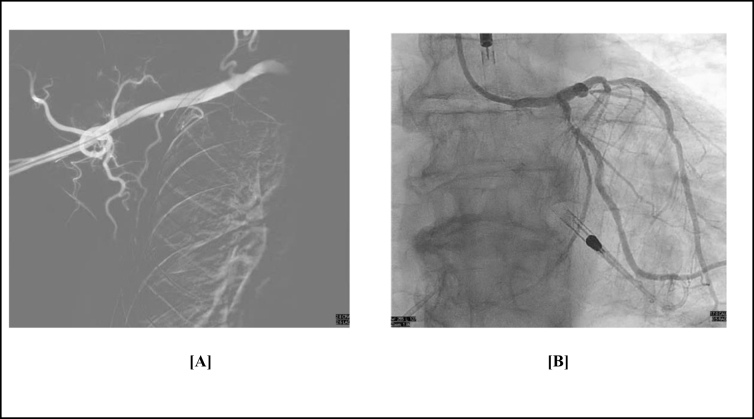
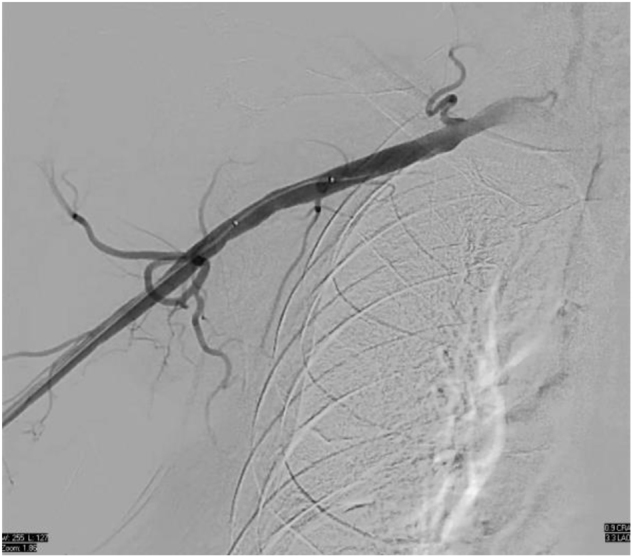
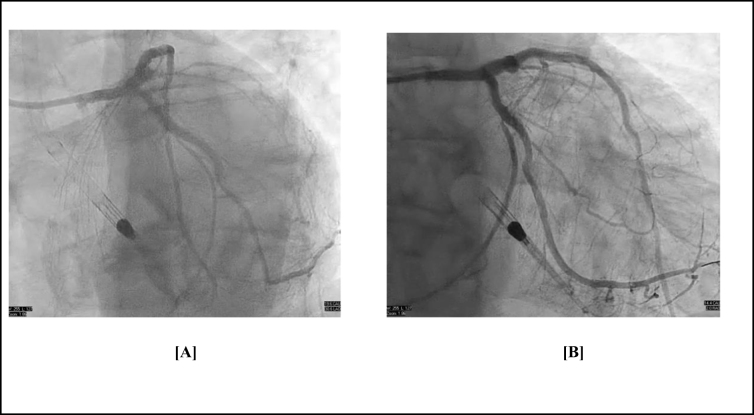
We present the case of a 68-year-old male with severe multivessel coronary artery disease with reduced left ventricular ejection fraction, and bilateral iliofemoral artery disease. Since there was difficulty in accessing the femoral arteries, axillary artery access was used to insert an Impella CP device to support high-risk PCI. The procedure involved successful revascularization of complex lesions using rotational atherectomy and stenting. The patient remained hemodynamically stable throughout and recovered without complications.
In patients with contraindications to femoral access this case highlights the feasibility and clinical utility of axillary access for Impella insertion despite requiring surgical expertise and meticulous planning, the axillary route offers a safe and effective alternative for mechanical circulatory support during complex coronary interventions.
Axillary artery access for Impella-assisted high-risk PCI is a viable and underutilized option in select patients with complex coronary anatomy and peripheral vascular disease, expanding the therapeutic possibilities in advanced interventional cardiology. This report highlights a safe, effective alternative for patients with contraindications to femoral access and emphasizes the importance of multidisciplinary planning.
对于患有复杂冠状动脉疾病且左心室功能受损的高危患者,经皮冠状动脉介入治疗(PCI)面临重大的手术挑战。在此类介入治疗期间,使用Impella装置进行机械循环支持已成为维持血流动力学稳定的有效策略。虽然传统上采用股动脉入路,但对于患有外周血管疾病的患者,可能需要像腋动脉入路这样的替代途径。
我们报告一例68岁男性患者,患有严重的多支冠状动脉疾病,左心室射血分数降低,且双侧髂股动脉疾病。由于股动脉穿刺困难,采用腋动脉入路插入Impella CP装置以支持高危PCI。该手术包括使用旋磨术和支架置入术成功实现复杂病变的血管再通。患者在整个手术过程中血流动力学保持稳定,且康复过程中无并发症。
对于有股动脉入路禁忌证的患者,本病例突出了腋动脉入路插入Impella装置的可行性和临床实用性。尽管需要手术专业知识和精心规划,但腋动脉途径为复杂冠状动脉介入治疗期间的机械循环支持提供了一种安全有效的替代方法。
对于具有复杂冠状动脉解剖结构和外周血管疾病的特定患者,腋动脉入路用于Impella辅助的高危PCI是一种可行但未充分利用的选择,扩展了高级介入心脏病学的治疗可能性。本报告突出了对有股动脉入路禁忌证患者的一种安全有效的替代方法,并强调了多学科规划的重要性。