Chen Xinhai, Xu Li, Luo Zhijiang, Wang Lihong, Wang Zhenyu, Li Yang, Jiao Xinan, Li Qiuchun
Jiangsu Key Lab of Zoonosis/Jiangsu Co-Innovation Center for Prevention and Control of Important Animal Infectious Diseases and Zoonoses, Yangzhou University, Yangzhou, China.
Joint International Research Laboratory of Agriculture and Agri-Product Safety, Yangzhou University, Yangzhou, China.
Front Cell Infect Microbiol. 2025 Jul 28;15:1644286. doi: 10.3389/fcimb.2025.1644286. eCollection 2025.
The CRISPR-Cas system serves as a defense mechanism in bacteria and archaea, protecting them against the invasion of mobile genetic elements. , a Gram-positive bacterium that diverged from , is characterized by the rare presence of the CRISPR-Cas system in only a few isolates.
In this study, we analyzed the prevalence of the type III-A CRISPR-Cas system in 368 genome sequences from animals, food sources, and humans across 26 countries, available in public database.
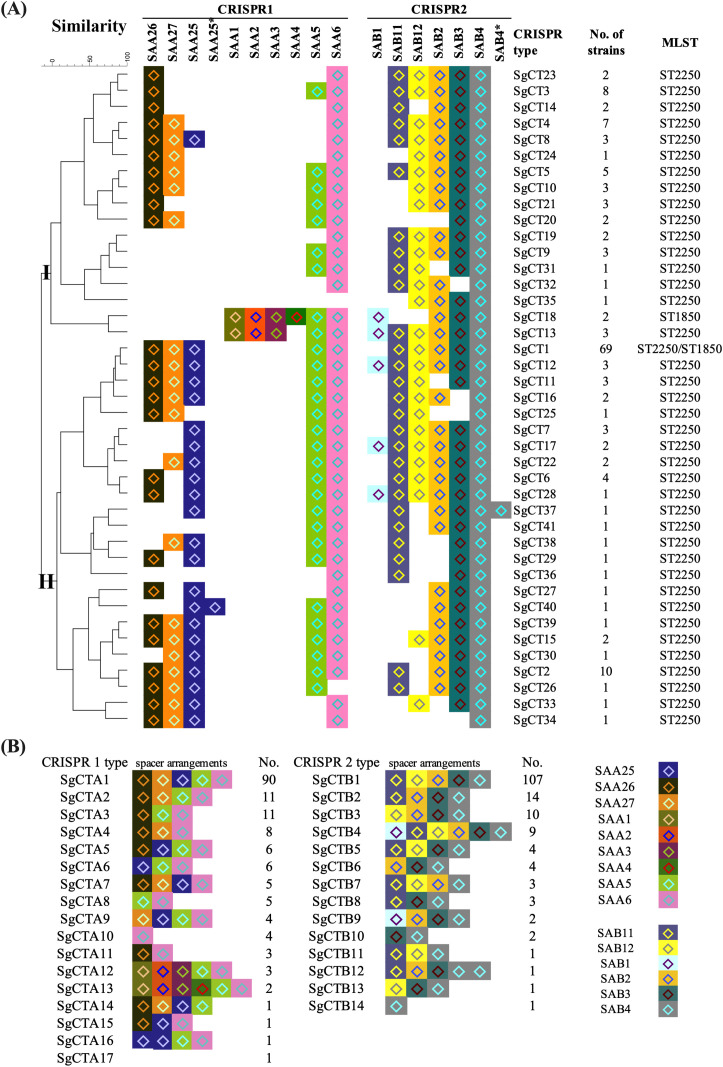
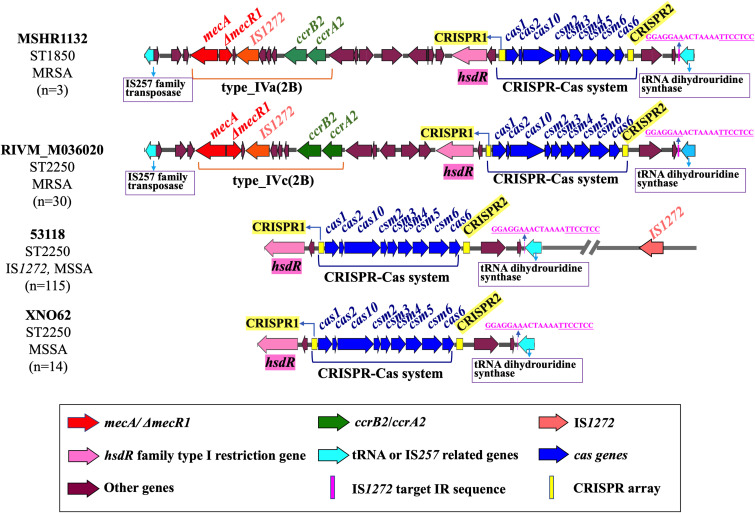
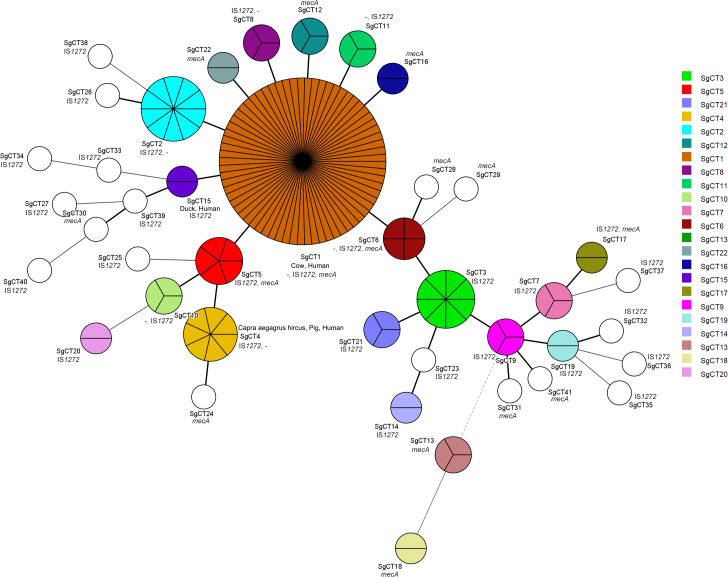
Our findings revealed that 44.0% of these strains carry this immune system, with 98.1% of them belonging to the sequence type 2250 (ST2250). Genomic localization analysis indicated that the CRISPR-Cas is closely associated with () or Insertion sequence (IS) transposase. Further analysis identified a common IS target inverted repeats (IR) sequence in ST2250 strains, providing insights into why these strains are more likely to acquire the CRISPR-Cas system. CRISPR typing identified 41 sequences types, classifying these strains into two clusters, with Cluster II being the predominant one. Homology analysis of spacers revealed that all the identified 15 spacers exhibited homology to sequences from plasmids, lytic phages, or prophages.
This study suggests that the acquisition of the CRISPR-Cas system in enhances its resistance to phage attacks and plasmid invasions in environmental settings, potentially posing significant challenges for clinical treatment of infections caused by these strains and hindering efforts to control their spread in food products using phage-based interventions.
CRISPR-Cas系统是细菌和古生菌的一种防御机制,可保护它们免受移动遗传元件的入侵。[细菌名称]是一种从[另一细菌名称]分化而来的革兰氏阳性菌,其特点是仅在少数分离株中罕见地存在CRISPR-Cas系统。
在本研究中,我们分析了来自26个国家的动物、食物来源和人类的368个[细菌名称]基因组序列中III-A型CRISPR-Cas系统的流行情况,这些序列可在公共数据库中获取。
我们的研究结果显示,这些菌株中有44.0%携带这种免疫系统,其中98.1%属于序列类型2250(ST2250)。基因组定位分析表明,CRISPR-Cas与[基因名称]或插入序列(IS)转座酶密切相关。进一步分析在ST2250菌株中鉴定出一个常见的IS靶反向重复(IR)序列,这为这些菌株为何更有可能获得CRISPR-Cas系统提供了见解。CRISPR分型鉴定出41种序列类型,将这些菌株分为两个簇,其中簇II占主导。间隔序列的同源性分析表明,所有鉴定出的15个间隔序列均与质粒、裂解性噬菌体或原噬菌体的序列具有同源性。
本研究表明,[细菌名称]中CRISPR-Cas系统的获得增强了其在环境中对噬菌体攻击和质粒入侵的抗性,这可能给由这些菌株引起的感染的临床治疗带来重大挑战,并阻碍利用基于噬菌体的干预措施控制它们在食品中传播的努力。