Grabau Jonathan D, Hoopes Hannah T, Ho Christine
Texas Scottish Rite Hospital for Children, Dallas, TX, USA.
J Pediatr Soc North Am. 2025 Jul 3;12:100239. doi: 10.1016/j.jposna.2025.100239. eCollection 2025 Aug.
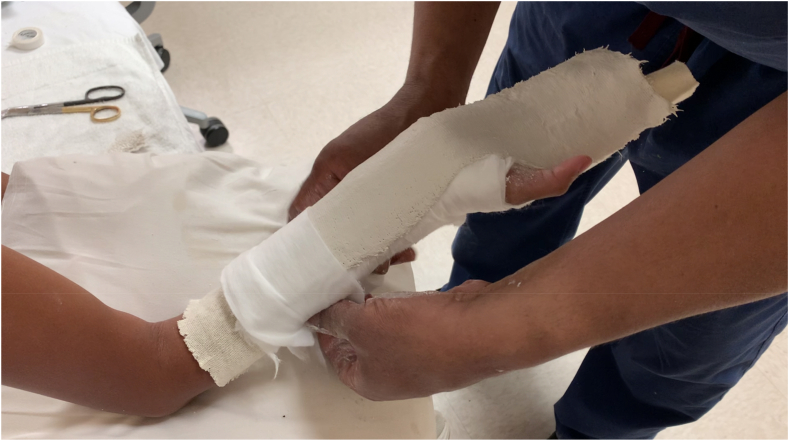
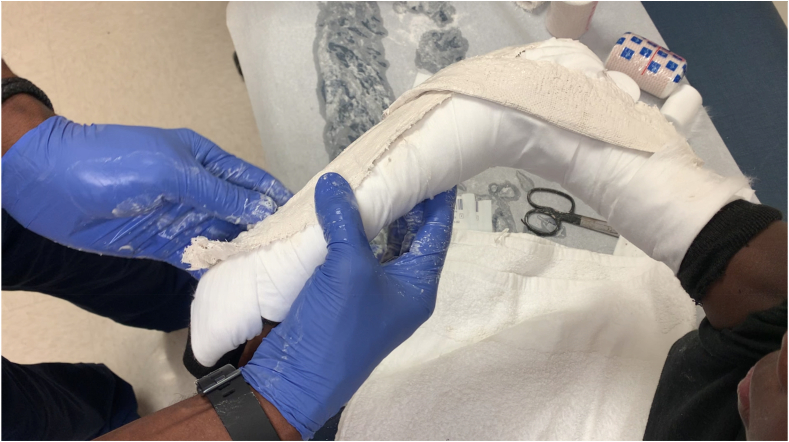
The purpose of this chapter is to provide a basic instructional reference for upper extremity splint application in the context of pediatric orthopaedic trauma. In addition to reviewing the steps necessary for successful splint application, this chapter will also discuss common pitfalls to avoid in order to optimize outcomes and prevent complications during and after splint immobilization for upper extremity injuries. Embedded throughout the chapter are figures and videos that highlight how to apply various splints to the upper extremity based on the injury location and the immobilization required for different clinical situations. Previous studies have indicated that many practitioners caring for pediatric trauma patients lack the proper training to apply splints safely and effectively. This chapter and its accompanying media should ideally serve as a primer for medical trainees, including orthopaedic residents, fellows, advanced practice providers, and other medical professionals learning to treat pediatric patients in clinical and emergency department settings. Generally, upper extremity splints are used as a method of temporary immobilization while awaiting definitive management, which may involve conversion to a cast once the swelling has resolved or following surgical intervention.
(1)Splints should be considered for pediatric patients with upper extremity injuries when associated soft tissue injuries or anticipated swelling prevent the use of a cast.(2)Similar to casting, upper extremity splints should immobilize the injured area while minimizing the immobilization of uninjured joints. This approach allows for a continued range of motion and helps prevent iatrogenic stiffness.(3)Successful splint application depends on the proper use of cast padding and plaster to effectively immobilize injuries and prevent iatrogenic soft tissue complications like wounds or skin ulceration.
本章旨在为小儿骨科创伤情况下的上肢夹板应用提供基本的教学参考。除了回顾成功应用夹板所需的步骤外,本章还将讨论常见的陷阱,以优化治疗效果,并预防上肢损伤夹板固定期间及之后的并发症。本章通篇配有图表和视频,重点介绍如何根据损伤部位以及不同临床情况所需的固定方式,对上肢应用各种夹板。以往研究表明,许多照顾小儿创伤患者的从业者缺乏安全有效地应用夹板的适当培训。本章及其配套媒体理想情况下应作为医学实习生的入门指南,包括骨科住院医师、研究员、高级执业提供者以及其他在临床和急诊科学习治疗小儿患者的医学专业人员。一般来说,上肢夹板用作一种临时固定方法,同时等待确定性治疗,这可能包括在肿胀消退后或手术干预后更换为石膏。
(1)对于伴有软组织损伤或预期肿胀而无法使用石膏的上肢损伤小儿患者,应考虑使用夹板。(2)与石膏固定类似,上肢夹板应固定受伤部位,同时尽量减少对未受伤关节的固定。这种方法允许继续进行活动范围,并有助于预防医源性僵硬。(3)成功应用夹板取决于正确使用石膏衬垫和石膏,以有效固定损伤并预防医源性软组织并发症,如伤口或皮肤溃疡。