
碳化大米生产废料衍生的碳-硅混合填料在工业胎面橡胶复合材料中的应用。
Application of Carbon-Silicon Hybrid Fillers Derived from Carbonised Rice Production Waste in Industrial Tread Rubber Compounds.
作者信息
Bobrova Valeryia V, Nechipurenko Sergey V, Yermukhambetova Bayana B, Kasperovich Andrei V, Yefremov Sergey A, Kaiaidarova Aigerim K, Makhayeva Danelya N, Irmukhametova Galiya S, Yeligbayeva Gulzhakhan Zh, Mun Grigoriy A
机构信息
Department of Polymer Composite Materials, Faculty of Technology of Organic Substances, Belarusian State Technological University, 220006 Minsk, Belarus.
Faculty of Chemistry and Chemical Technology, Al-Farabi Kazakh National University, Almaty 050040, Kazakhstan.
出版信息
Polymers (Basel). 2025 Jul 29;17(15):2070. doi: 10.3390/polym17152070.
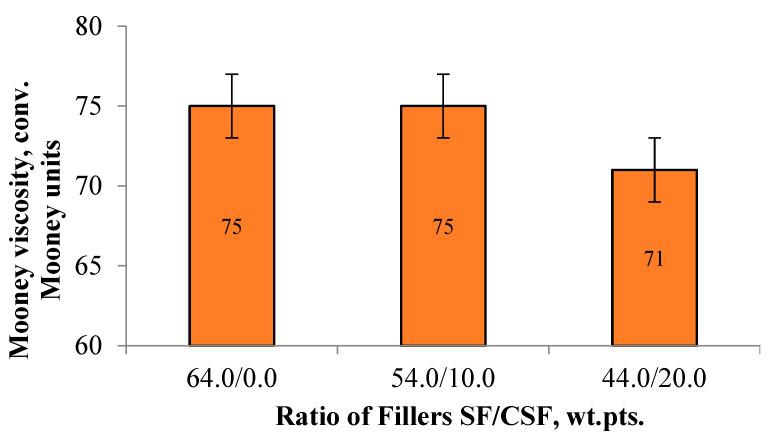
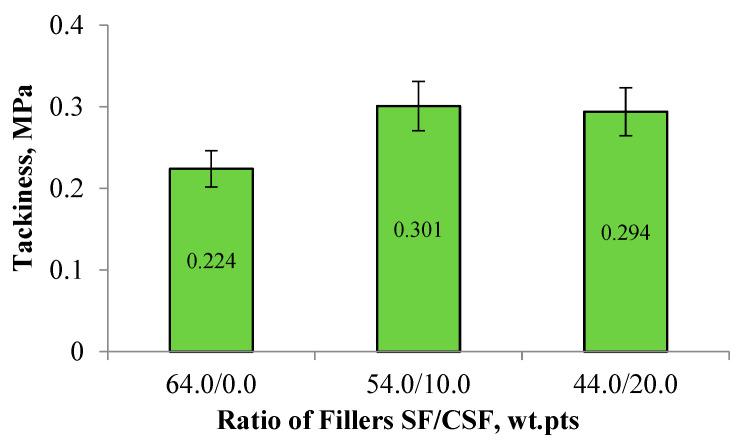
The disposal of agro-industrial waste is a pressing environmental issue. At the same time, due to the high silica content in specific agricultural residues, their processed products can be utilised in various industrial sectors as substitutes for commercial materials. This study investigates the key technological, physico-mechanical, and viscoelastic properties of industrial elastomeric compounds based on synthetic styrene-butadiene rubber, intended for the tread of summer passenger car tyres, when replacing the commercially used highly reinforcing silica filler (SF), Extrasil 150VD brand (white carbon black), with a carbon-silica filler (CSF). The CSF is produced by carbonising a finely ground mixture of rice production waste (rice husks and stems) in a pyrolysis furnace at 550-600 °C without oxygen. It was found that replacing 20 wt.pts. of silica filler with CSF in industrial tread formulations improves processing parameters (Mooney viscosity increases by up to 5.3%, optimal vulcanisation time by up to 9.2%), resistance to plastic deformation (by up to 7.7%), and tackiness of the rubber compounds (by 31.3-34.4%). Viscoelastic properties also improved: the loss modulus and mechanical loss tangent decreased by up to 24.0% and 14.3%, respectively; the rebound elasticity increased by up to 6.3% and fatigue resistance by up to 2.7 thousand cycles; and the internal temperature of samples decreased by 7 °C. However, a decrease in tensile strength (by 10.7-27.0%) and an increase in wear rate (up to 43.3% before and up to 22.5% after thermal ageing) were observed. Nevertheless, the overall results of this study indicate that the CSF derived from the carbonisation of rice production waste-containing both silica and carbon components-can effectively be used as a partial replacement for the commercially utilised reinforcing silica filler in the production of tread rubber for summer passenger car tyres.
农产品加工业废弃物的处理是一个紧迫的环境问题。与此同时,由于特定农业残余物中二氧化硅含量较高,其加工产品可在各个工业领域用作商业材料的替代品。本研究调查了基于合成丁苯橡胶的工业弹性体化合物的关键技术、物理机械和粘弹性性能,这些化合物用于夏季乘用车轮胎的胎面,用碳 - 二氧化硅填料(CSF)替代商业使用的高增强二氧化硅填料(SF),即Extrasil 150VD品牌(白炭黑)。CSF是通过在无氧条件下于550 - 600°C的热解炉中碳化精细研磨的大米生产废料(稻壳和稻茎)混合物而制得。研究发现,在工业胎面配方中用CSF替代20重量份的二氧化硅填料可改善加工参数(门尼粘度提高高达5.3%,最佳硫化时间提高高达9.2%)、抗塑性变形能力(提高高达7.7%)以及橡胶混合物的粘性(提高31.3 - 34.4%)。粘弹性性能也有所改善:损耗模量和力学损耗角正切分别降低高达24.0%和14.3%;回弹性提高高达6.3%,耐疲劳性提高高达2700次循环;样品内部温度降低7°C。然而,观察到拉伸强度有所下降(下降10.7 - 27.0%),磨损率有所增加(热老化前高达43.3%,热老化后高达22.5%)。尽管如此,本研究的总体结果表明,由含二氧化硅和碳成分的大米生产废料碳化得到的CSF可有效地用作商业使用的增强二氧化硅填料的部分替代品,用于夏季乘用车轮胎胎面橡胶的生产。





 Zotero 插件