Nassar Amin H, Kim Chul, Adeyelu Tolulope, Bou Farhat Elias, Abushukair Hassan, Rakaee Mehrdad, Matteson Kelsey, Lau Shun-Fat, Takabe Yamato, Ocejo Antonio, Ardeshir-Larijani Fatemeh, Leal Ticiana, Ramalingam Suresh, Alam Sumaiya, Gray Jhanelle E, Hicks James, Kaldas David, Baena Javier, Berjaga Maria Zurera, Nana Frank Aboubakar, Grohe Christian, Leuders Heike, Citarella Fabrizio, Cortellini Alessio, Mingo Emanuele Claudio, Pancirer Danny, Das Millie, Ellis-Caleo Timothy John, Cheung Justin M, Lin Jessica J, Watson Alexander S, Camidge D Ross, Sridhar Arthi, Parikh Kaushal, Crowley Fionnuala, Marron Thomas U, Aggarwal Vanya, Ahmed Murtaza, Sankar Kamya, Kawtharany Hassan, Zhang Jun, Owen Dwight H, Li Mingjia, Nagasaka Misako, Pinato David J, Awosika Nichola, Alhamad Khaled, Puri Sonam, Zaman Unaiza, Gupta Divya M, Lau Chelsea, Khan Hina, Liauw Justin, Velazquez Ana I, Brown Tyiesha, Moliner Laura, Mosteiro Miguel, Rocha Pedro, Evans Mark, Vanderwalde Ari, Elliott Andrew, Nieva Jorge, Lopes Gilberto, Ma Patrick C, Borghaei Hossein, Lee Matthew, Young Lauren, Aljumaily Raid, Mirza Haris, Kwiatkowski David J, Herbst Roy S, Flavell Richard A, Naqash Abdul Rafeh, Chiang Anne C
Department of Medicine (Medical Oncology), Yale School of Medicine and Yale Cancer Center, New Haven, CT, USA.
Division of Hematology and Oncology, Georgetown Cancer Institute, Washington, DC, USA.
Nat Commun. 2025 Aug 19;16(1):7717. doi: 10.1038/s41467-025-63091-0.
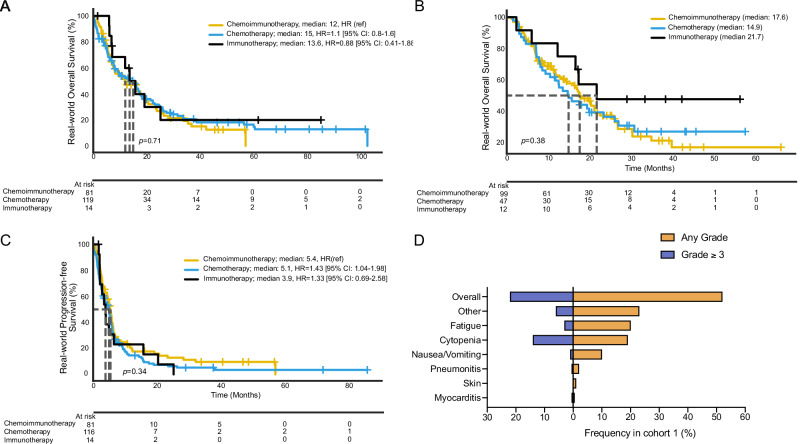
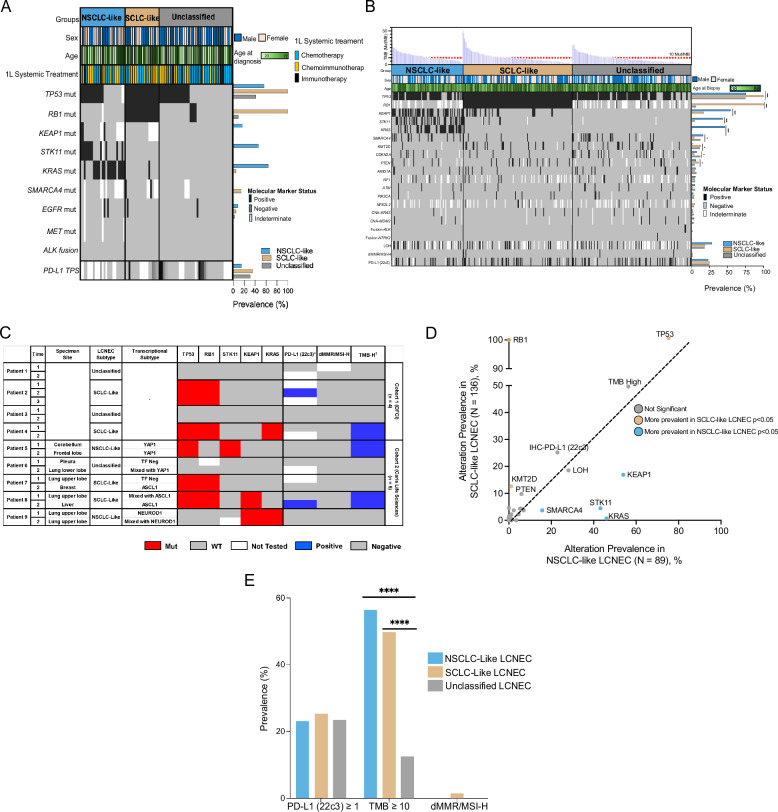
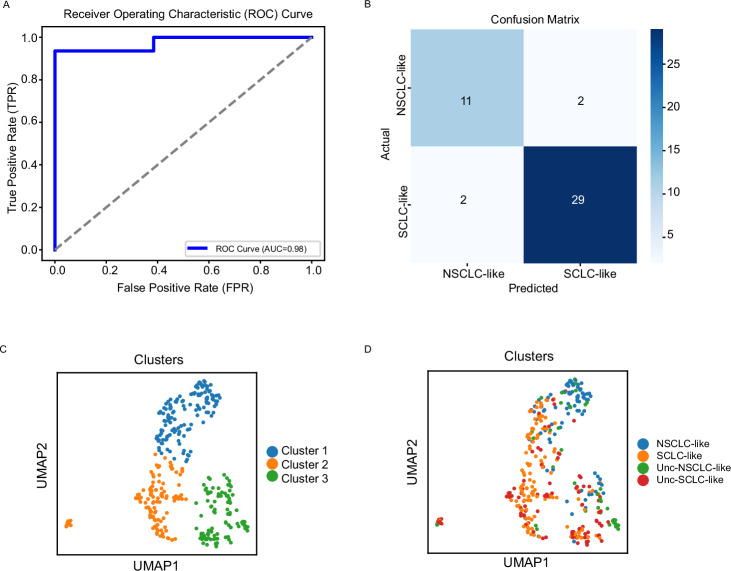
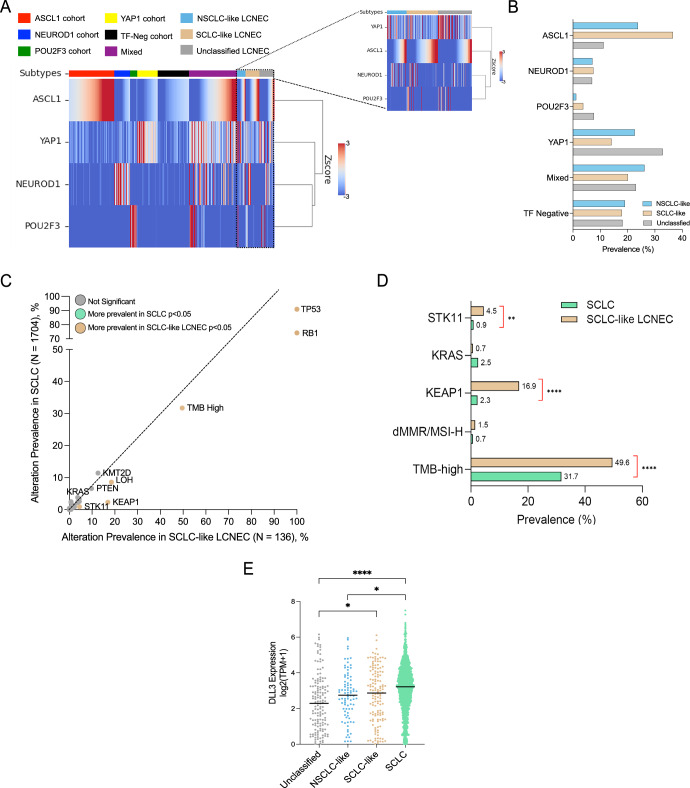
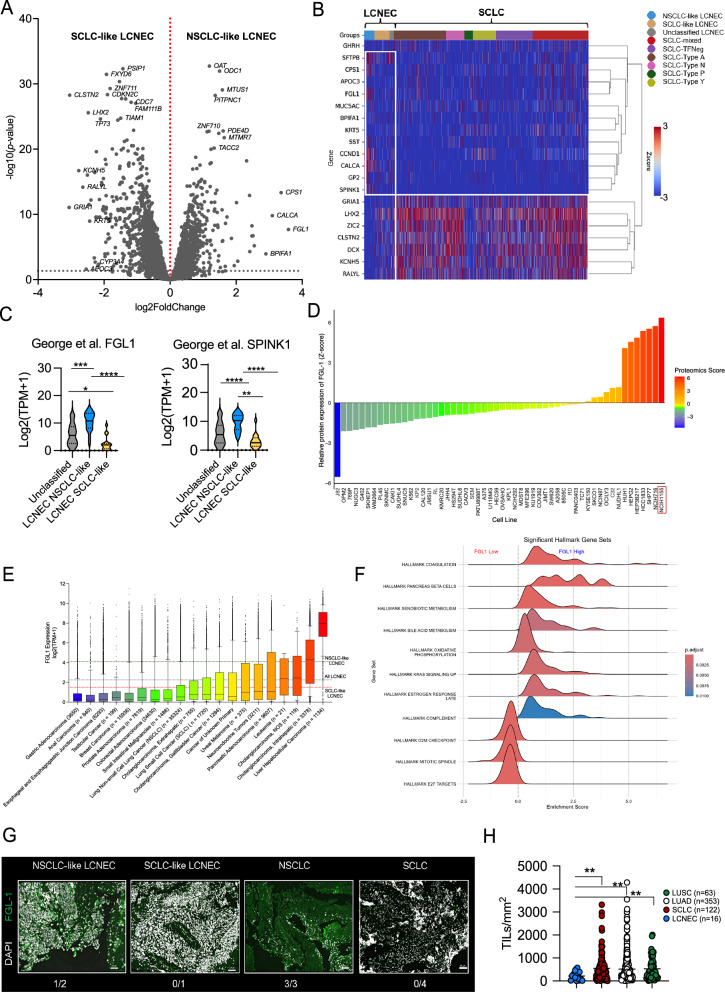
Pulmonary large cell neuroendocrine carcinoma (LCNEC) is a rare, aggressive lung tumor marked by significant molecular heterogeneity. In a study of 590 patients across two independent cohorts, we observe comparable overall survival across treatment regimens (chemotherapy, chemoimmunotherapy, immunotherapy) without unexpected adverse events. Genomic analysis identifies distinct non-small cell lung cancer-like (NSCLC-like, KEAP1, KRAS, STK11 mutations) and SCLC-like (RB1, TP53 mutations) LCNEC subtypes, with 80% aligning with SCLC transcriptional profiles. Serial sampling reveals stable mutational but shifting transcriptomic landscapes over time. Here we show, elevated FGL-1 (a LAG-3 ligand) and SPINK1 expression in NSCLC-like LCNECs, and higher levels of DLL3 in SCLC-like LCNECs. Immunofluorescence confirms FGL-1 expression in NSCLC-like LCNECs, and H&E slide analyses indicates fewer tumor-infiltrating lymphocytes in LCNECs versus other lung cancers. These findings highlight LCNEC's distinct immunogenomic profile, supporting future investigations into LAG-3, SPINK1, and DLL3-targeted therapies.
肺大细胞神经内分泌癌(LCNEC)是一种罕见的侵袭性肺肿瘤,具有显著的分子异质性。在一项对两个独立队列中的590名患者进行的研究中,我们观察到不同治疗方案(化疗、化疗免疫疗法、免疫疗法)的总生存期相当,且无意外不良事件。基因组分析确定了不同的非小细胞肺癌样(NSCLC样,KEAP1、KRAS、STK11突变)和小细胞肺癌样(RB1、TP53突变)LCNEC亚型,其中80%与小细胞肺癌转录谱一致。连续取样显示,随着时间推移,突变情况稳定,但转录组景观发生变化。我们在此表明,NSCLC样LCNEC中FGL-1(一种LAG-3配体)和SPINK1表达升高,而SCLC样LCNEC中DLL3水平更高。免疫荧光证实了NSCLC样LCNEC中FGL-1的表达,苏木精和伊红(H&E)切片分析表明,与其他肺癌相比,LCNEC中肿瘤浸润淋巴细胞较少。这些发现突出了LCNEC独特的免疫基因组特征,为未来针对LAG-3、SPINK1和DLL3的靶向治疗研究提供了支持。