Schippers Anouck, Vansteensel Mariska J, Freudenburg Zac V, Luo Shiyu, Crone Nathan E, Ramsey Nick F
Department of Neurology and Neurosurgery, University Medical Center Utrecht Brain Center, Heidelberglaan 100, Utrecht, 3584 CX, The Netherlands.
Department of Biomedical Engineering, Johns Hopkins University School of Medicine, Baltimore, MD, USA.
J Neuroeng Rehabil. 2025 Aug 19;22(1):181. doi: 10.1186/s12984-025-01689-7.
Recent studies have demonstrated that speech can be decoded from brain activity which in turn can be used for brain-computer interface (BCI)-based communication. It is however also known that the area often used as a signal source for speech decoding BCIs, the sensorimotor cortex (SMC), is also engaged when people perceive speech, thus making speech perception a potential source of false positive activation of the BCI. The current study investigated if and how speech perception may interfere with reliable speech BCI control.
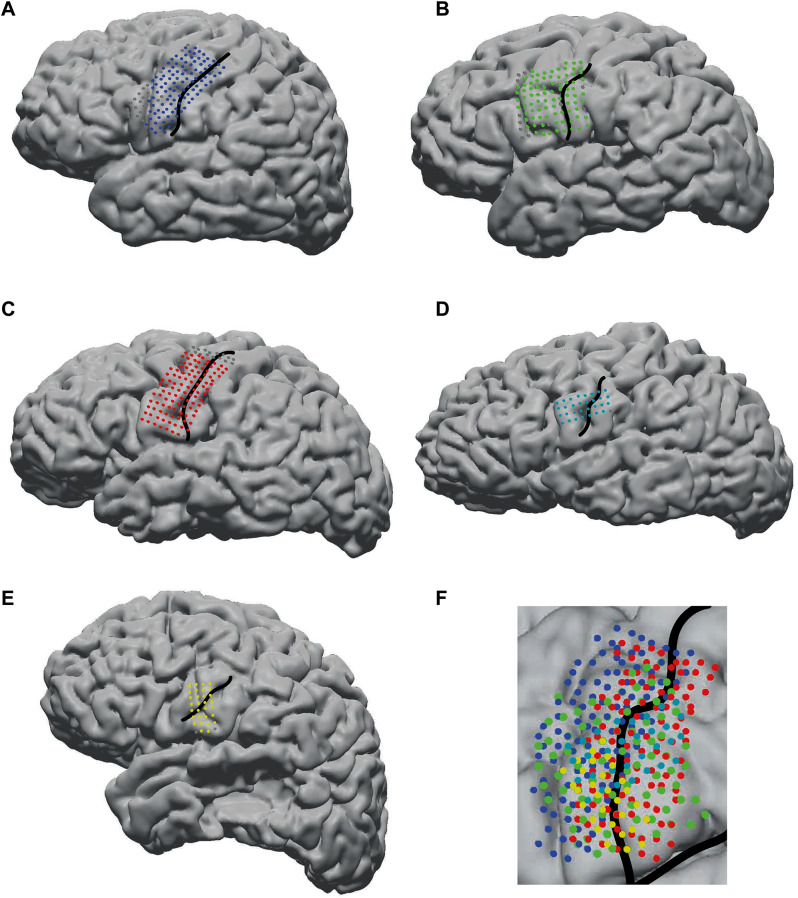
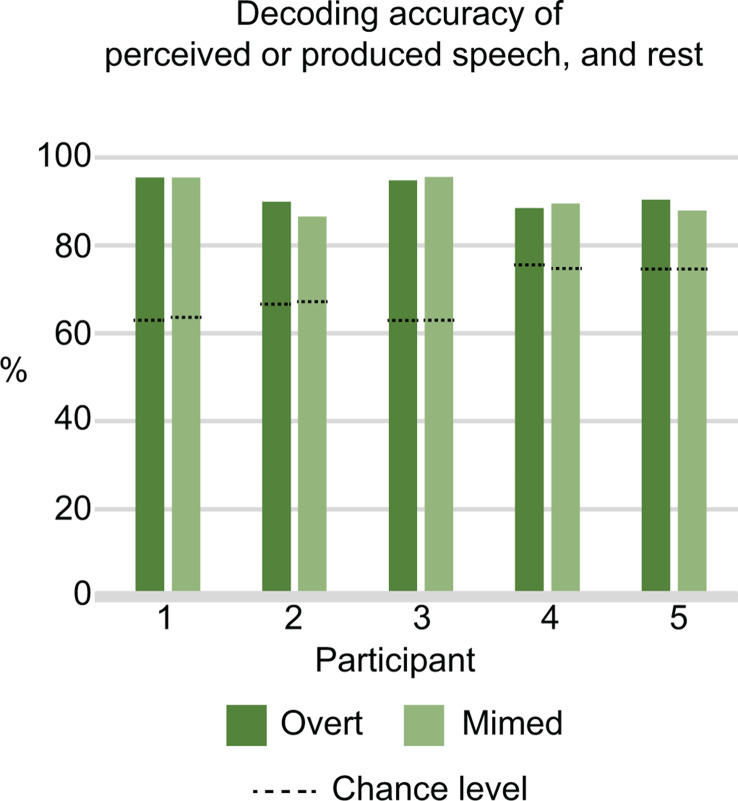
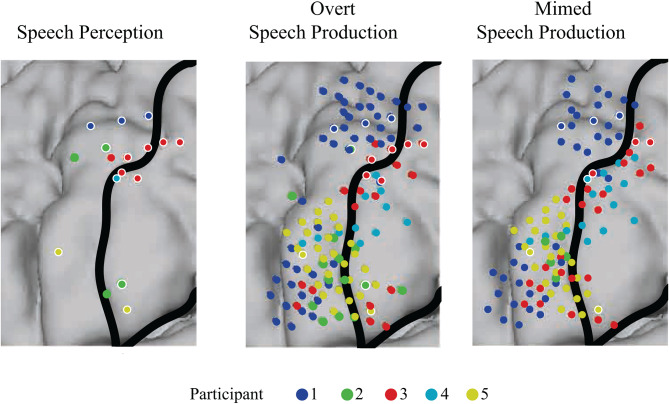
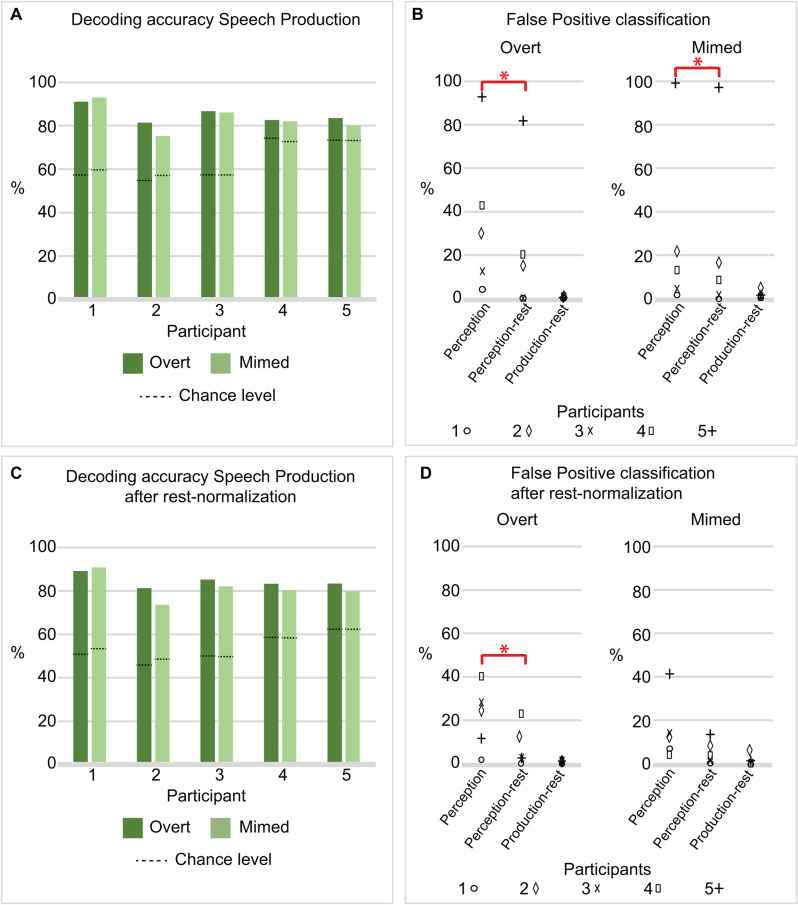
We recorded high-density electrocorticography (HD-ECoG) data from five subjects while they performed a speech perception and a speech production task. We first evaluated whether speech perception and production activated the SMC. Second, we trained a support-vector machine (SVM) on the speech production data (including rest). To test the occurrence of false positives, this decoder was then tested on speech perception data where every perception segment that was classified as a produced syllable rather than rest was considered a false positive. Finally, we investigated whether perceived speech could be distinguished from produced speech and rest.
Our results show that both the perception and production of speech activate the SMC. In addition, we found that decoders that are highly reliable at detecting self-produced syllables from brain signals may generate false positive BCI activations during the perception of speech and that it is possible to distinguish perceived speech from produced speech and rest, with high accuracy.
We conclude that speech perception can interfere with reliable BCI control, and that efforts to limit the occurrence of false positives during daily-life BCI use should be implemented in BCI design to increase the likelihood of successful adoptation by end users.
最近的研究表明,可以从大脑活动中解码语音,进而将其用于基于脑机接口(BCI)的通信。然而,众所周知,常用于语音解码BCI信号源的区域,即感觉运动皮层(SMC),在人们感知语音时也会被激活,因此语音感知可能是BCI误激活的潜在来源。本研究调查了语音感知是否以及如何干扰可靠的语音BCI控制。
我们记录了五名受试者在执行语音感知和语音产生任务时的高密度脑皮层电图(HD-ECoG)数据。我们首先评估语音感知和产生是否激活了SMC。其次,我们在语音产生数据(包括休息)上训练了支持向量机(SVM)。为了测试误报的发生情况,然后在语音感知数据上测试该解码器,其中每个被分类为产生的音节而不是休息的感知片段都被视为误报。最后,我们研究了是否可以将感知到的语音与产生的语音和休息区分开来。
我们的结果表明,语音的感知和产生都会激活SMC。此外,我们发现,在从脑信号中检测自我产生的音节方面高度可靠的解码器,在语音感知过程中可能会产生误激活的BCI信号,并且可以高精度地将感知到的语音与产生的语音和休息区分开来。
我们得出结论,语音感知会干扰可靠的BCI控制,并且在BCI设计中应努力限制日常生活中使用BCI时误报的发生,以增加最终用户成功采用的可能性。