Zgadzai Oleg, Almog Nir, Varshavsky Yefim, Jbara Moamen, Driesschaert Benoit, Blank Aharon
Schulich Faculty of Chemistry Technion - Israel Institute of Technology Haifa, 3200003, Israel.
Department of Pharmaceutical Sciences, School of Pharmacy and In Vivo Multifunctional Magnetic Resonance Center, West Virginia University, Morgantown, WV 26506, USA.
J Magn Reson Open. 2025 Sep;24. doi: 10.1016/j.jmro.2025.100207. Epub 2025 Jul 9.
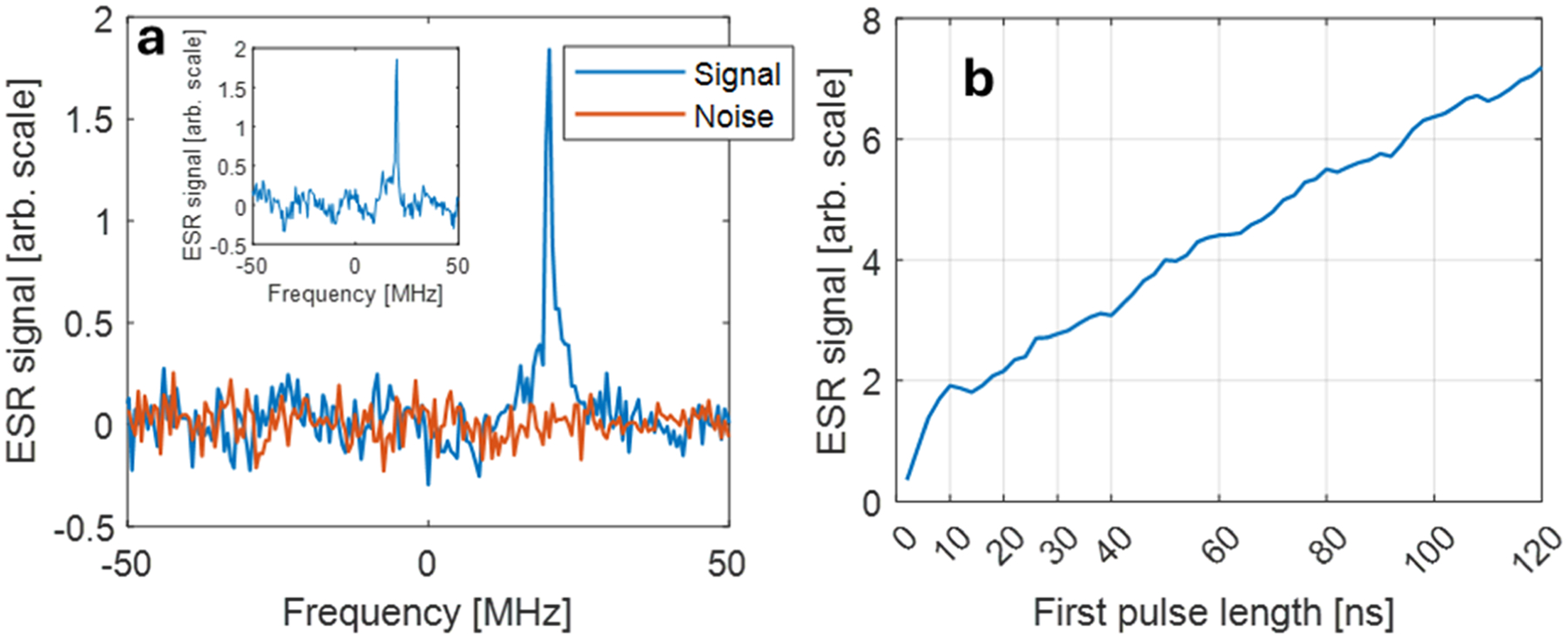
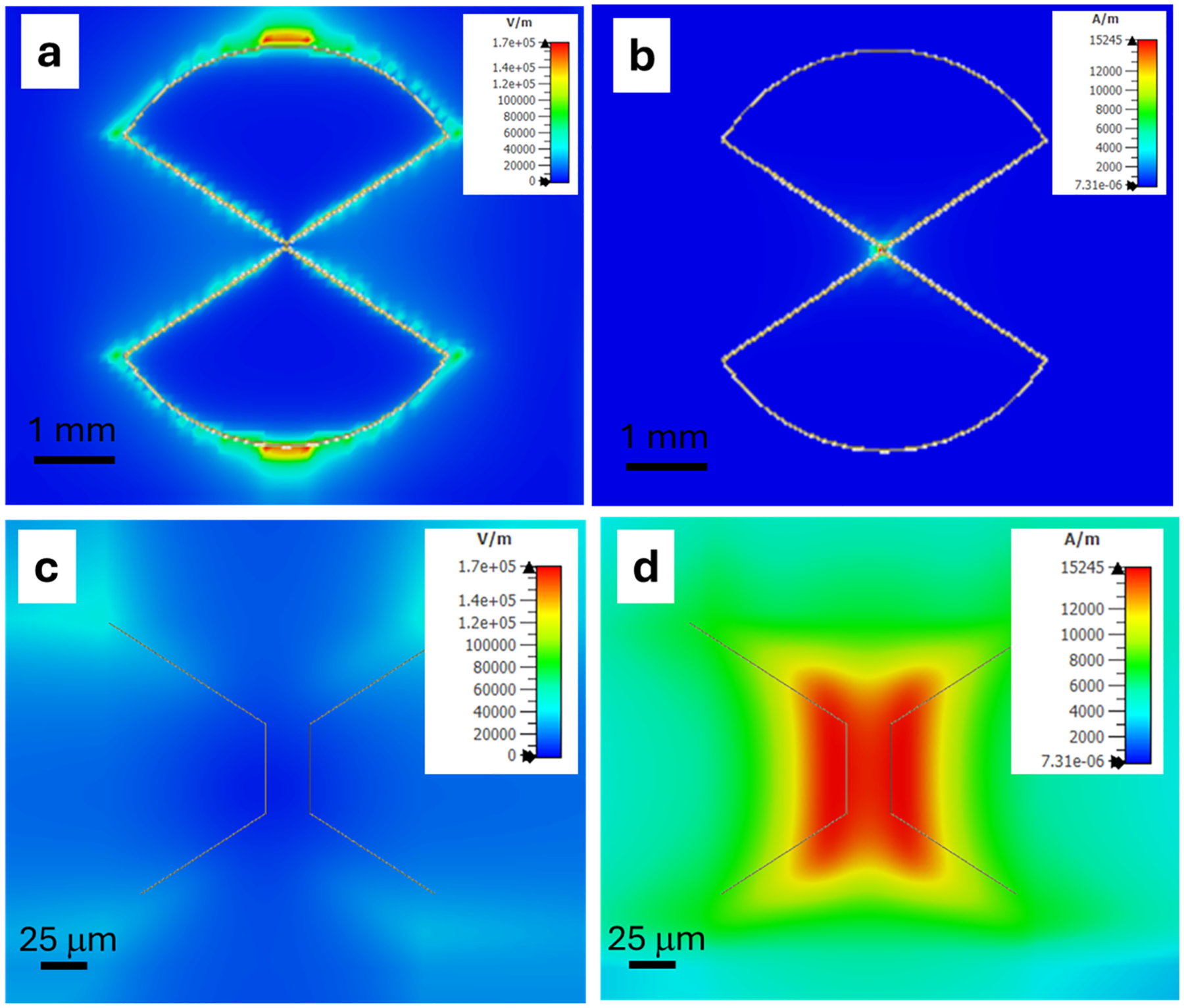
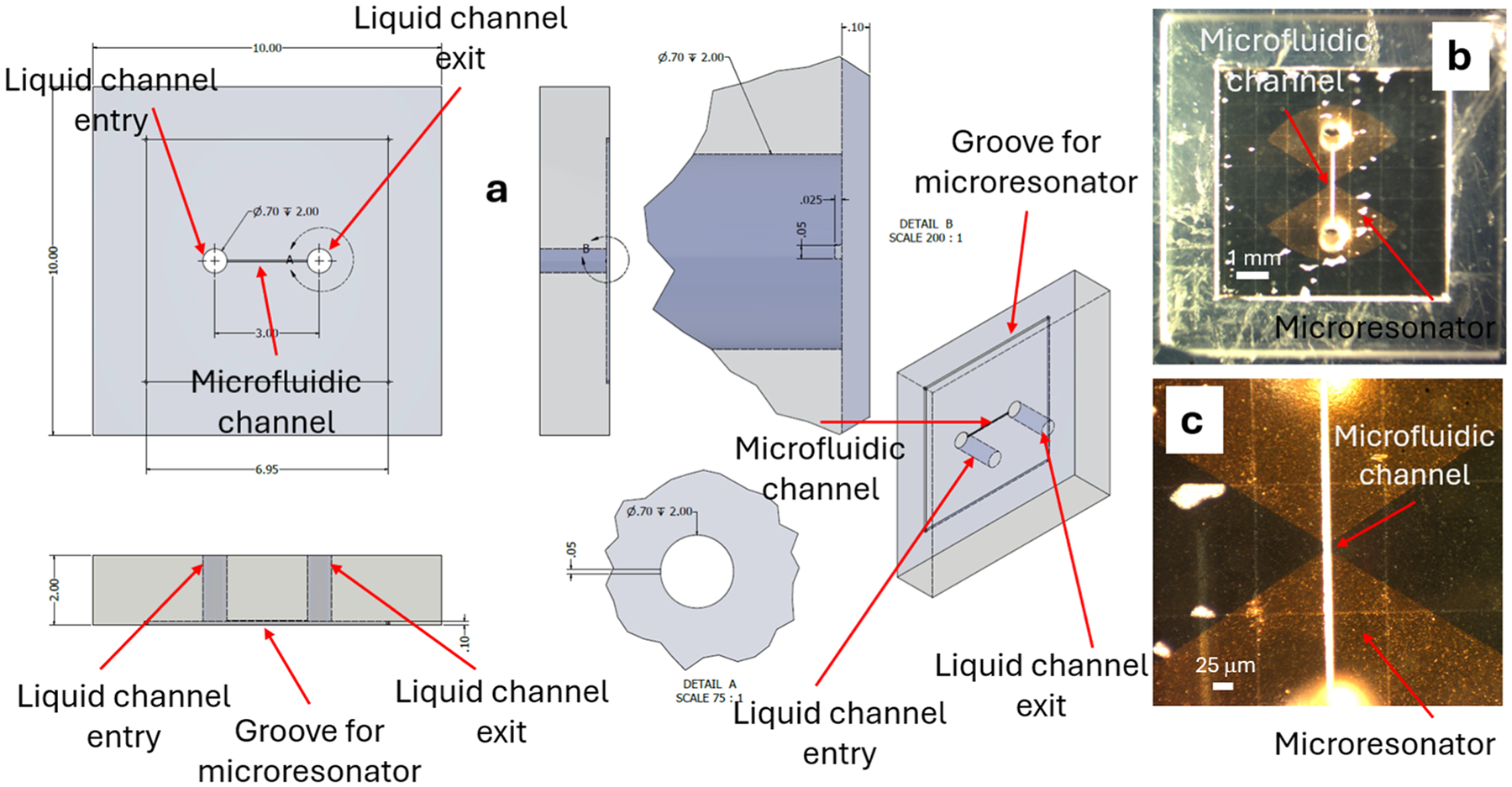
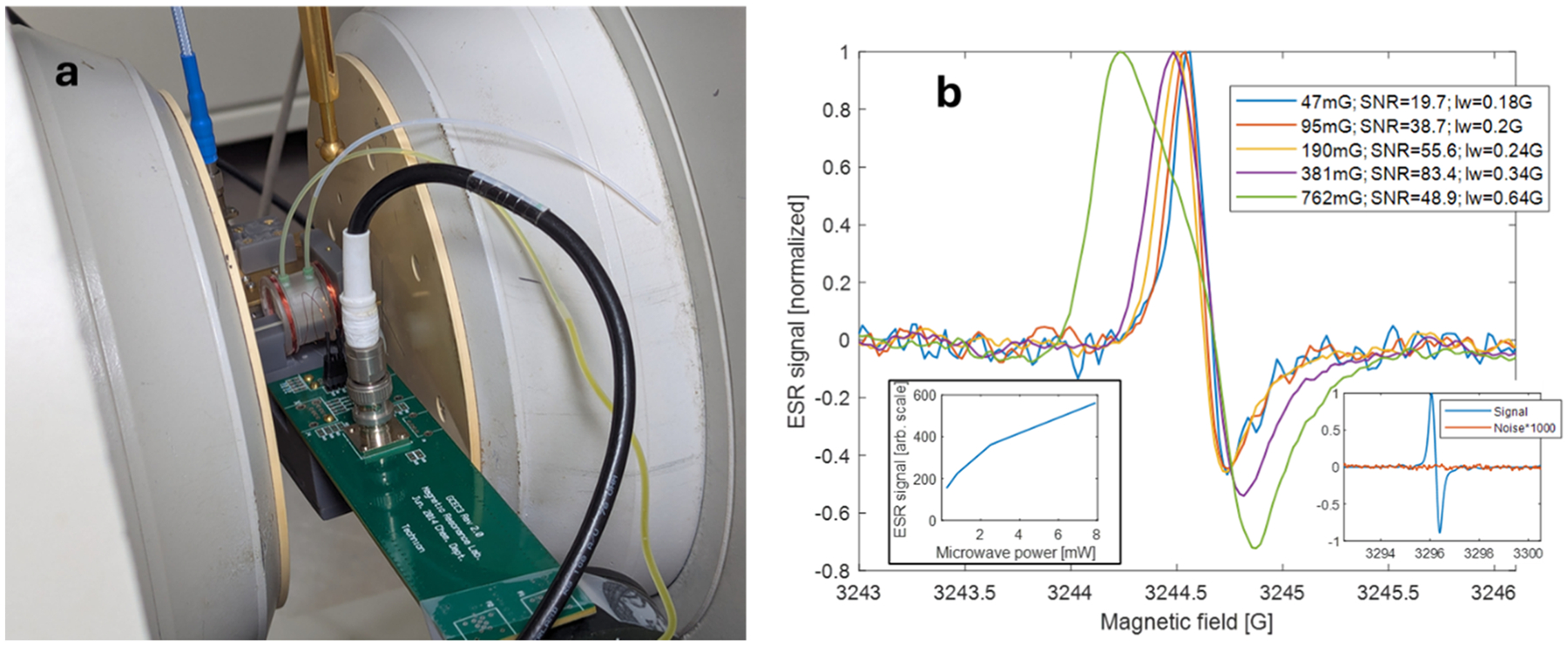
This paper presents a novel continuous-flow electron spin resonance (ESR) microfluidic device designed for both continuous-wave (CW) and pulsed ESR measurements on sub-nanoliter liquid samples. The system integrates a planar surface microresonator (ParPar type) operating at ~9.4 GHz with a precision-fabricated quartz microfluidic chip, enabling spatial confinement of the sample within the resonator's microwave magnetic field hotspot while minimizing dielectric losses. The effective sample volume is ~0.06 nL, and the device supports standard microfluidic connectors, facilitating both continuous and stopped-flow experiments. Using a 1 mM aqueous solution of deuterated Finland trityl (dFT) radical, CW ESR measurements yielded a peak signal-to-noise ratio (SNR) of ~83 for a 100-point spectrum acquired over 80 s, with a resonator quality factor of Q ~15-20. This corresponds to a spin sensitivity of ~1.04 × 10 spins/√Hz/G. Pulsed ESR measurements, performed with 0.1 W microwave power and 10 ns π pulses, achieved an SNR of ~47 with 1 s of averaging, corresponding to a spin sensitivity of ~7.8 × 10 spins/√Hz. A Rabi frequency of ~50 MHz was measured, indicating a microwave conversion efficiency of ~56 G/√W. Both the pulsed spin sensitivity and Rabi frequency are consistent with simulated values. This device represents a significant step toward ESR-based detection of individual, slowly flowing cells-analogous to flow cytometry but with magnetic resonance contrast. With future enhancements such as higher operating frequencies, cryogenic integration, or optimized resonator geometries, the system is expected to enable practical ESR measurements at the single-cell level.
本文介绍了一种新型的连续流电子自旋共振(ESR)微流控装置,该装置设计用于对亚纳升液体样品进行连续波(CW)和脉冲ESR测量。该系统将一个工作在~9.4 GHz的平面表面微谐振器(ParPar型)与一个精密制造的石英微流控芯片集成在一起,能够将样品空间限制在谐振器的微波磁场热点内,同时将介电损耗降至最低。有效样品体积约为0.06 nL,该装置支持标准微流控连接器,便于进行连续流和停流实验。使用1 mM的氘代芬兰三苯甲基(dFT)自由基水溶液,在80 s内采集100点光谱的连续波ESR测量中,峰值信噪比(SNR)约为83,谐振器品质因数Q约为15 - 20。这对应于约1.04×10自旋/√Hz/G的自旋灵敏度。使用0.1 W微波功率和10 ns π脉冲进行的脉冲ESR测量,平均1 s时信噪比达到约47,对应于约7.8×10自旋/√Hz的自旋灵敏度。测量到的拉比频率约为50 MHz,表明微波转换效率约为56 G/√W。脉冲自旋灵敏度和拉比频率均与模拟值一致。该装置朝着基于ESR的单个缓慢流动细胞检测迈出了重要一步——类似于流式细胞术,但具有磁共振对比度。随着未来诸如更高工作频率、低温集成或优化谐振器几何形状等改进,预计该系统能够在单细胞水平实现实际的ESR测量。