Gebrezgabiher Gebremedhin, Siraj Kelifa Jemal, Romha Gebremedhin
Department of Veterinary Medicine, Samara University, Samara, Afar, Ethiopia.
Department of Veterinary Public Health and Food Safety, Mekelle University, Mekelle, Tigray, Ethiopia.
J Parasitol Res. 2025 Aug 14;2025:5512514. doi: 10.1155/japr/5512514. eCollection 2025.
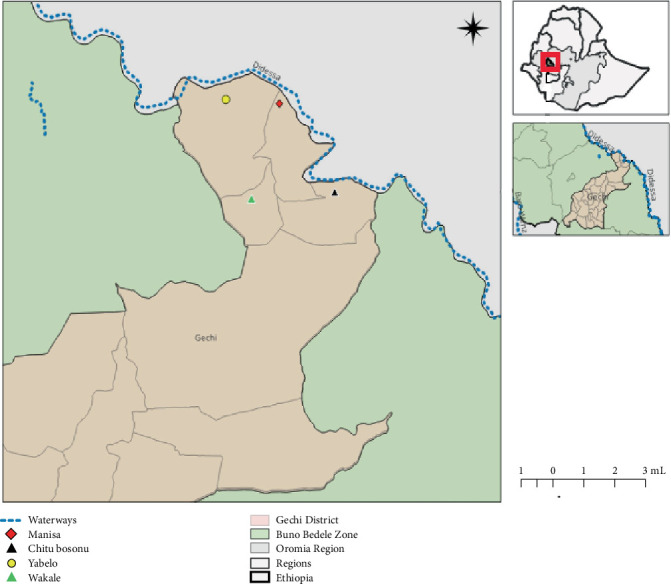
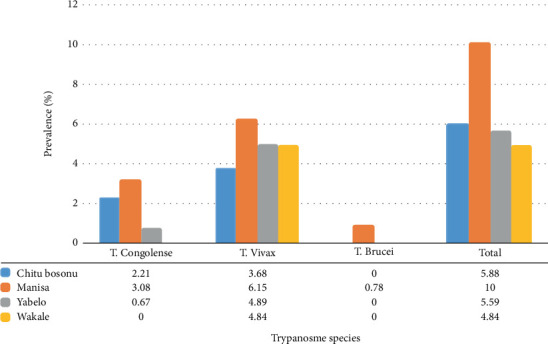
Bovine trypanosomiasis, a parasitic disease transmitted by tsetse flies, poses a significant threat to livestock health and agricultural productivity in Ethiopia, affecting millions of farmers who rely on cattle for milk, meat, and draught power. This study was aimed at assessing the prevalence of bovine trypanosomiasis and the density of tsetse flies in the Gechi District, western Ethiopia. A cross-sectional study was conducted from March to September 2022 in Gechi District, western Ethiopia. Out of 471 blood samples collected from randomly selected animals, 32 (6.79%) tested positive for trypanosomes, with (71.87%) being the most prevalent, followed by (25%) and (3.13%). The prevalence of trypanosomes did not significantly differ across study sites, age groups, body conditions, or sexes. The mean packed cell volume value of parasitemic animals (23.1%) was significantly lower than that of aparasitemic animals (25.52%) ( = 0.013). By deploying 60 traps, a total of 288 tsetse flies were caught, with 73.26% identified as and the remaining 26.74% as . This study found a 6.79% prevalence of bovine trypanosomiasis in the Gechi District, which was caused primarily by and , with a tsetse fly density of 2.4 flies per trap per day (FTD), indicating that trypanosomes and their vectors are prevalent in the area. Continuous control measures and monitoring should be implemented to mitigate the impact of the disease.
牛锥虫病是一种由采采蝇传播的寄生虫病,对埃塞俄比亚的牲畜健康和农业生产力构成重大威胁,影响着数百万依靠牛获取牛奶、肉类和畜力的农民。本研究旨在评估埃塞俄比亚西部格奇区牛锥虫病的流行情况和采采蝇的密度。2022年3月至9月在埃塞俄比亚西部格奇区进行了一项横断面研究。从随机选取的动物身上采集的471份血样中,32份(6.79%)锥虫检测呈阳性,其中 (71.87%)最为常见,其次是 (25%)和 (3.13%)。锥虫的流行率在不同研究地点、年龄组、身体状况或性别之间没有显著差异。感染寄生虫动物的平均红细胞压积值(23.1%)显著低于未感染寄生虫动物(25.52%)( = 0.013)。通过部署60个诱捕器,共捕获288只采采蝇,其中73.26%被鉴定为 ,其余26.74%为 。本研究发现格奇区牛锥虫病的流行率为6.79%,主要由 和 引起,采采蝇密度为每天每个诱捕器2.4只采采蝇(FTD),这表明锥虫及其传播媒介在该地区很普遍。应实施持续的控制措施和监测,以减轻该病的影响。