Elsukova Elena, Zamay Tatiana, Kichkailo Anna, Yakunenkov Andrey, Veprintsev Dmitry V, Minic Zoran, Berezovski Maxim V, Glazyrin Yury
Department of Biology, Chemistry and Teaching Methods, Krasnoyarsk State Pedagogical University Named After V.P. Astafyev, Ady Lebedevoy 82, 660049 Krasnoyarsk, Russia.
Laboratory for Digital Controlled Drugs and Theranostics, Federal Research Center "Krasnoyarsk Science Center of the Siberian Branch of the Russian Academy of Sciences", Akademgorodok 50, 660036 Krasnoyarsk, Russia.
Int J Mol Sci. 2025 Aug 15;26(16):7898. doi: 10.3390/ijms26167898.
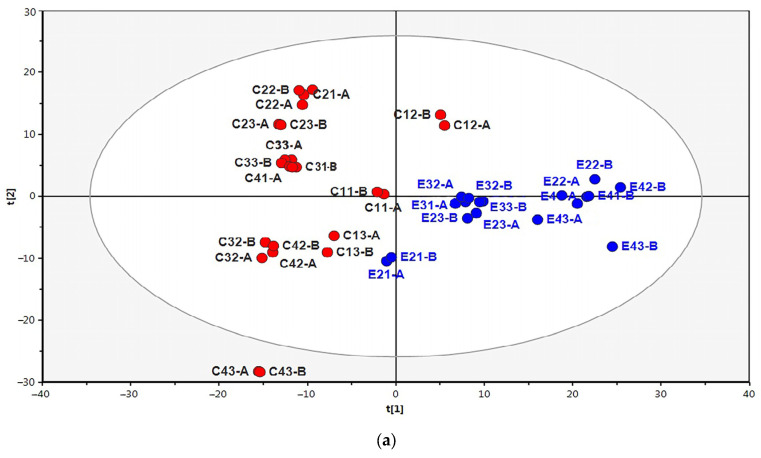
Adipose tissue exhibits dynamic metabolic and structural changes in response to environmental stimuli, including temperature fluctuations. While continuous cold exposure has been extensively studied, the molecular effects of prolonged intermittent cold exposure (ICE) remain poorly characterized. Here, we present a proteomic analysis of inguinal white adipose tissue (IWAT) from mice subjected to a 16-week regimen of short-term daily ICE (6 °C for 6 h, 5 days per week) without compensatory caloric intake. Mass spectrometry identified 1108 proteins, with 140 differentially expressed between experimental and control groups. ICE significantly upregulated mitochondrial proteins associated with lipid and carbohydrate catabolism, the tricarboxylic acid (TCA) cycle, oxidative phosphorylation, and lipogenesis, including LETM1, AIFM1, PHB, PHB2, ACOT2, NDUA9, and ATP5J. These changes reflect enhanced metabolic activity and mitochondrial remodeling. In contrast, proteins linked to oxidative stress, insulin resistance, inflammation, and extracellular matrix remodeling were downregulated, such as HMGB1, FETUA, SERPH1, RPN1, and AOC3. Notably, gamma-synuclein (SYUG), which inhibits lipolysis, was undetectable in ICE-treated samples. Our findings support the hypothesis that ICE promotes thermogenic reprogramming and metabolic rejuvenation in subcutaneous fat through activation of futile cycles and mitochondrial restructuring. This study offers molecular insights into adaptive thermogenesis and presents intermittent cold exposure as a potential strategy to mitigate adipose tissue aging.
脂肪组织会根据包括温度波动在内的环境刺激呈现出动态的代谢和结构变化。虽然持续冷暴露已得到广泛研究,但长期间歇性冷暴露(ICE)的分子效应仍鲜为人知。在此,我们对小鼠腹股沟白色脂肪组织(IWAT)进行了蛋白质组学分析,这些小鼠接受了为期16周的短期每日ICE方案(6°C,6小时,每周5天),且无热量摄入补偿。质谱鉴定出1108种蛋白质,实验组和对照组之间有140种差异表达。ICE显著上调了与脂质和碳水化合物分解代谢、三羧酸(TCA)循环、氧化磷酸化和脂肪生成相关的线粒体蛋白质,包括LETM1、AIFM1、PHB、PHB2、ACOT2、NDUA9和ATP5J。这些变化反映了代谢活性增强和线粒体重塑。相比之下,与氧化应激、胰岛素抵抗、炎症和细胞外基质重塑相关的蛋白质则下调,如HMGB1、FETUA、SERPH1、RPN1和AOC3。值得注意的是,在ICE处理的样本中未检测到抑制脂肪分解的γ-突触核蛋白(SYUG)。我们的研究结果支持以下假设:ICE通过激活无效循环和线粒体重组促进皮下脂肪的产热重编程和代谢年轻化。这项研究为适应性产热提供了分子见解,并将间歇性冷暴露作为减轻脂肪组织衰老的潜在策略。