Sellier P, Collaud F, Benchekroun Y Krimi, Jimenez V, Leon X, Daniele N, Pham Q H, El Andari J, VandenDriessche T, Chuah M K, Grimm D, Bosch F, Mingozzi F, Ronzitti G
Université Paris-Saclay, University Evry, Inserm, Genethon, Integrare Research Unit UMR_S951, 91000 Evry, France.
Genethon, 91000 Evry, France.
Mol Ther Methods Clin Dev. 2025 Apr 9;33(2):101464. doi: 10.1016/j.omtm.2025.101464. eCollection 2025 Jun 12.
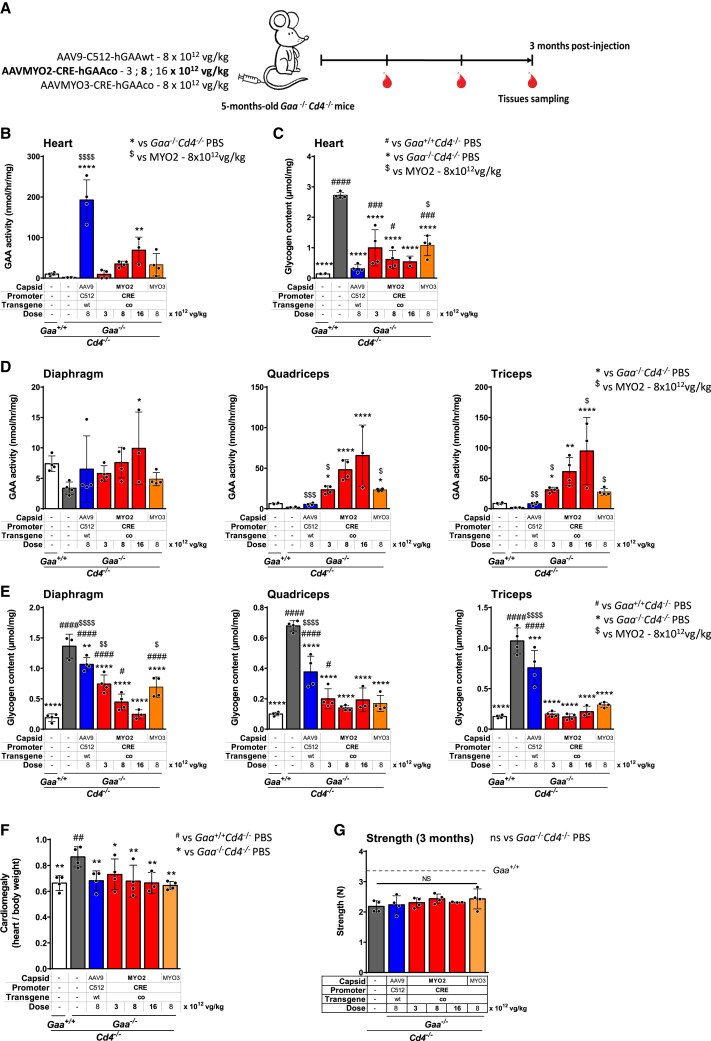
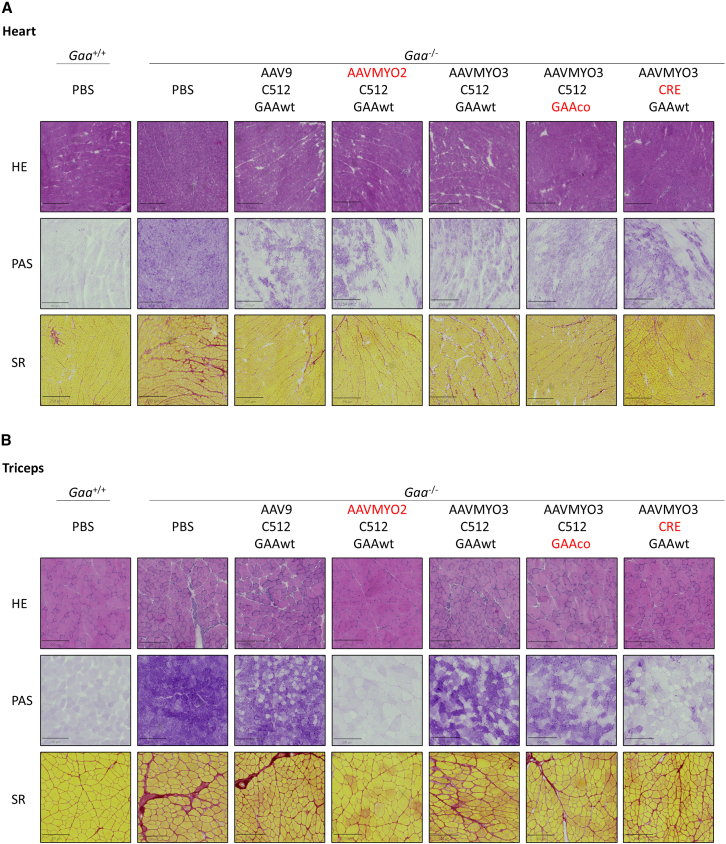
Pompe disease is a glycogen storage disorder caused by mutations in the acid α-glucosidase (GAA) gene, leading to reduced GAA activity and glycogen accumulation in heart and skeletal muscles. Enzyme replacement therapy with recombinant GAA, the standard of care for Pompe disease, is limited by poor skeletal muscle distribution and immune responses after repeated administrations. The expression of GAA in muscle with adeno-associated virus (AAV) vectors has shown limitations, mainly the low targeting efficiency and immune responses to the transgene. To address these issues, we developed AAV capsids with improved skeletal muscle targeting and reduced off-targeting. These capsids combined with codon optimization, muscle-specific -regulatory elements, and a synthetic promoter demonstrated a strong skeletal muscle tropism, reduced liver targeting, and enhanced GAA transgene expression and reduced glycogen accumulation in a mouse model. However, increased muscle-specific expression led to a robust anti-hGAA immune response. To circumvent this, the AAVMYO2 capsid was tested in immunodeficient mice and compared to AAV9 at different doses. The combination of AAVMYO2 with an optimized transgene expression cassette provided a dose-dependent advantage for glycogen reduction in skeletal muscles of mice. These findings support the potential of muscle-specific AAV gene therapy for Pompe disease at lower doses with greater specificity.
庞贝氏病是一种糖原贮积症,由酸性α-葡萄糖苷酶(GAA)基因突变引起,导致GAA活性降低,糖原在心脏和骨骼肌中蓄积。重组GAA酶替代疗法是庞贝氏病的标准治疗方法,但受骨骼肌分布不佳和反复给药后的免疫反应限制。用腺相关病毒(AAV)载体在肌肉中表达GAA已显示出局限性,主要是靶向效率低和对转基因的免疫反应。为解决这些问题,我们开发了具有改善的骨骼肌靶向性和降低脱靶性的AAV衣壳。这些衣壳与密码子优化、肌肉特异性调控元件和合成启动子相结合,在小鼠模型中表现出强烈的骨骼肌嗜性、降低的肝脏靶向性、增强的GAA转基因表达并减少了糖原蓄积。然而,肌肉特异性表达增加导致强烈的抗hGAA免疫反应。为规避此问题,在免疫缺陷小鼠中测试了AAVMYO2衣壳,并与不同剂量的AAV9进行比较。AAVMYO2与优化的转基因表达盒组合为降低小鼠骨骼肌中的糖原提供了剂量依赖性优势。这些发现支持了低剂量、高特异性的肌肉特异性AAV基因疗法治疗庞贝氏病的潜力。