
消泡剂 - 西甲硅油 - 对内镜清洗消毒的影响:前瞻性真实世界研究。
Influence of a defoaming agent - simethicone - on endoscope cleaning and disinfection: Prospective real-world study.
作者信息
Huang Juanjuan, Ling Tingsheng, Zhang Junlin, Wei Lianzhen, Chen Lei, Cao Huiwen, Wang Lei, Liu Yitong, Wen Dongkun, Ren Danrui, Li Yang
机构信息
Department of Nursing, Affiliated Hospital of Nanjing University of Chinese Medicine, Nanjing, China.
Endoscopy Center, Affiliated Hospital of Nanjing University of Chinese Medicine, Nanjing, China.
出版信息
Endosc Int Open. 2025 Sep 1;13:a26812659. doi: 10.1055/a-2681-2659. eCollection 2025.
BACKGROUND AND STUDY AIMS
Simethicone has been extensively utilized in endoscopy examinations and therapies; however, consensus regarding its impact on endoscopy cleaning is still lacking. The aim of this study was to assess impact of simethicone use during endoscopic examination on efficacy of endoscope cleaning.
METHODS
This was a prospective real-world study that involved use of varying concentrations of simethicone in the endoscope biopsy channel and auxiliary water channel.
RESULTS
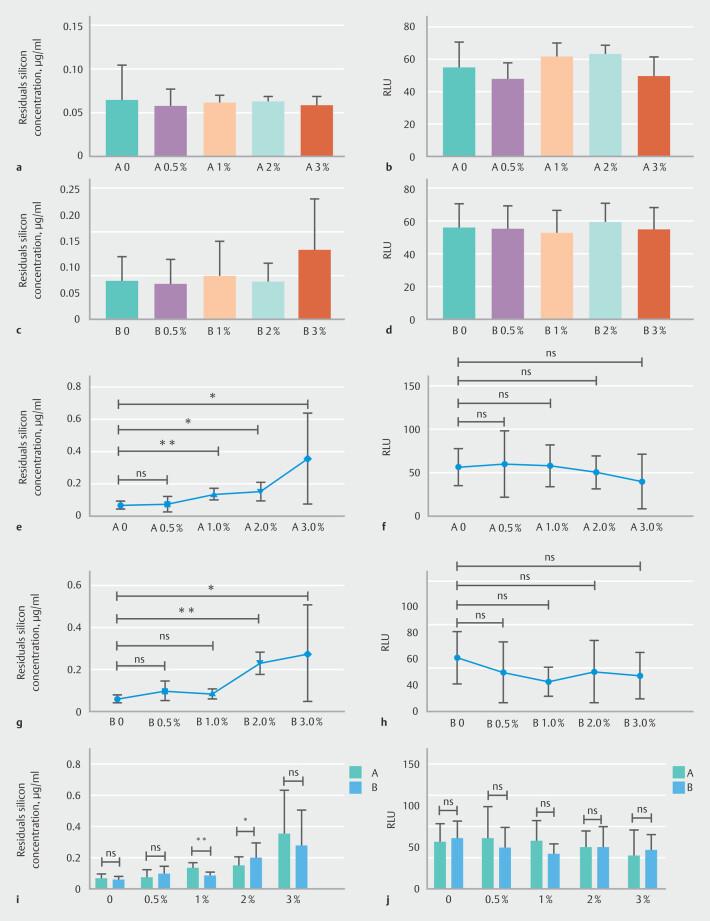
All simethicone residual amounts and adenosine triphosphate (ATP) values were analyzed every month for 1 year. Use of 1% and 2% concentrations of simethicone generally resulted in variations in residual simethicone levels between the two channels. There was no significant alteration in ATP values in any concentration between the two channels. However, there was a significant difference in ATP values between the two channels at the concentration of 1% simethicone. After 1 year of usage, suspected adherent was observed in the 2% simethicone group, whereas no crystals were detected adhering to the biopsy channel walls in the 1% group or the control group. Sensitivity analysis suggested that the study results did not differ between the gastroscopy and colonoscopy subgroups.
CONCLUSIONS
Simethicone may remain in the biopsy and water infusion channels, regardless of whether it is used or not. It is recommended to utilize a simethicone concentration of 1% or less when administering it through the biopsy or auxiliary water channels of the endoscope.
背景与研究目的
西甲硅油已广泛应用于内镜检查和治疗;然而,关于其对内镜清洗的影响仍缺乏共识。本研究的目的是评估内镜检查期间使用西甲硅油对内镜清洗效果的影响。
方法
这是一项前瞻性现实世界研究,涉及在内镜活检通道和辅助水通道中使用不同浓度的西甲硅油。
结果
对1年中每月的所有西甲硅油残留量和三磷酸腺苷(ATP)值进行分析。使用1%和2%浓度的西甲硅油通常会导致两个通道之间残留西甲硅油水平的变化。两个通道在任何浓度下的ATP值均无显著变化。然而,在1%西甲硅油浓度下,两个通道的ATP值存在显著差异。使用1年后,在2%西甲硅油组中观察到疑似附着物,而在1%组或对照组中未检测到晶体附着在活检通道壁上。敏感性分析表明,胃镜检查和结肠镜检查亚组之间的研究结果没有差异。
结论
无论是否使用,西甲硅油都可能残留在活检通道和注水通道中。建议在内镜活检或辅助水通道给药时,使用浓度为1%或更低的西甲硅油。




 Zotero 插件