Araújo Beatriz, Rivera André, de Oliveira Tapioca Vanessa, Barbosa Lucas M, Caetano Lucas, Abreu Samuel Navarro, Mohanty Sanghamitra, Ternes Caique M P, Serpa Frans, Tamirisa Kamala P, d'Avila André, Natale Andrea
Departament of Medicine, Nove de Julho University, São Bernardo do Campo, Brazil.
Department of Medicine, Bahiana School of Medicine and Public Health, Salvador, Brazil.
Europace. 2025 Sep 1;27(9). doi: 10.1093/europace/euaf156.
Catheter ablation is the standard treatment for symptomatic atrial fibrillation (AF) and can be performed under general anaesthesia (GA) or varying levels of sedation to optimize patient comfort and lesion formation. However, the effect of different anaesthesia strategies on AF recurrence rates remains uncertain.
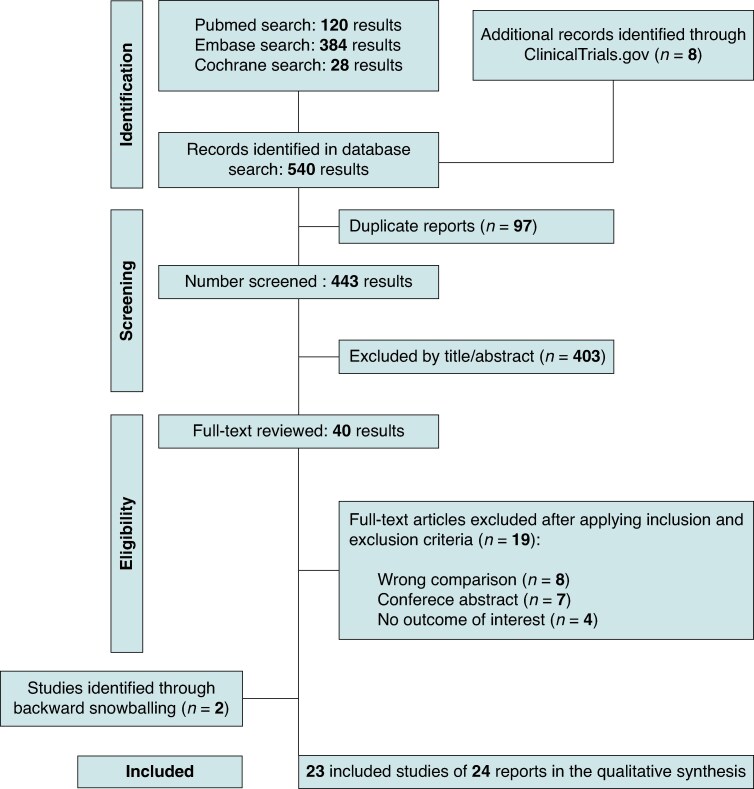
We systematically searched PubMed, Embase, Cochrane, and ClinicalTrials.gov for randomized controlled trials (RCTs) and observational studies comparing outcomes of catheter ablation under GA vs. sedation (including deep, moderate, and conscious sedation). We pooled risk ratios (RR) with 95% confidence intervals (CI) with a random effects model. R version 4.4.1 was used for statistical analyses. Our systematic review and meta-analysis included 6 RCTs and 17 observational studies, corresponding to 12 302 patients assigned to either sedation (n = 8952) or GA (n = 3350). There was no difference in recurrence of atrial tachyarrhythmias (ATAs) between groups (RR 1.15; 95% CI 0.97-1.36; P = 0.10; 95% prediction interval 0.66-2.01). There was no significant subgroup interaction in the recurrence of AF according to sedation type (conscious vs. mild vs. moderate sedation vs. deep sedation) (P = 0.20) or AF type (persistent AF vs. non-persistent) (P = 0.20).
In patients undergoing catheter ablation for AF, there was no significant difference in recurrence of ATA between GA and sedation.
导管消融是症状性心房颤动(AF)的标准治疗方法,可在全身麻醉(GA)或不同程度的镇静下进行,以优化患者舒适度和病灶形成。然而,不同麻醉策略对AF复发率的影响仍不确定。
我们系统检索了PubMed、Embase、Cochrane和ClinicalTrials.gov,以查找比较GA与镇静(包括深度、中度和清醒镇静)下导管消融结果的随机对照试验(RCT)和观察性研究。我们采用随机效应模型汇总风险比(RR)及95%置信区间(CI)。使用R版本4.4.1进行统计分析。我们的系统评价和荟萃分析纳入了6项RCT和17项观察性研究,对应12302例患者,分为镇静组(n = 8952)或GA组(n = 3350)。两组之间房性快速性心律失常(ATA)复发率无差异(RR = 1.15;95% CI 0.97 - 1.36;P = 0.10;95%预测区间0.66 - 2.01)。根据镇静类型(清醒镇静与轻度镇静与中度镇静与深度镇静)(P = 0.20)或AF类型(持续性AF与非持续性AF)(P = 0.20),AF复发率无显著亚组交互作用。
在接受AF导管消融的患者中,GA和镇静之间ATA复发率无显著差异。