Kelly R H, Wolstencroft R A, Dumonde D C, Balfour B M
Clin Exp Immunol. 1972 Jan;10(1):49-65.
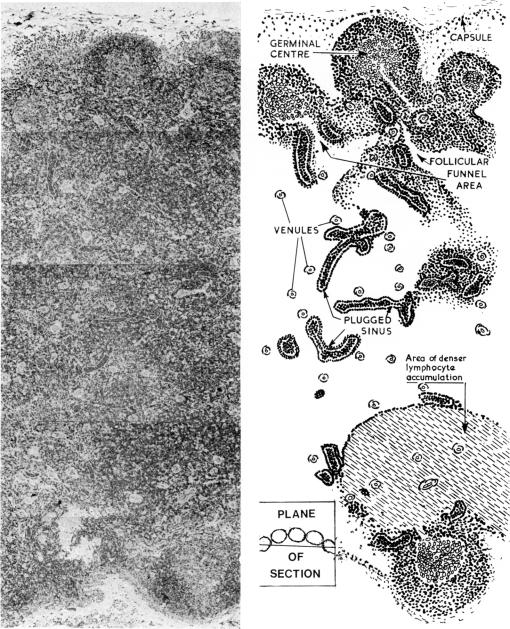
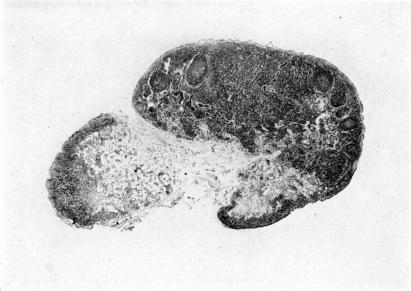
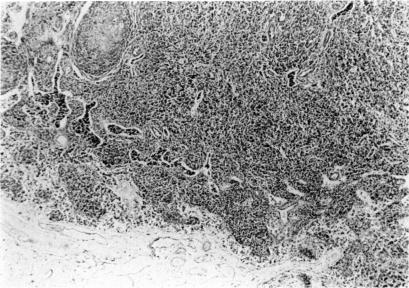
The experiments reported here were concerned with determining the effects of lymphocyte activation products (LAP) on lymph node architecture, and with assaying afferent lymph for evidence of the peripheral release of LAP during the induction of an immune response. Intralymphatic inoculation of purified homologous LAP into guinea-pigs resulted in increased weight and cellular content of the draining node. Histologically these nodes showed paracortical distension and dense aggregations of lymphoid cells or `cellular plugs' in the paracortical sinuses. It was suggested that one effect of LAP may be to cause cellular retention in the paracortex of lymph nodes by regulating the rate of cell exit via the sinuses of the node. The peripheral lymph of rabbits was assayed for its ability to inhibit macrophage migration and to accelerate lymphocyte DNA synthesis after stimulation with three different antigens. The antigens were chosen to give a spectrum which ranged from a primarily humoral response (erythrocyte stimulation) through a mixed humoral and cell-mediated response (diphtheria toxoid stimulation) to a predominantly cell-mediated type of response (skin contact sensitization to fluorodinitrobenzene–FDNB). Paracortical distension with lymphoid cell sinus plugging, similar to that observed in the guinea-pig nodes following intralymphatic injection of LAP, were common features of both the diphtheria toxoid and FDNB responses. It was concluded that the development of this type of sinus plugging and paracortical distension might be related to multiple activities of LAP generated and released either at the peripheral antigen depot or within the draining node.
本文报道的实验旨在确定淋巴细胞激活产物(LAP)对淋巴结结构的影响,并检测输入淋巴液,以寻找免疫应答诱导过程中LAP外周释放的证据。将纯化的同源LAP经淋巴管接种到豚鼠体内,导致引流淋巴结重量增加和细胞含量增多。组织学检查显示,这些淋巴结副皮质区扩张,副皮质窦中有密集的淋巴细胞聚集或“细胞栓”。有人提出,LAP的一个作用可能是通过调节细胞经淋巴结窦离开的速率,使细胞滞留在淋巴结的副皮质区。检测了兔外周淋巴液在用三种不同抗原刺激后抑制巨噬细胞迁移和加速淋巴细胞DNA合成的能力。选择这些抗原是为了涵盖从主要的体液应答(红细胞刺激)到混合的体液和细胞介导应答(白喉类毒素刺激),再到主要的细胞介导应答类型(对氟二硝基苯 - FDNB的皮肤接触致敏)的一系列反应。白喉类毒素和FDNB应答的共同特征是副皮质区扩张和淋巴窦被淋巴细胞堵塞,这与豚鼠淋巴结经淋巴管注射LAP后观察到的情况相似。得出的结论是,这种类型的窦堵塞和副皮质区扩张的发展可能与在外周抗原储存部位或引流淋巴结内产生和释放的LAP的多种活性有关。