Anand Sonia S, Kandasamy Sujane, Marchand Miles, Kavousi Maryam, Gulati Martha, Deanfield John, Quyyumi Arshed A
Chanchlani Research Centre, Department of Medicine, McMaster University, Hamilton, Ontario, Canada.
Mary Heersink School of Global Health and Social Medicine, McMaster University, Hamilton, Ontario, Canada.
Lancet Reg Health Eur. 2025 Aug 21;56:101371. doi: 10.1016/j.lanepe.2025.101371. eCollection 2025 Sep.
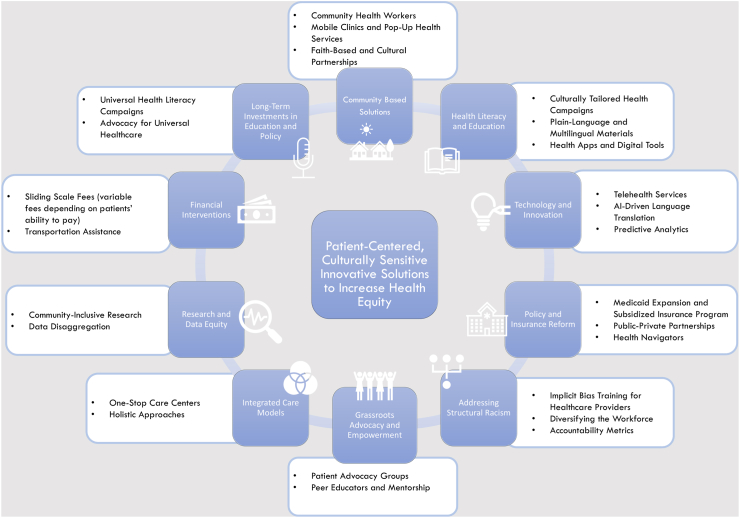
Cardiovascular disease (CVD) and its risk factors are more prevalent among traditionally marginalized racial, ethnic, and Indigenous groups. These populations also often face greater barriers to accessing cardiovascular health care, further contributing to the health equity gap. To address the challenge of inequalities and disparities in cardiovascular health outcomes, the Lancet Regional Health-Europe convened experts to evaluate the current state of knowledge on inequalities and disparities in cardiovascular health among marginalized populations and propose recommendations to address these disparities. This Series paper aims to review disparities in CVD referring to coronary heart disease and stroke, based on race, ethnicity, ancestry, and Indigeneity emphasizing the intersection of these factors with sex, gender, and socioeconomic status (SES) across Europe and North America. These regions were chosen as they have well established health-care systems, with persistent, and in some regions widening, disparities in cardiovascular health and outcomes. Ethnicity and race should be measured in a standardized manner in health-care administrative databases to identify high risk groups who might need focused programmes to improve health-care access and to address bias and inequities in care. Strategies that policymakers, health-care professionals, and advocacy groups can use to advance cardiovascular health equity include improving access to health-care systems and research for high-risk communities, fostering trust between these communities and public health providers, and enhancing the delivery of evidence-based therapies for the prevention and treatment of CVD.
心血管疾病(CVD)及其危险因素在传统上处于边缘地位的种族、族裔和原住民群体中更为普遍。这些人群在获得心血管保健方面也往往面临更大的障碍,这进一步加剧了健康公平差距。为应对心血管健康结果方面的不平等和差异挑战,《柳叶刀-欧洲区域健康》召集专家评估边缘化人群心血管健康不平等和差异的现有知识状况,并提出解决这些差异的建议。本系列论文旨在回顾基于种族、族裔、血统和原住民身份的冠心病和中风等心血管疾病的差异,强调这些因素与欧洲和北美的性别、社会经济地位(SES)的交叉影响。选择这些地区是因为它们拥有完善的医疗保健系统,心血管健康和结果存在持续的差异,在某些地区差异还在扩大。在医疗保健管理数据库中应以标准化方式衡量种族和族裔,以确定可能需要针对性项目来改善医疗保健可及性以及解决医疗保健中的偏见和不公平现象的高风险群体。政策制定者、医疗保健专业人员和倡导团体可用于促进心血管健康公平的策略包括改善高风险社区获得医疗保健系统和研究的机会,促进这些社区与公共卫生提供者之间的信任,以及加强基于证据的心血管疾病预防和治疗疗法的提供。