
对从绿鬣蜥分离并在体外爬行动物细胞中繁殖的一种新型疱疹病毒的电子显微镜观察。
Electron microscopy observations on a new herpes-type virus isolated from Iguana iguana and propagated in reptilian cells in vitro.
作者信息
Zeigel R F, Clark H F
出版信息
Infect Immun. 1972 Apr;5(4):570-82. doi: 10.1128/iai.5.4.570-582.1972.
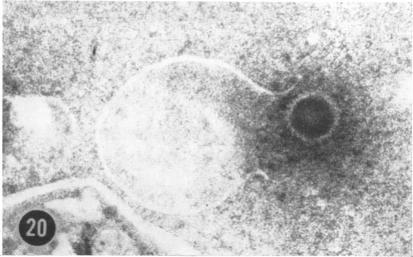
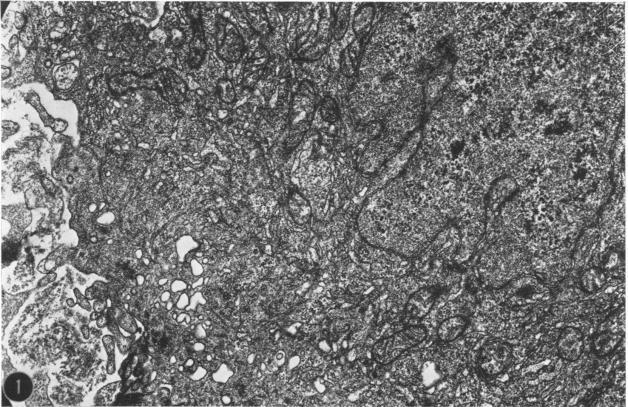
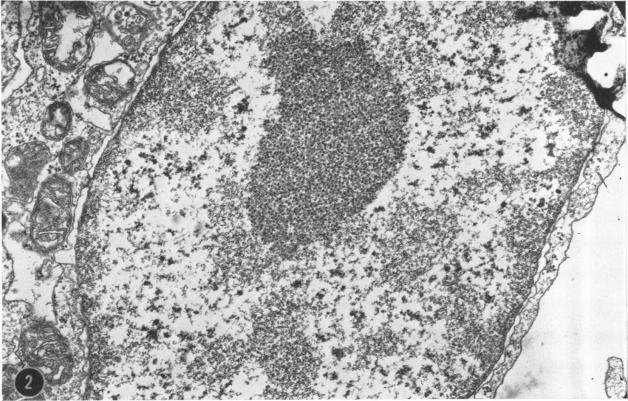
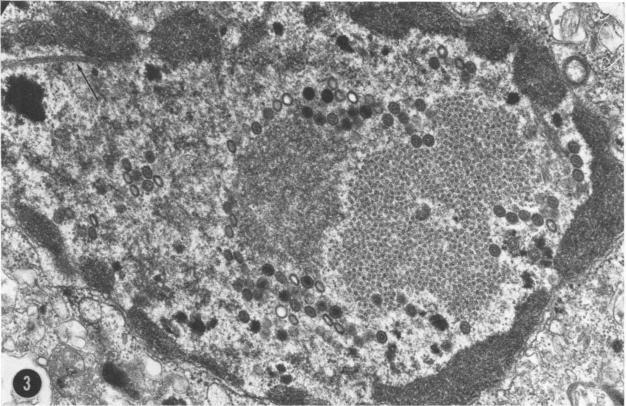
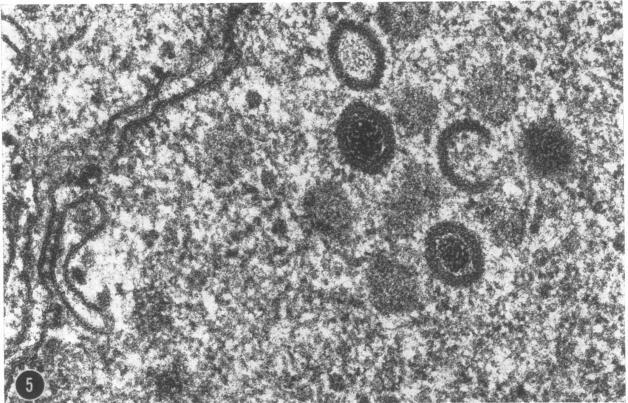
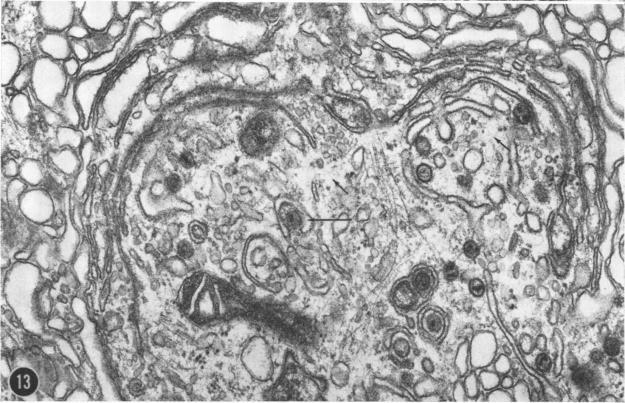
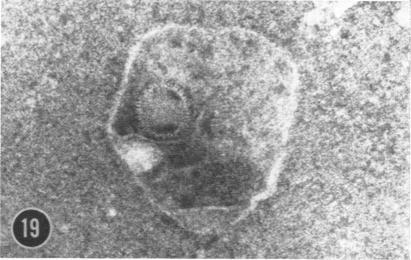
Ultrastructural observations on a new viral isolate, designated iguana virus, indicate that it is consistently present in intranuclear inclusions, possesses a +/- 115-nm nucleocapsid, ranges from 165 to 300 nm in diameter in the enveloped form, and exhibits cubic symmetry (probably 162 capsomeres). It is concluded that it is a herpes-type virus, the morphological evidence being in agreement with and supporting the biological and physical characteristics presented by Clark and Karzon. Several fine-structural features, among them the encapsidization of small 35-nm hexagonal bodies and the viral membrane envelope enclosure of cell-derived moieties are presented and discussed.
对一种新的病毒分离株(命名为鬣蜥病毒)的超微结构观察表明,它始终存在于核内包涵体中,具有约115纳米的核衣壳,包膜形式的直径范围为165至300纳米,并呈现立方对称(可能有162个壳粒)。得出的结论是,它是一种疱疹型病毒,形态学证据与克拉克和卡尔宗提出的生物学和物理特征一致并提供了支持。文中展示并讨论了几个精细结构特征,其中包括35纳米的小六角体的衣壳化以及细胞衍生部分的病毒膜包膜包裹。





 Zotero 插件