Evans M J, Newton H E, Levy L
Infect Immun. 1973 Jan;7(1):76-85. doi: 10.1128/iai.7.1.76-85.1973.
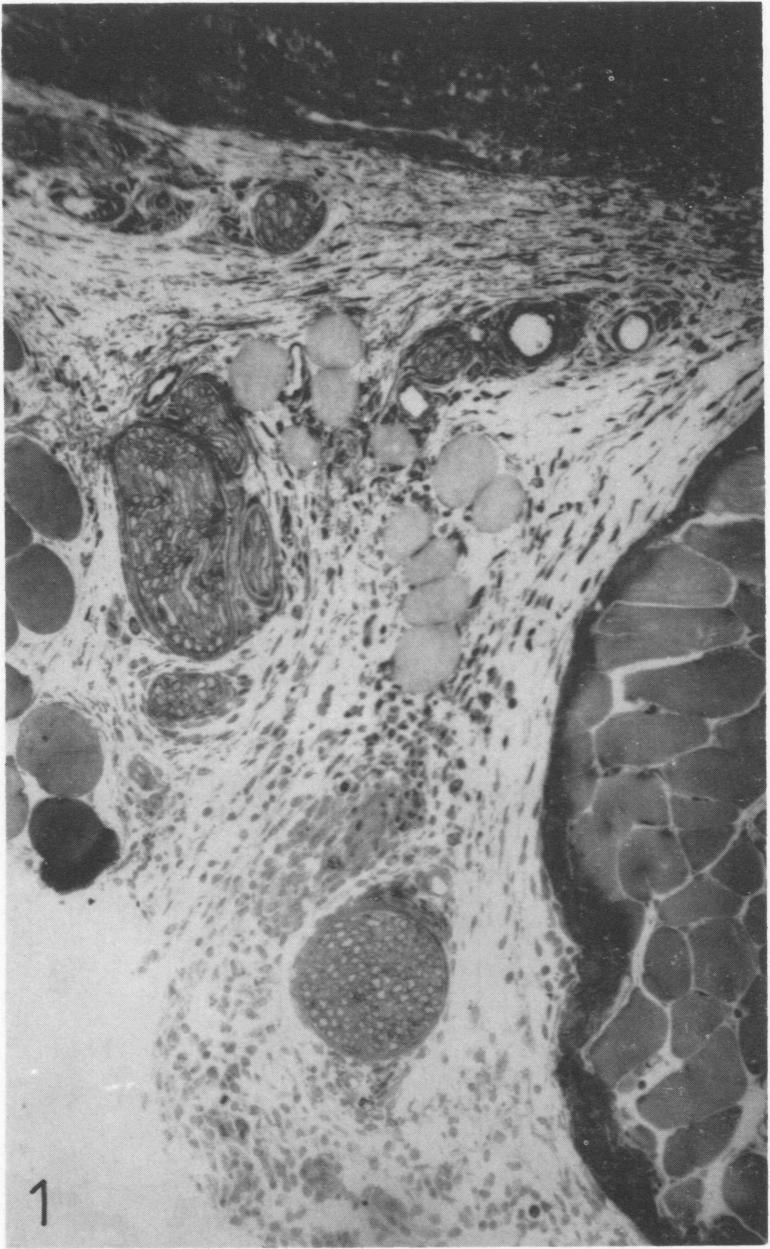
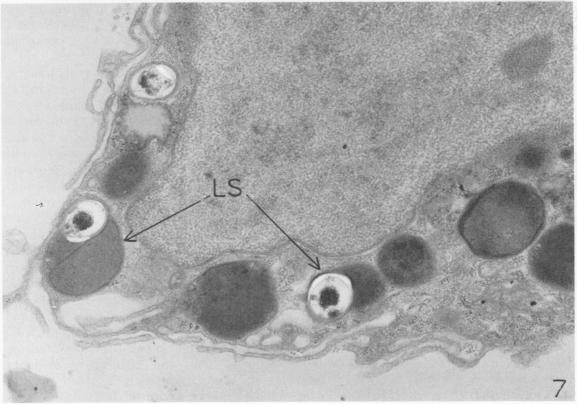
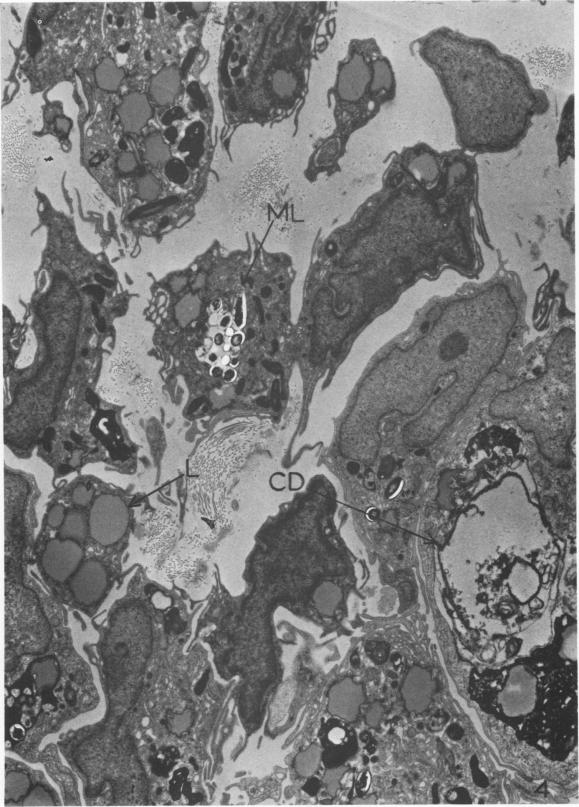
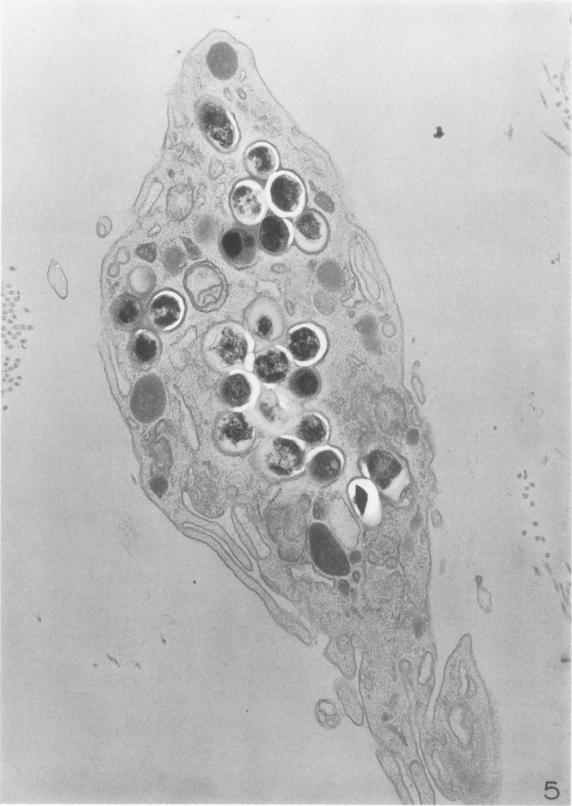
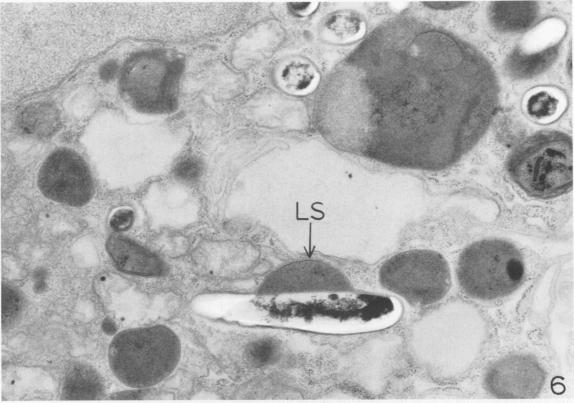
The purpose of these experiments was to study the early response of mouse foot pads to Mycobacterium leprae. To accomplish this, mice were inoculated in both foot pads with large and small numbers of organisms. The animals were sacrificed at intervals from 2 hr to 27 days after inoculation. The microscopical results, which utilized normal BALB/c and thymectomized-irradiated B6C3F(1) mice, showed that the tissue responded first with an influx of polymorphonuclear cells and later lymphocytes and monocytes. The latter formed a diffuse infiltrate in the tissues. Under conditions where growth normally occurred, the mononuclear cell infiltrate did not persist. The organisms were found within phagocytic cells and the interstitial space. They were always contained within a phagosome and often fused with lysosomes. Most of the organisms appeared to be degenerating at all of the times studied. No organisms were observed in striated muscle fibers of tissues studied.
这些实验的目的是研究小鼠足垫对麻风分枝杆菌的早期反应。为实现这一目的,给小鼠的双足垫接种大量和少量的麻风分枝杆菌。在接种后2小时至27天的不同时间点处死动物。利用正常BALB/c小鼠和胸腺切除-照射的B6C3F(1)小鼠得到的显微镜检查结果显示,组织首先对多形核细胞的流入产生反应,随后是淋巴细胞和单核细胞。后者在组织中形成弥漫性浸润。在通常发生生长的条件下,单核细胞浸润不会持续存在。在吞噬细胞和间质空间中发现了麻风分枝杆菌。它们总是包含在吞噬体中,并且经常与溶酶体融合。在所有研究的时间点,大多数麻风分枝杆菌似乎都在退化。在所研究组织的横纹肌纤维中未观察到麻风分枝杆菌。