Kahane I, Razin S
J Bacteriol. 1969 Oct;100(1):187-94. doi: 10.1128/jb.100.1.187-194.1969.
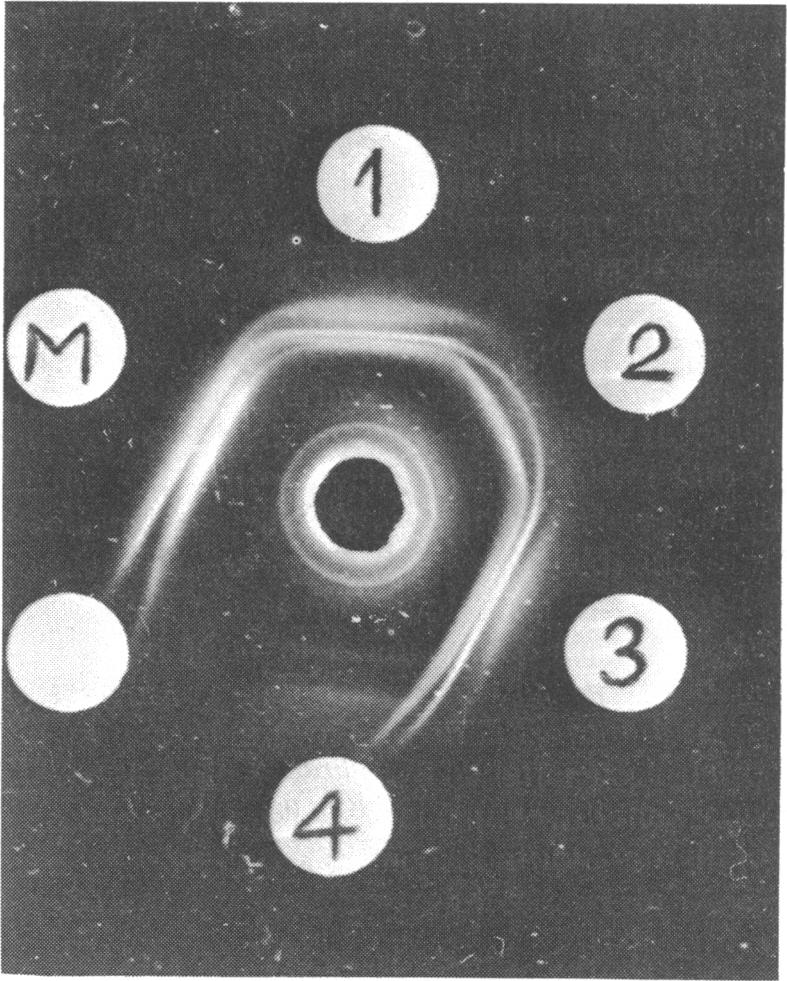
The antigens responsible for the production of antibodies to Mycoplasma laidlawii and M. gallisepticum causing growth and metabolic inhibition of these organisms were localized in the cell membrane. Various membrane fractions were tested for serological activity. Membrane lipids were completely or almost completely inactive, whereas several preparations of defatted membrane proteins retained some serological activity, shown by their ability to stimulate metabolic inhibition antibody in rabbits and to adsorb metabolic inhibition antibody and form precipitation lines with an antiserum to the membrane. When the membranes were heated to 65 C for 1 hr, they virtually lost their ability to adsorb metabolic inhibition antibody, which suggests that the antigenic determinants are proteins. Serological activity was retained in reaggregated membranes obtained by dialysis against Mg(2+) of membranes solubilized in sodium dodecyl sulfate. The amount of solubilized membrane protein and lipid incorporated into the reaggregated membranes could be regulated by varying the Mg(2+) concentration. As the serological tests indicated that the various membrane antigens were selectively incorporated into the different reaggregated membranes, the use of controlled reaggregation of solubilized membranes is suggested as a new tool for the fractionation and antigenic analysis of membrane proteins.
导致对莱氏无胆甾原体和鸡败血支原体产生抗体并引起这些微生物生长和代谢抑制的抗原定位于细胞膜。对各种膜组分进行了血清学活性测试。膜脂完全或几乎完全无活性,而几种脱脂膜蛋白制剂保留了一些血清学活性,这表现在它们刺激兔体内代谢抑制抗体以及吸附代谢抑制抗体并与膜抗血清形成沉淀线的能力上。当膜在65℃加热1小时后,它们几乎失去了吸附代谢抑制抗体的能力,这表明抗原决定簇是蛋白质。通过对溶解于十二烷基硫酸钠中的膜进行透析,使其与Mg(2+)重新聚集,重新聚集的膜保留了血清学活性。通过改变Mg(2+)浓度,可以调节重新聚集的膜中掺入的溶解膜蛋白和脂质的量。由于血清学测试表明各种膜抗原被选择性地掺入到不同的重新聚集的膜中,因此建议使用溶解膜的可控重新聚集作为膜蛋白分级分离和抗原分析的新工具。