Knochel J P, Dotin L N, Hamburger R J
J Clin Invest. 1972 Feb;51(2):242-55. doi: 10.1172/JCI106809.
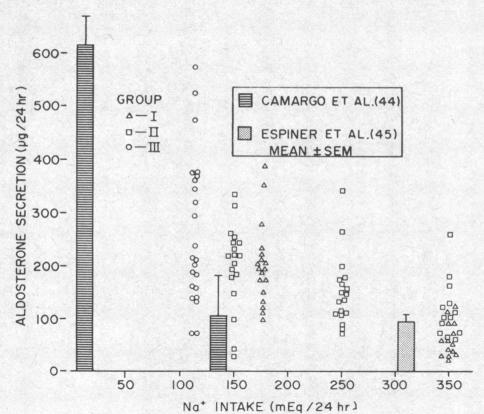
Serial estimations of exchangeable (42)K showed that six volunteer subjects undergoing intensive physical conditioning in a hot climate sustained a mean deficit of 517 mEq. This deficit occurred despite a daily potassium intake of 100 mEq. Simultaneous values for lean body mass rose suggesting that potassium deficiency was not the result of catabolism. Although sweating was the major avenue by which the deficit occurred, daily excretion of potassium into the urine when each subject was maximally deficient ranged from 46 to 75 mEq and thus was inappropriately high for potassium-depleted subjects. Despite high intakes of sodium and excretion of corresponding quantities into the urine, Na/K ratios in sweat were low thus indicating unsuppressed activity of aldosterone on sweat glands. Moreover, excretion and secretion of aldosterone and in many instances, plasma renin activity, appeared to be high with respect to sodium intake. These findings suggest that intense physical work in the heat stimulates higher production of aldosterone than would occur in nonexercising subjects on similar sodium intakes. Similar to the phenomenon of mineralocorticoid escape, such overproduction of aldosterone in the presence of conditions permitting excretion of sodium into the urine could facilitate continued excretion of potassium by the kidney despite serious potassium depletion. As a consequence, the kidney played a role in the genesis of potassium depletion in these subjects. In contrast to subjects undergoing conditioning in the summer months, potassium depletion did not occur in 16 subjects during identical training under cooler environmental conditions.
对可交换(42)钾的系列测定表明,六名在炎热气候下进行强化体能训练的志愿者受试者平均缺钾517毫当量。尽管每日钾摄入量为100毫当量,但仍出现了这种缺钾情况。同时,瘦体重值上升,这表明钾缺乏并非分解代谢的结果。虽然出汗是缺钾发生的主要途径,但当每个受试者极度缺钾时,其每日尿钾排泄量在46至75毫当量之间,因此对于缺钾的受试者来说,这个排泄量过高。尽管钠摄入量高且尿中排泄相应量的钠,但汗液中的钠/钾比值较低,这表明醛固酮对汗腺的活性未受抑制。此外,醛固酮的排泄和分泌,以及在许多情况下血浆肾素活性,相对于钠摄入量似乎都很高。这些发现表明,在炎热环境下进行剧烈体力劳动比在摄入相似钠量的非运动受试者中刺激醛固酮产生的量更高。与盐皮质激素逃逸现象类似,在存在允许钠排泄到尿液中的条件下,醛固酮的这种过度产生可能会促进肾脏持续排泄钾,尽管存在严重的钾缺乏。因此,肾脏在这些受试者钾缺乏的发生过程中起到了作用。与在夏季进行体能训练的受试者不同,16名受试者在较凉爽环境条件下进行相同训练时未出现钾缺乏情况。