Forstner J F, Jabbal I, Qureshi R, Kells D I, Forstner G G
Biochem J. 1979 Sep 1;181(3):725-32. doi: 10.1042/bj1810725.
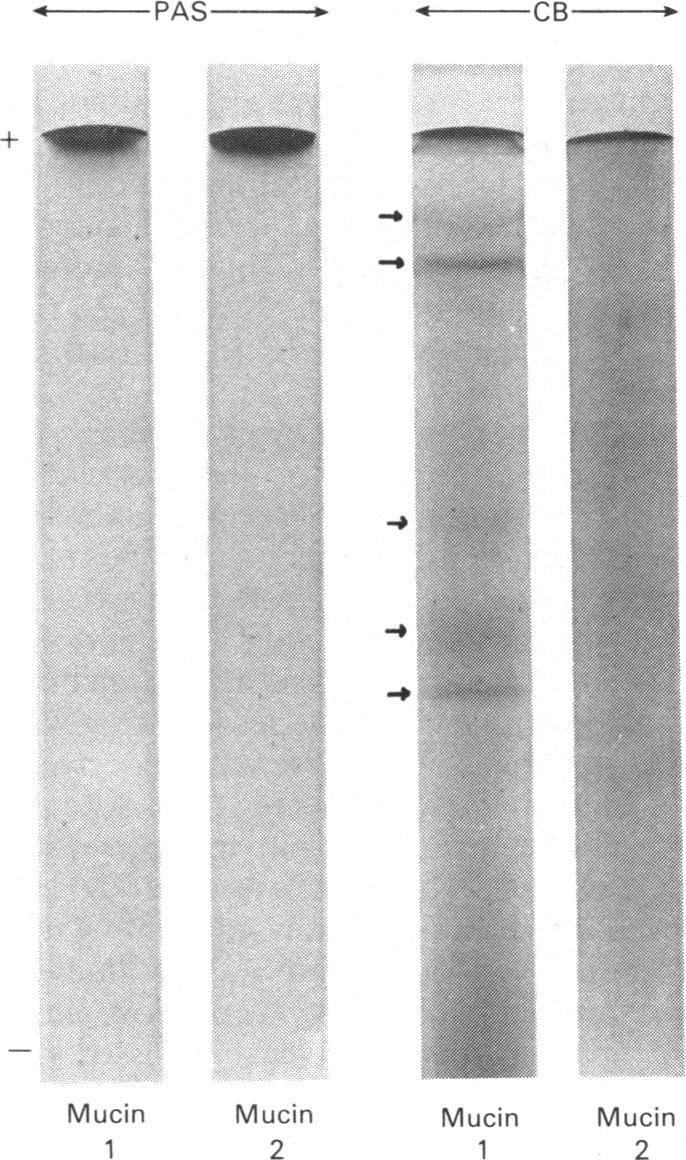
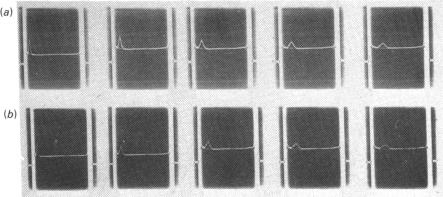
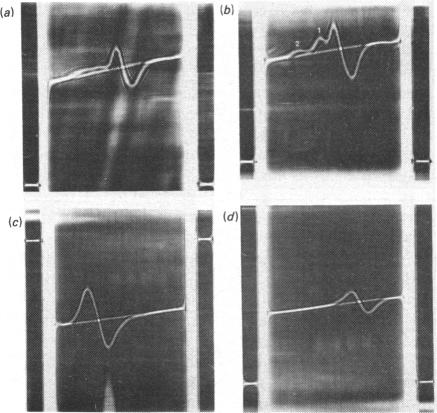
Goblet-cell mucin (mucin 1) was isolated and purified from human small-intestinal scrapings. After application of mucin 1 to DEAE-Bio-Gel (A) columns, most of the glycoprotein (76-94% of hexoses) was eluted in the first peak (designated mucin 2). Minor amounts of acidic glycoproteins were eluted with 0.2m- and 0.4m-NaCl in later peaks. Analyses of mucin 1 and mucin 2 revealed mucin 2 to be a monodisperse highly glycosylated glycoprotein containing 6.3% by wt. of protein, N-acetylgalactosamine, N-acetylglucosamine, galactose and fucose. Mucin 1 was similar in composition, but was polydisperse and contained more protein (12.3% by wt.) as well as N-acetylneuraminic acid. Analytical CsCl-gradient ultracentrifugation showed both mucin 1 and mucin 2 to have a major component with an average buoyant density of 1.47000g/ml. Mucin 1 also contained a slightly less-dense minor glycoprotein component. After exhaustive reduction and alkylation mucin 1 retained its major component, but partly dissociated into two lighter glycoprotein components. Mucin 2, in contrast, did not change its density distribution after reduction. Band ultracentrifugation in (2)H(2)O-containing iso-osmotic buffers showed that mucin 1 contained a major fast-sedimenting component (s(o)=37+/-2S), and a minor amount of a slower-sedimenting component. After reduction there was an increased quantity of the latter component, for which an s(o) value of 14.5S was calculated. In contrast, mucin 2 was unaltered by reduction (s(o)=33+/-2S). These findings indicate that the major component of goblet-cell mucin (mucin 2) does not dissociate after S-S-bond reduction, and thus does not apparently rely for its polymeric structure on the association of subunits through covalent disulphide bonds. However, the effects of reduction on mucin 1 suggest that in the native mucin intramolecular disulphide bonds in the minor glycoproteins may stabilize their structure, permitting secondary non-covalent interactions to develop with the major dense mucin (mucin 2) protein.
杯状细胞黏蛋白(黏蛋白1)从人小肠刮屑中分离纯化得到。将黏蛋白1应用于DEAE-生物凝胶(A)柱后,大部分糖蛋白(己糖的76 - 94%)在第一个峰(命名为黏蛋白2)中洗脱出来。少量酸性糖蛋白在随后的峰中用0.2m和0.4m氯化钠洗脱。对黏蛋白1和黏蛋白2的分析表明,黏蛋白2是一种单分散的高度糖基化糖蛋白,按重量计含有6.3%的蛋白质、N-乙酰半乳糖胺、N-乙酰葡糖胺、半乳糖和岩藻糖。黏蛋白1的组成相似,但具有多分散性,含有更多蛋白质(按重量计12.3%)以及N-乙酰神经氨酸。分析性CsCl梯度超速离心显示黏蛋白1和黏蛋白2都有一个主要成分,平均浮力密度为1.47000g/ml。黏蛋白1还含有一个密度稍低的次要糖蛋白成分。在进行彻底的还原和烷基化后,黏蛋白1保留了其主要成分,但部分解离成两个较轻的糖蛋白成分。相比之下,黏蛋白2在还原后其密度分布没有变化。在含(2)H(2)O的等渗缓冲液中进行区带超速离心表明,黏蛋白1含有一个主要的快速沉降成分(s(o) = 37 ± 2S)和少量较慢沉降成分。还原后,后一种成分的量增加,计算得其s(o)值为14.5S。相比之下,黏蛋白2在还原后没有变化(s(o) = 33 ± 2S)。这些发现表明,杯状细胞黏蛋白(黏蛋白2)的主要成分在二硫键还原后不会解离,因此其聚合结构显然不依赖于亚基通过共价二硫键的缔合。然而,还原对黏蛋白1的影响表明,在天然黏蛋白中,次要糖蛋白中的分子内二硫键可能稳定其结构,从而允许与主要的致密黏蛋白(黏蛋白2)蛋白发生二级非共价相互作用。