Ron D, Tattersall P, Tal J
J Virol. 1984 Oct;52(1):63-9. doi: 10.1128/JVI.52.1.63-69.1984.
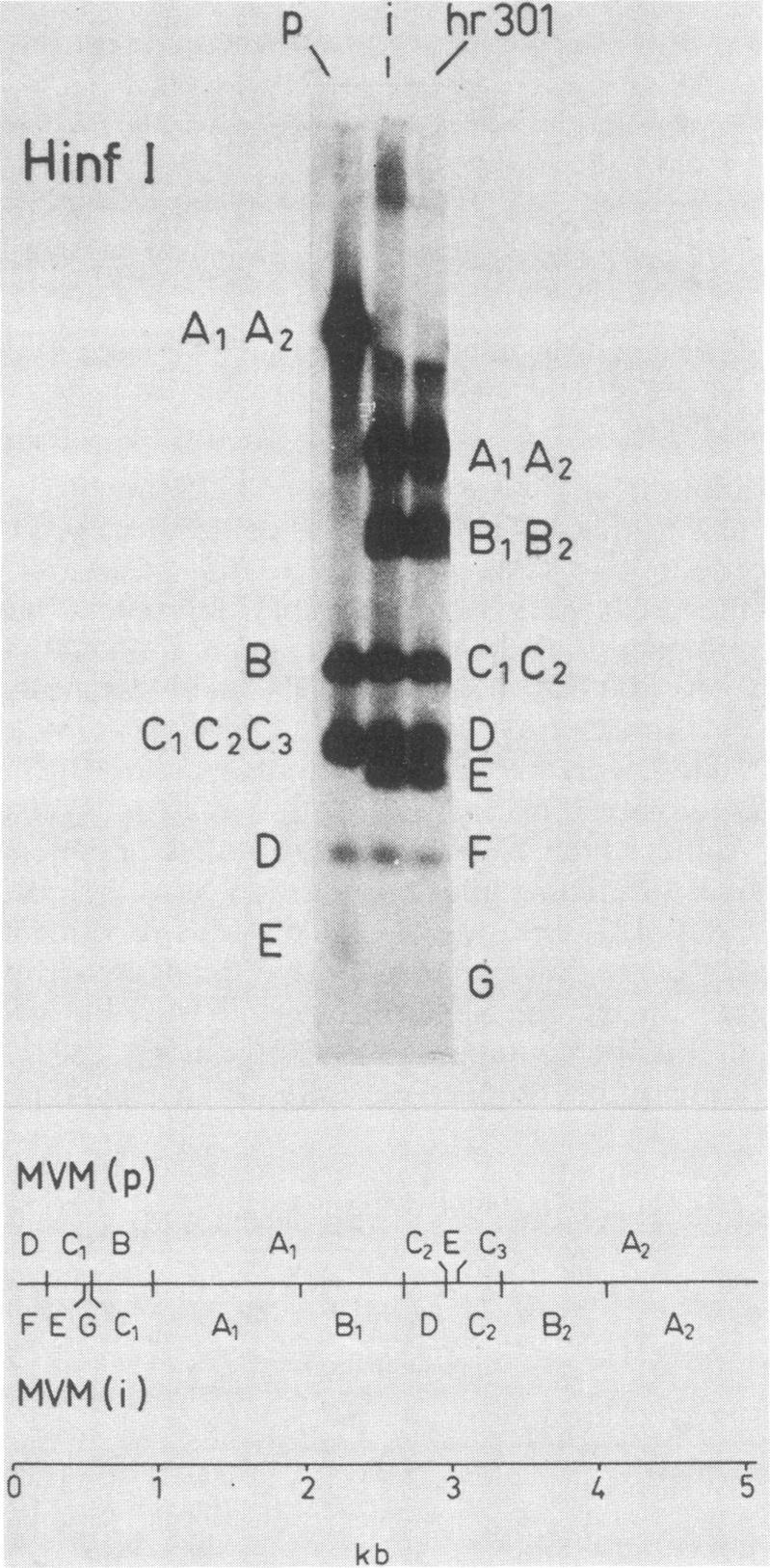
Minute virus of mice (i), the lymphotropic strain of minute virus of mice, established a persistent infection in normally restrictive L cells. The carrier state, which lasted 150 days, exhibited three clearly distinguishable stages. During the early stage (days 1 to 10 postinfection), small amounts of virus were formed. A "crisis" then developed that lasted 50 to 60 days and was characterized by massive cell lysis and high titers of virus. This was followed by a 70- to 80-day period in which small but stable quantities of virus were produced. Virus shed by the carrier culture during the latter phase had acquired an altered host range, namely, it had lost its ability to replicate in T-lymphocyte cell lines and had adapted to growth in L cells. Virus isolated at this time from a single plaque in L cells, designated hr301, was shown to possess similar host range properties. No differences, however, could be found between the DNAs of minute virus of mice (i) and of hr301 by restriction enzyme analysis, suggesting that the mutation that affected the viral host range did not involve an extensive region of the viral genome.
小鼠微小病毒(i),即小鼠微小病毒的嗜淋巴细胞株,在通常具有限制性的L细胞中建立了持续感染。持续150天的携带状态呈现出三个明显可区分的阶段。在早期阶段(感染后1至10天),形成少量病毒。接着出现持续50至60天的“危机”,其特征是大量细胞裂解和高滴度病毒。随后是一个70至80天的时期,在此期间产生少量但稳定的病毒量。携带培养物在后期释放的病毒获得了改变的宿主范围,即它失去了在T淋巴细胞系中复制的能力,并适应了在L细胞中的生长。此时从L细胞中的单个噬斑分离出的病毒,命名为hr301,显示出具有相似的宿主范围特性。然而,通过限制性酶分析未发现小鼠微小病毒(i)和hr301的DNA之间存在差异,这表明影响病毒宿主范围的突变并不涉及病毒基因组的广泛区域。