Goldman R C, White D, Orskov F, Orskov I, Rick P D, Lewis M S, Bhattacharjee A K, Leive L
J Bacteriol. 1982 Sep;151(3):1210-21. doi: 10.1128/jb.151.3.1210-1221.1982.
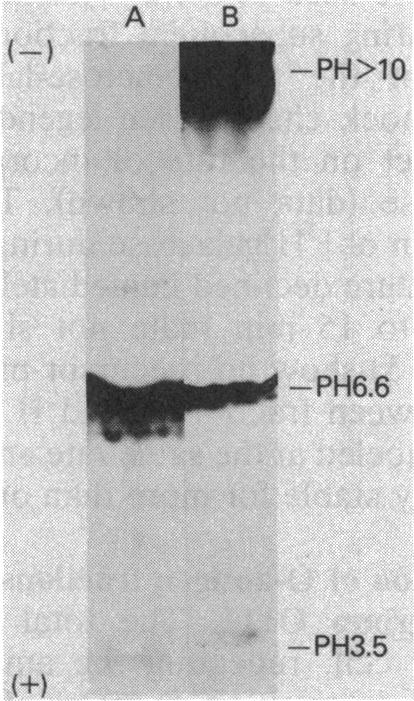
The repeating pentasaccharide of O-antigen from Escherichia coli O111 contains galactose, glucose, N-acetylglucosamine, and colitose, the latter representing the major antigenic determinant. Phenol extraction of this strain was previously shown to release two fractions (I and II) containing O-antigen carbohydrate, and both fractions were believed to be lipopolysaccharide. We have now characterized fractions I and II and conclude that only fraction II represents lipopolysaccharide. Fraction II contains phosphate, 2-keto-3-deoxyoctonate, beta-hydroxymyristic acid, and potent endotoxin activity, whereas fraction I was deficient in all of these properties of the lipid A and core oligosaccharide regions of lipopolysaccharide. Fractions I and II each represented 50% of the total cellular O-antigen, and both were present on the cell surface. Both fractions were metabolically stable, and no precursor-product relationship existed between them. Fraction II had a number-average molecular weight of 15,800, corresponding to an average of 12 O-antigen repeats per molecule. In contrast, fraction I had a number-average molecular weight of 354,000, corresponding to an average of 404 O-antigen repeats per molecule. Before heat treatment, cells of E. coli O111 are poorly agglutinated by O-serum; although this indicates the presence of a capsule, the corresponding K-antigen was never detected. We conclude that fraction I, when present on the cell surface, inhibits agglutination of unheated cultures of E. coli O111 by O-serum because: (i) a variant strain which lacks fraction I was agglutinated by O-serum without prior heating; (ii) erythrocytes coated with purified fraction I behaved like bacteria containing fraction I in showing inhibition of O-serum agglutination; and (iii) heat treatment released fraction I and rendered bacterial cells agglutinable in O-serum.
大肠杆菌O111的O抗原重复五糖包含半乳糖、葡萄糖、N-乙酰葡糖胺和可立糖,后者是主要的抗原决定簇。先前已表明,对该菌株进行苯酚提取可释放出两个含有O抗原碳水化合物的组分(I和II),并且这两个组分都被认为是脂多糖。我们现在已对组分I和II进行了表征,并得出结论,只有组分II代表脂多糖。组分II含有磷酸盐、2-酮-3-脱氧辛酸、β-羟基肉豆蔻酸和强效内毒素活性,而组分I在脂多糖的脂质A和核心寡糖区域的所有这些特性方面均有欠缺。组分I和II各占细胞总O抗原的50%,且二者均存在于细胞表面。这两个组分在代谢上均稳定,且它们之间不存在前体-产物关系。组分II的数均分子量为15,800,相当于每个分子平均有12个O抗原重复序列。相比之下,组分I的数均分子量为354,000,相当于每个分子平均有404个O抗原重复序列。在热处理之前,大肠杆菌O111细胞被O血清凝集的能力较差;尽管这表明存在荚膜,但从未检测到相应的K抗原。我们得出结论,当组分I存在于细胞表面时,它会抑制O血清对未加热的大肠杆菌O111培养物的凝集,原因如下:(i)缺乏组分I的变异菌株在未经预先加热的情况下可被O血清凝集;(ii)涂有纯化组分I的红细胞在表现出对O血清凝集的抑制方面与含有组分I的细菌相似;(iii)热处理释放了组分I并使细菌细胞在O血清中可被凝集。