Esiri M M, Booss J
J Clin Pathol. 1984 Feb;37(2):150-6. doi: 10.1136/jcp.37.2.150.
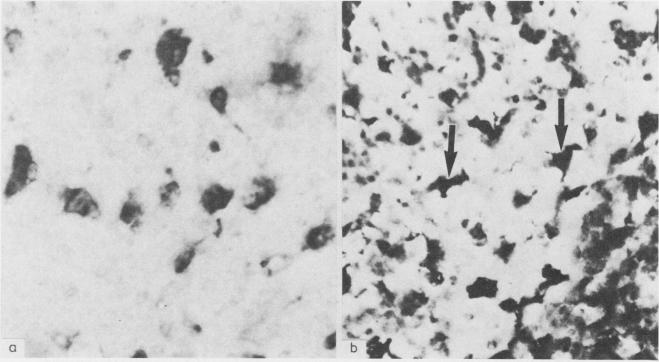
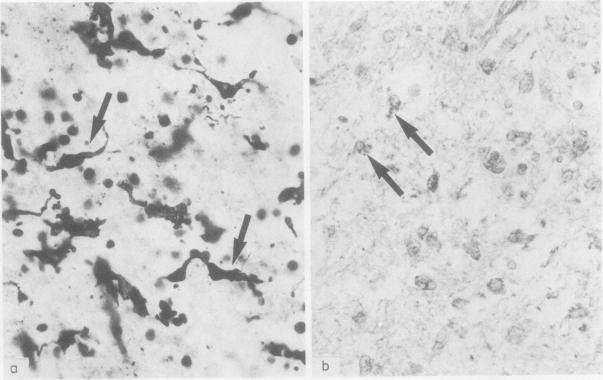
The macrophage markers non-specific esterase, alpha 1-antitrypsin, alpha 1-antichymotrypsin, and lysozyme were compared with conventional microglial and macrophage stains in the human central nervous system. In a series of specimens from cases of head trauma, conventionally fixed and embedded, the modified Weil-Davenport stain was unequivocally best for demonstrating reactive microglia. alpha 1-antichymotrypsin, however, was the most effective for showing macrophages in a series of specimens from patients with other conditions, which included inflammatory, neoplastic, and non-inflammatory diseases. The non-specific esterase reaction was unsatisfactory in tissues fixed in neutral formalin but was successful in fresh frozen tissue. In a series of specimens from cases of multiple sclerosis, non-specific esterase showed demyelination clearly and stained neuronal cytoplasm. It also stained macrophages but was less satisfactory for lipid-bearing phagocytes in multiple sclerosis than oil red 0.
在人类中枢神经系统中,对巨噬细胞标志物非特异性酯酶、α1 -抗胰蛋白酶、α1 -抗糜蛋白酶和溶菌酶与传统的小胶质细胞和巨噬细胞染色方法进行了比较。在一系列常规固定和包埋的头部外伤病例标本中,改良的魏尔-达文波特染色法在显示反应性小胶质细胞方面无疑是最佳的。然而,在一系列来自患有其他疾病(包括炎症性、肿瘤性和非炎症性疾病)患者的标本中,α1 -抗糜蛋白酶在显示巨噬细胞方面最为有效。非特异性酯酶反应在中性福尔马林固定的组织中效果不佳,但在新鲜冷冻组织中则成功。在一系列多发性硬化症病例标本中,非特异性酯酶清晰地显示了脱髓鞘,并对神经元细胞质进行了染色。它也对巨噬细胞进行了染色,但在显示多发性硬化症中含脂质的吞噬细胞方面不如油红O。