Rager-Zisman B, Egan J E, Kress Y, Bloom B R
J Virol. 1984 Sep;51(3):845-55. doi: 10.1128/JVI.51.3.845-855.1984.
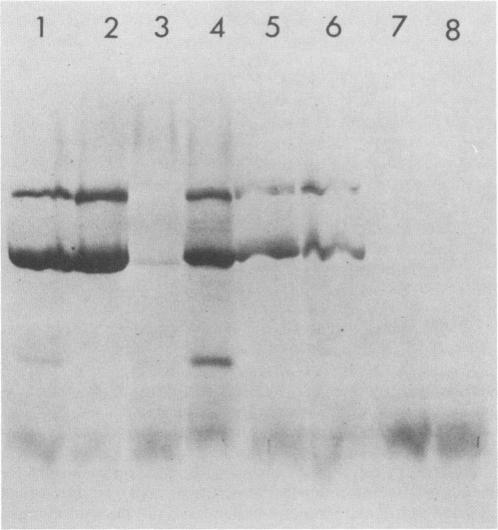
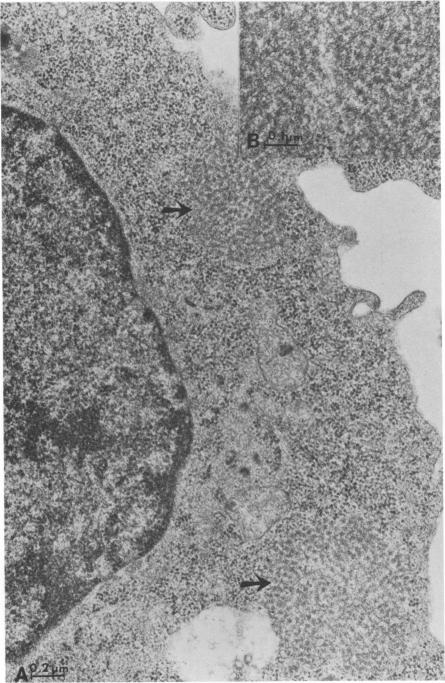
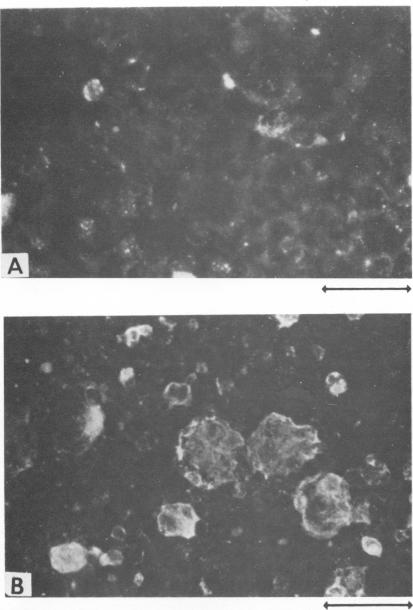
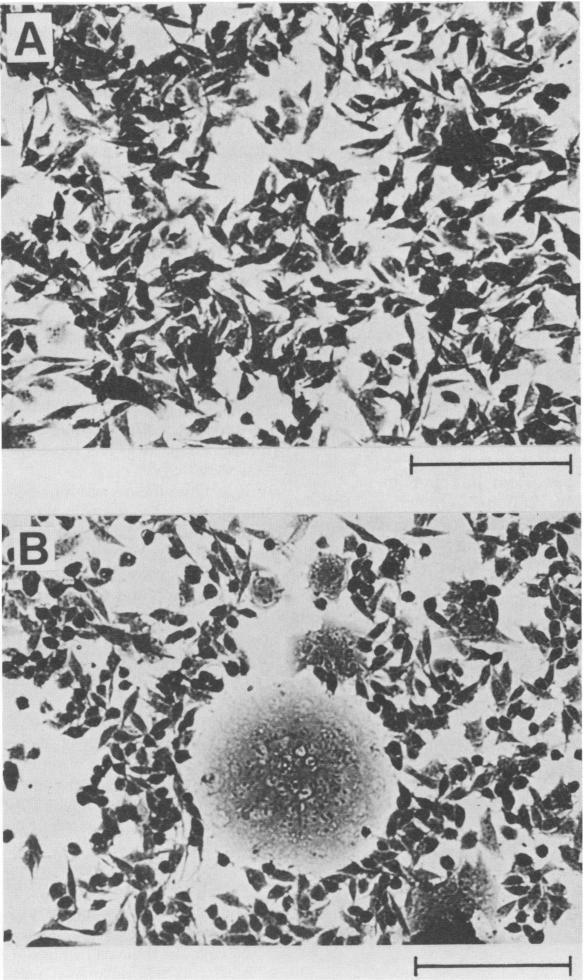
Clone NS20Y of the mouse neuroblastoma C1300 was infected with wild-type Edmonston measles virus, and, after a transition to a carrier culture, became persistently infected. Persistently infected clones were derived and characterized morphologically by the appearance of multinucleate giant cells and nucleocapsid matrices in cytoplasm and nucleus, but very few budding virus particles. Antimeasles antibodies markedly suppressed the expression of viral antigens and giant cells, and the effect was totally reversible. When the cells were cultured at 33 degrees C, the number of giant cells began to diminish and ultimately disappeared; in contrast, when cultured at 39 degrees C, the cultures invariably lysed. Yields at 33 degrees C were ca. 2 logs lower than those at 39 degrees C. Cells cultured at 33 degrees C produced relatively high levels of interferon, whereas those at 39 degrees C produced little or no interferon. When the persistently infected cultures were exposed to anti-interferon alpha/beta serum at a nonpermissive temperature, there was a marked increase in multinucleate cells, suggesting that maintenance of the persistence state and its regulation by temperature may be related to the production of interferon. Viral isolates from cells cultured at 39 degrees C were obtained, and 90% of viral clones were found to be cold sensitive. Complementation studies with different viral clones indicated that the cold-sensitive defect was probably associated with the same genetic function. Western blot analysis of the persistently infected cells indicated a significant diminution and expression of all measles-specific proteins at a nonpermissive temperature. Infection of NS20Y neuroblastoma cells with the cold-sensitive virus isolates resulted in the development of an immediate persistent infection, whereas infection of Vero or HeLa cells resulted in a characteristic lytic infection, suggesting that the cold-sensitive mutants may be selected or adapted for persistent infection in cells of neural origin.
将小鼠神经母细胞瘤C1300的克隆NS20Y用野生型埃德蒙斯顿麻疹病毒感染,在转变为载体培养后,该克隆变成持续感染状态。通过出现多核巨细胞以及细胞质和细胞核中的核衣壳基质,从持续感染的克隆中衍生出细胞并对其进行形态学特征描述,但出芽的病毒颗粒极少。抗麻疹抗体显著抑制病毒抗原和巨细胞的表达,且这种作用完全可逆。当细胞在33℃培养时,巨细胞数量开始减少并最终消失;相反,在39℃培养时,培养物总是会裂解。33℃时的产量比39℃时低约2个对数。在33℃培养的细胞产生相对高水平的干扰素,而在39℃培养的细胞产生很少或不产生干扰素。当持续感染的培养物在非允许温度下暴露于抗α/β干扰素血清时,多核细胞显著增加,这表明持续感染状态的维持及其温度调节可能与干扰素的产生有关。获得了在39℃培养的细胞的病毒分离株,发现90%的病毒克隆对冷敏感。用不同病毒克隆进行的互补研究表明,冷敏感缺陷可能与相同的基因功能相关。对持续感染细胞的蛋白质印迹分析表明,在非允许温度下所有麻疹特异性蛋白的表达明显减少。用冷敏感病毒分离株感染NS20Y神经母细胞瘤细胞导致立即出现持续感染,而感染Vero或HeLa细胞则导致典型的裂解感染,这表明冷敏感突变体可能是为在神经来源的细胞中持续感染而选择或适应的。