Roessner C A, Ihler G M
J Bacteriol. 1984 Jan;157(1):165-70. doi: 10.1128/jb.157.1.165-170.1984.
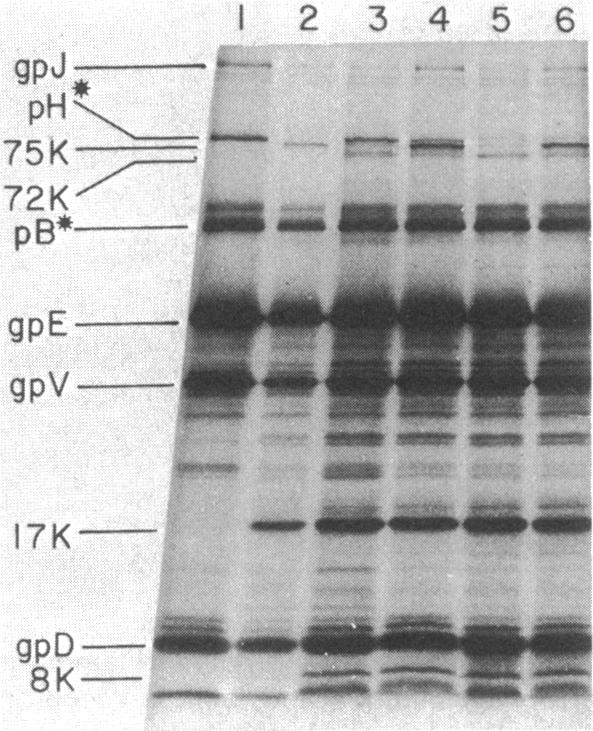
Previous studies have shown that bacteriophage lambda initially binds to liposomes bearing its receptor protein by the tip of the tail fiber (type 1 complex). It then associates more directly so that the hollow tail tube is in direct contact with the membrane (type 2 complex). DNA can be injected across the lipid bilayer into the liposome from type 2 complexes. We show here that gpJ, the tail fiber protein, becomes more sensitive to proteolytic degradation in type 2 complexes, indicating that the tail fiber does not pass into the liposome and that the tail fiber may undergo a conformational change in type 2 complexes. Another bacteriophage protein, pH, is sensitive to proteolytic degradation in free bacteriophage, type 1 complexes, or type 2 complexes formed with free receptor, but is resistant to proteinases in type 2 complexes formed with liposomes. This finding suggests that pH associates with the membrane. We suggest that this association is part of the mechanism by which a transmembrane hole for DNA entry is formed.
先前的研究表明,λ噬菌体最初通过尾丝尖端与携带其受体蛋白的脂质体结合(1型复合物)。然后它会更直接地结合,使中空的尾管与膜直接接触(2型复合物)。DNA可以从2型复合物穿过脂质双层注入脂质体。我们在此表明,尾丝蛋白gpJ在2型复合物中对蛋白水解降解更敏感,这表明尾丝不会进入脂质体,并且尾丝在2型复合物中可能会发生构象变化。另一种噬菌体蛋白pH,在游离噬菌体、1型复合物或与游离受体形成的2型复合物中对蛋白水解降解敏感,但在与脂质体形成的2型复合物中对蛋白酶具有抗性。这一发现表明pH与膜结合。我们认为这种结合是形成DNA进入的跨膜孔机制的一部分。