Larder B A, Darby G
J Virol. 1982 May;42(2):649-58. doi: 10.1128/JVI.42.2.649-658.1982.
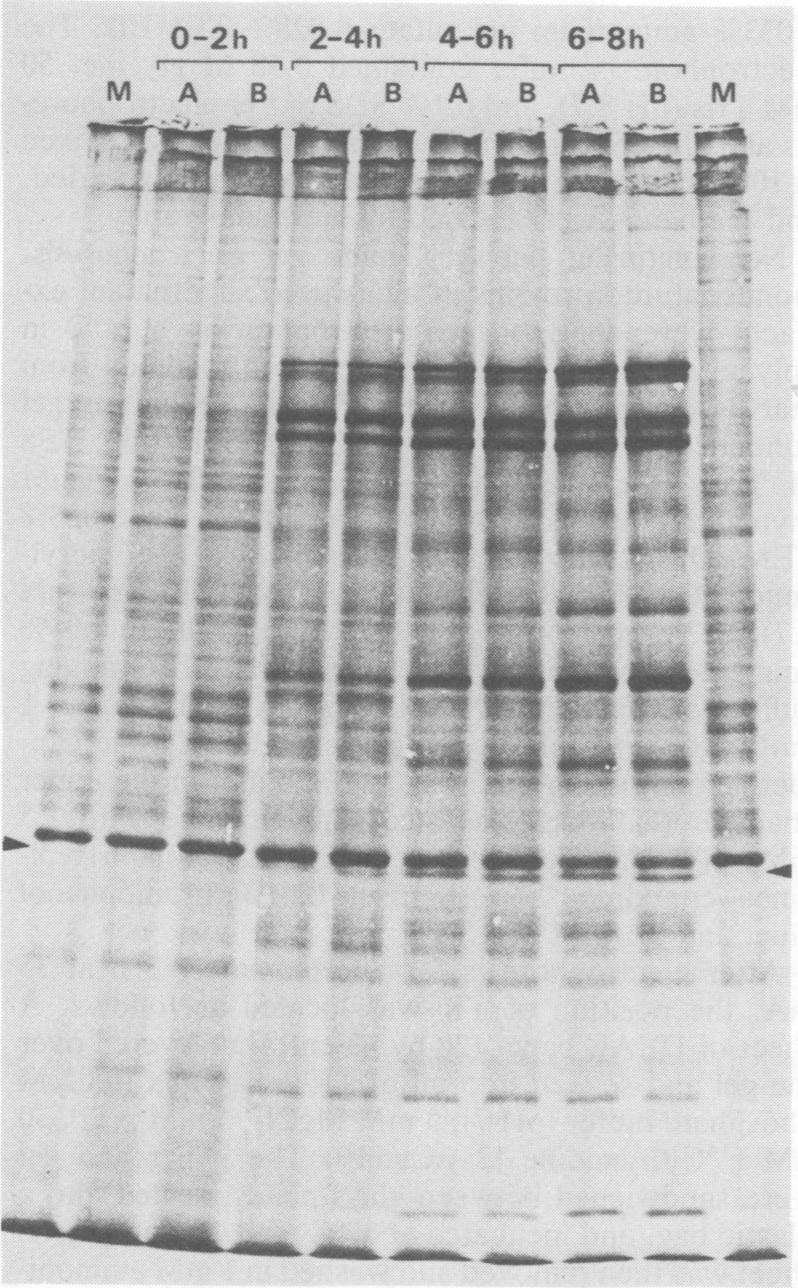
The acyclovir-resistant mutant of herpes simplex virus type 1, SC16 S1, induced reduced levels of thymidine kinase activity (ca. 25% reduction) in infected cells. The activity appeared with kinetics similar to that in wild type-infected cells, and pulse-labeling experiments showed that the thymidine kinase polypeptide was synthesized at a similar rate. We showed that the enzyme was virus specific by inactivating it with antiserum raised against herpes simplex virus-infected cell proteins. The enzyme induced by the mutant had reduced electrophoretic mobility in nondenaturing gels, decreased thermal stability, and decreased affinity for several different substrates (assessed by measurement of Km values) compared with the enzyme induced by the wild type. From the data obtained we conclude that the thymidine kinase induced by the mutant has an altered specificity, probably resulting from an amino acid substitution which affects the primary binding site for nucleosides and nucleoside analogs.
1型单纯疱疹病毒的阿昔洛韦耐药突变体SC16 S1在感染细胞中诱导的胸苷激酶活性水平降低(约降低25%)。该活性出现的动力学与野生型感染细胞中的相似,脉冲标记实验表明胸苷激酶多肽的合成速率相似。我们通过用针对单纯疱疹病毒感染细胞蛋白产生的抗血清使其失活,证明该酶具有病毒特异性。与野生型诱导的酶相比,突变体诱导的酶在非变性凝胶中的电泳迁移率降低、热稳定性降低,并且对几种不同底物的亲和力降低(通过测量Km值评估)。根据获得的数据,我们得出结论,突变体诱导的胸苷激酶具有改变的特异性,这可能是由于氨基酸取代影响了核苷和核苷类似物的主要结合位点所致。