Croce C M, Erikson J, ar-Rushdi A, Aden D, Nishikura K
Proc Natl Acad Sci U S A. 1984 May;81(10):3170-4. doi: 10.1073/pnas.81.10.3170.
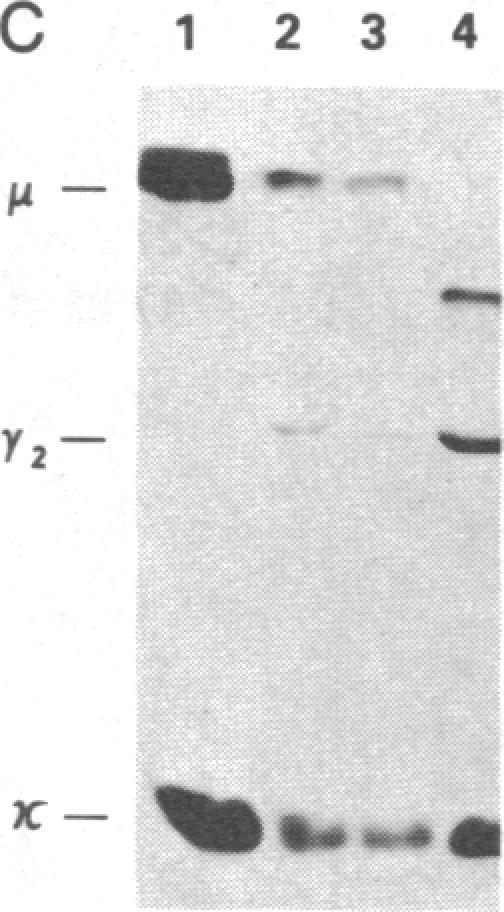
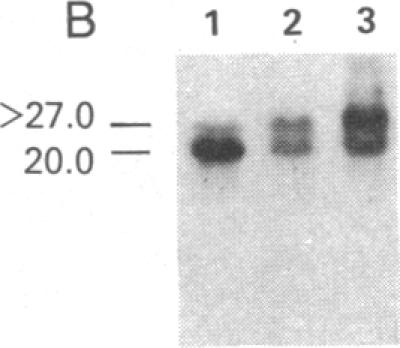
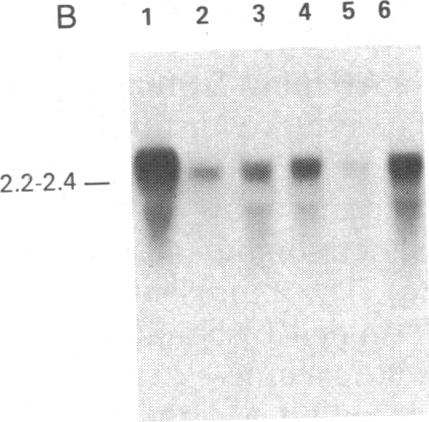
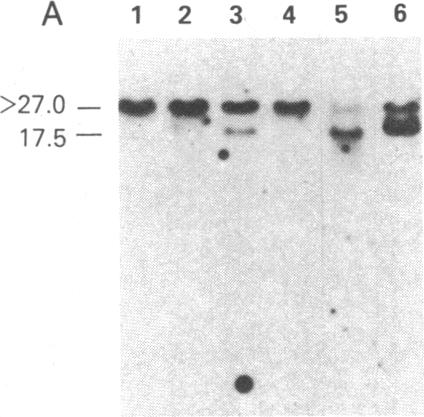
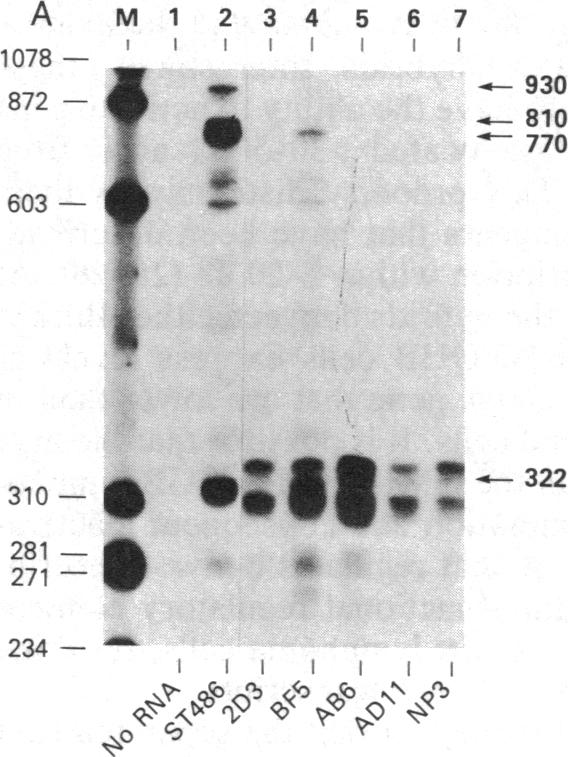
We examined somatic cell hybrids between Burkitt lymphoma cells and either human lymphoblastoid cells or mouse plasmacytoma cells for the expression of the translocated c-myc oncogene. The results of this study indicate that the translocated c-myc oncogene is transcribed in plasma cells but is repressed in lymphoblastoid cells. Thus, the factors necessary for translocated c-myc transcription are present in plasma cells and Burkitt lymphoma cells but are absent or inactive in lymphoblastoid cells. Since the distance between the rearranged immunoglobulin loci and the c-myc oncogene can even exceed 30-50 kilobases, we speculate that the translocated c-myc oncogene is under the transcriptional control of enhancer-like elements capable of acting over long distances. The activity of this long-range enhancer may depend on the interaction with transacting factors that are active in plasma cells and in Burkitt lymphoma cells but are not active in lymphoblastoid cells. We also examined the transcription of the first exon of the c-myc oncogene, which becomes separated from the second and third exon because of the chromosomal break involving the first intron. This exon is transcribed at high levels in ST486 Burkitt lymphoma cells with the t(8;14) chromosome translocation. Hybrids between lymphoblastoid and ST486 cells expressed high levels of transcripts of the first exon, whereas hybrids between plasma cells and ST486 cells did not. Thus, transcription of the separated first exon can be enhanced in lymphoblastoid and Burkitt lymphoma cells because of its close proximity to the heavy chain enhancer that is normally located between the joining and the switch region of the C mu gene. Such enhancement, however, does not occur in plasma cells, possibly because these cells are able to suppress completely the c-myc oncogene, unless it has been placed in the proximity of a rearranged immunoglobulin constant region gene.
我们检测了伯基特淋巴瘤细胞与人淋巴母细胞或小鼠浆细胞瘤细胞之间的体细胞杂种中易位的c-myc癌基因的表达情况。本研究结果表明,易位的c-myc癌基因在浆细胞中可转录,但在淋巴母细胞中受到抑制。因此,易位的c-myc转录所需的因子存在于浆细胞和伯基特淋巴瘤细胞中,但在淋巴母细胞中不存在或无活性。由于重排的免疫球蛋白基因座与c-myc癌基因之间的距离甚至可能超过30 - 50千碱基,我们推测易位的c-myc癌基因受能够远距离起作用的增强子样元件的转录调控。这种远距离增强子的活性可能取决于与在浆细胞和伯基特淋巴瘤细胞中有活性但在淋巴母细胞中无活性的反式作用因子的相互作用。我们还检测了c-myc癌基因第一个外显子的转录情况,由于涉及第一个内含子的染色体断裂,该外显子与第二个和第三个外显子分离。在具有t(8;14)染色体易位的ST486伯基特淋巴瘤细胞中,该外显子高水平转录。淋巴母细胞与ST486细胞之间的杂种表达高水平的第一个外显子转录本,而浆细胞与ST486细胞之间的杂种则不表达。因此,由于分离的第一个外显子与通常位于Cμ基因连接区和转换区之间的重链增强子距离很近,其转录在淋巴母细胞和伯基特淋巴瘤细胞中可增强。然而,在浆细胞中不会发生这种增强,可能是因为这些细胞能够完全抑制c-myc癌基因活性,除非它被置于重排的免疫球蛋白恒定区基因附近。