van der Weij J P, van der Veen C J, de Vries E, Cats A
Clin Exp Immunol. 1983 Dec;54(3):819-26.
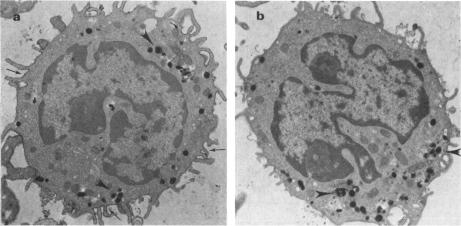
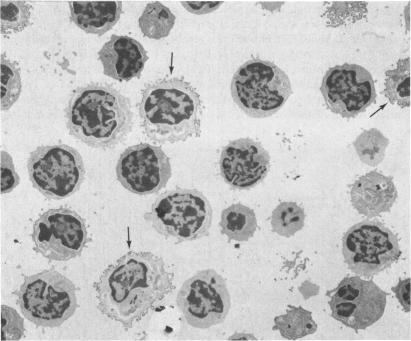
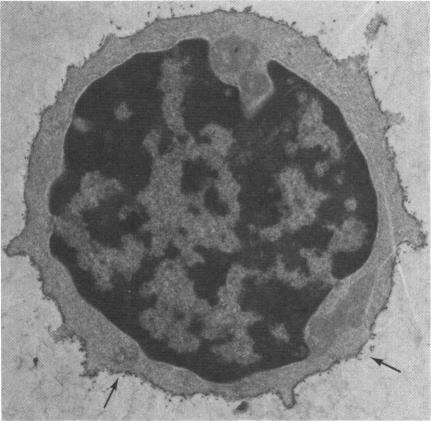
Human peripheral blood mononuclear cell (PBMC) were treated with a panel of monoclonal antibodies (MoAbs) for the demonstration of membrane antigens at the ultrastructural level. The bound MoAbs were linked by rabbit anti-mouse IgG to a peroxidase-anti-peroxidase (PAP) complex composed of monoclonal mouse anti-peroxidase antibodies and horse radish peroxidase. This labelling method with a three step incubation procedure resulted in clear demonstration of the membrane antigens. Moreover, the use of the PAP complex as marker permitted the recognition of monocytes not only by morphology but also by their endogenous peroxidase pattern. In addition, it was observed that the MoAbs used, supposedly specific for T lymphocytes, reacted to a certain degree with monocytes.
用人外周血单个核细胞(PBMC)与一组单克隆抗体(MoAbs)处理,以在超微结构水平上展示膜抗原。结合的MoAbs通过兔抗小鼠IgG与由单克隆小鼠抗过氧化物酶抗体和辣根过氧化物酶组成的过氧化物酶 - 抗过氧化物酶(PAP)复合物相连。这种采用三步孵育程序的标记方法清晰地展示了膜抗原。此外,使用PAP复合物作为标志物不仅可以通过形态学识别单核细胞,还可以通过其内源性过氧化物酶模式进行识别。另外,观察到所使用的据称对T淋巴细胞具有特异性的MoAbs在一定程度上与单核细胞发生反应。