Frolova E I, Zalmanzon E S, Lukanidin E M, Georgiev G P
Nucleic Acids Res. 1978 Jan;5(1):1-11. doi: 10.1093/nar/5.1.1.
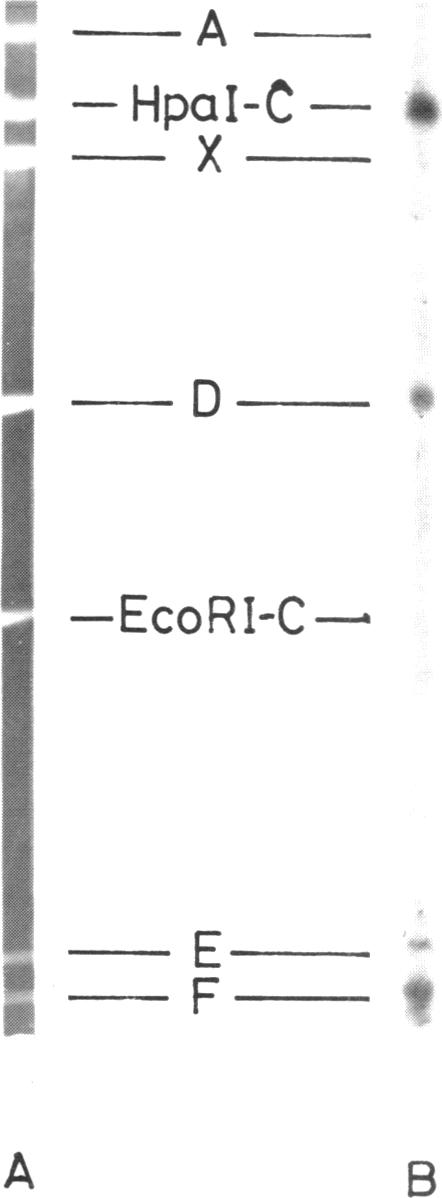
Transcription of the human adenovirus 5 genome in transformed rat embryo cells (DFK3) was investigated using two different approaches. Preferential digestion of transcribed viral sequences by DNase I was analysed using kinetics of renaturation of 32P-labeled Ad5 HpaI restriction fragments in the presence of material which was stable after nuclease treatment. The second approach was the hybridization of 32P-labeled nuclear RNA from transformed cells with Ad5 restriction fragments which were attached to a nitrocellulose filter. These two methods gave similar results. It was found that not all integrated regions of the Ad5 genome are active in transformed cells. 2,5 copies of the HpaI-E fragment of Ad5 DNA were found in transformed DFK3 cell line. Nuclear RNA from these cells hybridized to HpaI-E fragment of Ad5 DNA, but only about half of sequences of the integrated HpaI-E fragment was sensitive to DNase I digestion.
采用两种不同方法对人腺病毒5型基因组在转化的大鼠胚胎细胞(DFK3)中的转录情况进行了研究。在存在经核酸酶处理后仍稳定的物质的情况下,利用32P标记的腺病毒5型HpaI限制性片段的复性动力学,分析了DNase I对转录病毒序列的优先消化作用。第二种方法是将来自转化细胞的32P标记的核RNA与附着在硝酸纤维素滤膜上的腺病毒5型限制性片段进行杂交。这两种方法得到了相似的结果。研究发现,腺病毒5型基因组并非所有整合区域在转化细胞中都具有活性。在转化的DFK3细胞系中发现了2.5份腺病毒5型DNA的HpaI-E片段。这些细胞的核RNA与腺病毒5型DNA的HpaI-E片段杂交,但整合的HpaI-E片段中只有约一半的序列对DNase I消化敏感。