Lin A Y, Lee A S
Proc Natl Acad Sci U S A. 1984 Feb;81(4):988-92. doi: 10.1073/pnas.81.4.988.
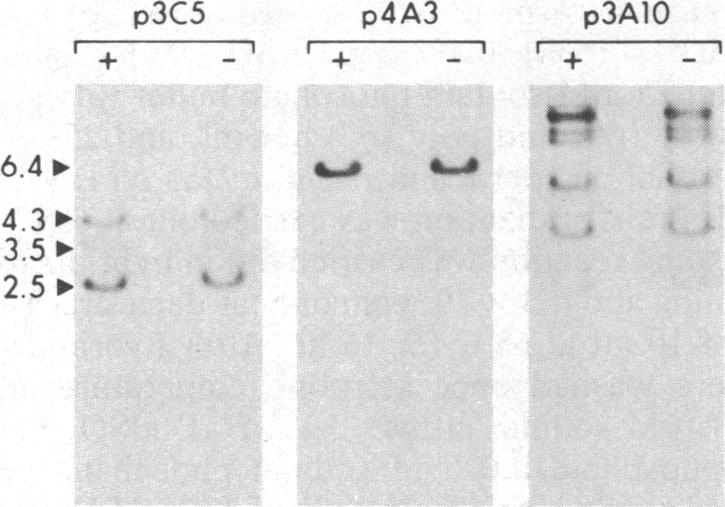
The coordinated expression of two genes specifically induced by glucose starvation is demonstrated in a hamster fibroblast cell line, K12. Using two cDNA plasmids, p4A3 and p3C5, as hybridization probes, we examine the kinetics of induction of these genes when the cells are grown in medium deprived of glucose. The results show that (i) after a lag period of about 8 hr, there is a rapid and simultaneous increase of the p4A3 and p3C5 mRNA levels and (ii) the elevation of the mRNA levels for p4A3 and p3C5 is largely due to new transcription. In addition, we compare the mRNA transcripts encoded by these glucose-regulated genes in culture cells and phosphoenolpyruvate carboxykinase, the enzyme that catalyzes the rate-limiting step in gluconeogenesis in fasted rats. Our results indicate that the expression of phosphoenolpyruvate carboxykinase is not inducible by glucose starvation in our culture cells.
在仓鼠成纤维细胞系K12中证明了由葡萄糖饥饿特异性诱导的两个基因的协同表达。使用两个cDNA质粒p4A3和p3C5作为杂交探针,我们研究了细胞在缺乏葡萄糖的培养基中生长时这些基因的诱导动力学。结果表明:(i)在约8小时的延迟期后,p4A3和p3C5 mRNA水平迅速同时增加;(ii)p4A3和p3C5 mRNA水平的升高主要归因于新的转录。此外,我们比较了培养细胞中这些葡萄糖调节基因编码的mRNA转录本与磷酸烯醇丙酮酸羧激酶(该酶催化禁食大鼠糖异生中的限速步骤)。我们的结果表明,在我们的培养细胞中,磷酸烯醇丙酮酸羧激酶的表达不受葡萄糖饥饿诱导。