Young N A, Kwon-Chung K J, Kubota T T, Jennings A E, Fisher R I
J Clin Microbiol. 1978 Jun;7(6):589-94. doi: 10.1128/jcm.7.6.589-594.1978.
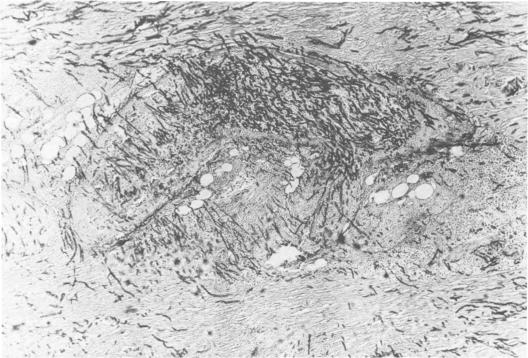
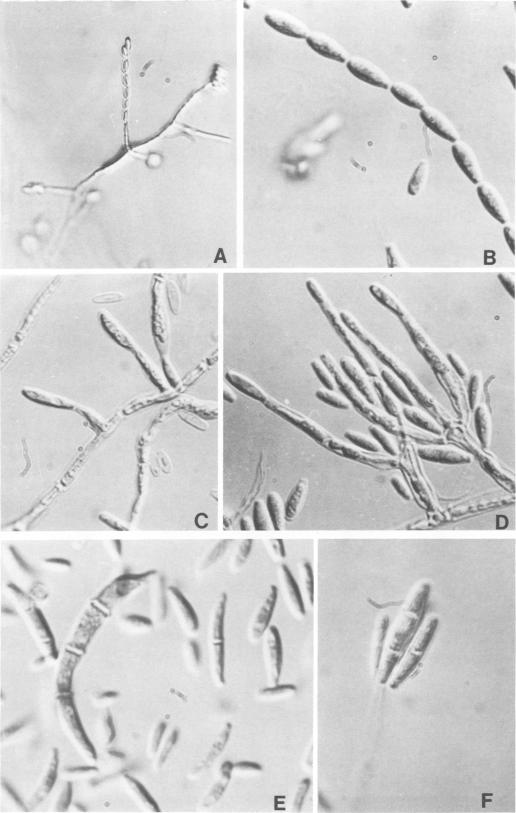
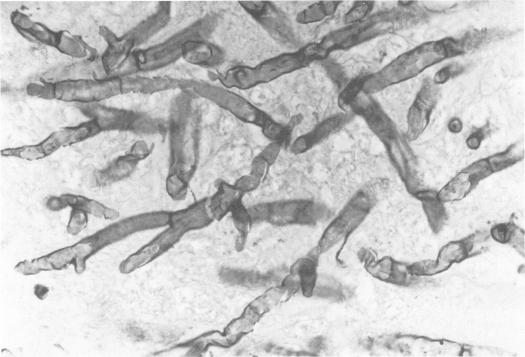
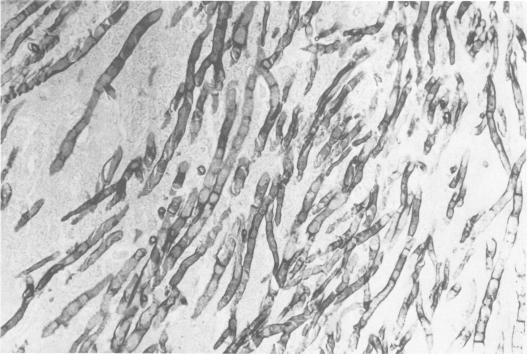
Disseminated infection caused by Fusarium moniliforme is described in a 32-year-old granulocytopenic man with malignant lymphoma being treated with cytotoxic drugs and corticosteroids. Infected skin denuded by antecedent severe varicella-zoster infection was the probable source of fungemia. F. moniliforme grows rapidly on common mycological media as a lavender- to violet-colored mold at 25 to 37 degrees C. Its aerial hyphae produce fusoid macroconidia and characteristic fusiform microconidia in chains. The morphology of hyphae in tissue closely resembles species of Aspergillus and is not diagnostically specific. Morphological characteristics which distinguish cultures of F. moniliforme from other medically important species of Fusarium are discussed.
一名32岁患有恶性淋巴瘤的粒细胞缺乏男子正在接受细胞毒性药物和皮质类固醇治疗,现描述了由串珠镰刀菌引起的播散性感染。先前严重水痘 - 带状疱疹感染导致皮肤剥脱,这可能是真菌血症的来源。串珠镰刀菌在普通真菌培养基上于25至37摄氏度迅速生长,形成薰衣草色至紫色的霉菌。其气生菌丝产生梭形大分生孢子和呈链状的特征性梭形小分生孢子。组织中菌丝的形态与曲霉菌种非常相似,无诊断特异性。文中讨论了将串珠镰刀菌培养物与其他医学上重要的镰刀菌属物种区分开来的形态学特征。