Mulligan R C, Berg P
Proc Natl Acad Sci U S A. 1981 Apr;78(4):2072-6. doi: 10.1073/pnas.78.4.2072.
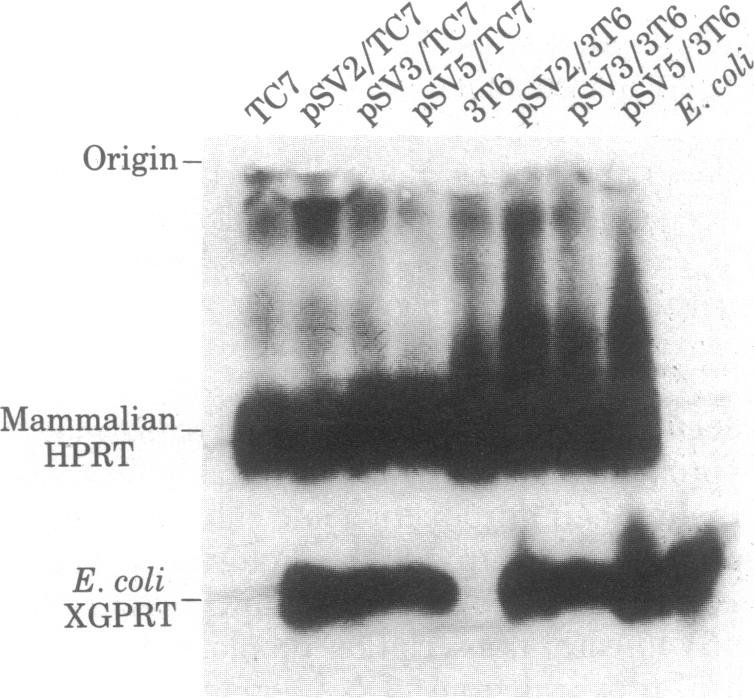
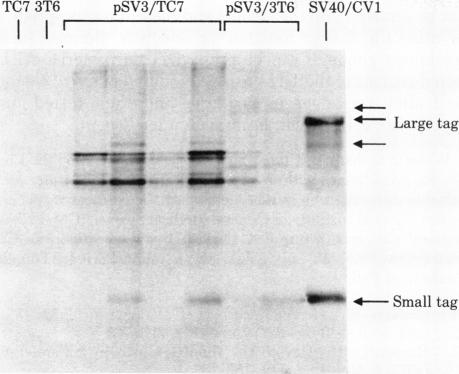
Cultured monkey (TC7) and mouse (3T6) cells synthesize an Excherichia coli enzyme, xanthine-guanine phosphoribosyltransferase (XGPRT; 5-phospho-alpha-D-ribose-1-diphosphate:xanthine phosphoribosyltransferase, EC 2.4.2.22), after transfection with DNA vectors carrying the corresponding bacterial gene, Ecogpt. In contrast to mammalian cells, which do not efficiently use xanthine for purine nucleotide synthesis, cells that produce E. coli XGPRT can synthesize GMP from xanthine via XMP. After transfection with vector-Ecogpt DNAs, surviving cells producing XGPRT can be selectively grown with xanthine as the sole precursor for guanine nucleotide formation in a medium containing inhibitors (aminopterin and mycophenolic acid) that block de novo purine nucleotide synthesis. Cells transformed for Ecogpt arise with a frequency of 10(-4) to 10(-5); they appear to be genetically stable in as much as there is no discernible decrease in XGPRT formation or loss on their ability to grow in selective medium after propagation in nonselective medium. Although several of the vector-gpt DNAs can replicate in monkey and mouse cells, none of the transformants contain autonomously replicating vector-gpt DNA. Rather, the gpt transformants contain one to five copies of the transfecting DNA associated with, and most probably integrated into, cellular DNA sequences. In several transformants, vector-coded gene products for which there was no selection are also synthesized. This suggests that recombinant DNAs containing Ecogpt as a selective marker can be useful for cotransformation of nonselectable genes.
培养的猴(TC7)细胞和小鼠(3T6)细胞在用携带相应细菌基因Ecogpt的DNA载体转染后,能合成一种大肠杆菌酶,即黄嘌呤 - 鸟嘌呤磷酸核糖转移酶(XGPRT;5 - 磷酸 - α - D - 核糖 - 1 - 二磷酸:黄嘌呤磷酸核糖转移酶,EC 2.4.2.22)。与不能有效利用黄嘌呤进行嘌呤核苷酸合成的哺乳动物细胞不同,产生大肠杆菌XGPRT的细胞可以通过XMP从黄嘌呤合成GMP。在用载体 - Ecogpt DNA转染后,产生XGPRT的存活细胞可以在含有阻断嘌呤核苷酸从头合成的抑制剂(氨基蝶呤和霉酚酸)的培养基中,以黄嘌呤作为鸟嘌呤核苷酸形成的唯一前体进行选择性生长。因Ecogpt而转化的细胞出现频率为10^(-4)至10^(-5);它们在遗传上似乎是稳定的,因为在非选择性培养基中传代后,XGPRT的形成没有明显减少,并且它们在选择性培养基中生长的能力也没有丧失。虽然几种载体 - gpt DNA可以在猴和小鼠细胞中复制,但没有一个转化体含有自主复制的载体 - gpt DNA。相反,gpt转化体含有与细胞DNA序列相关且很可能整合到其中的一到五个转染DNA拷贝。在几个转化体中,还合成了没有选择压力的载体编码基因产物。这表明含有Ecogpt作为选择标记的重组DNA可用于非选择基因的共转化。