Matthysse A G, Holmes K V, Gurlitz R H
J Bacteriol. 1981 Jan;145(1):583-95. doi: 10.1128/jb.145.1.583-595.1981.
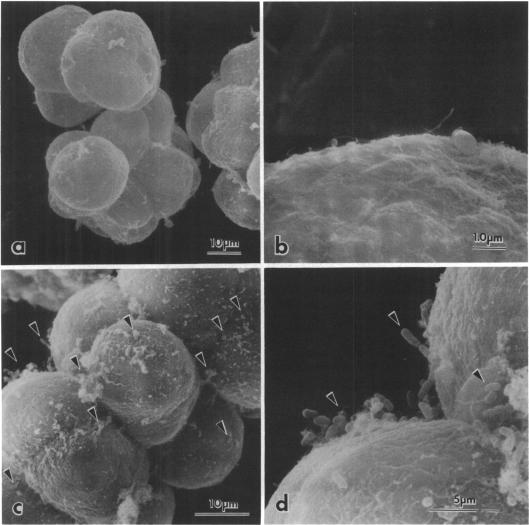
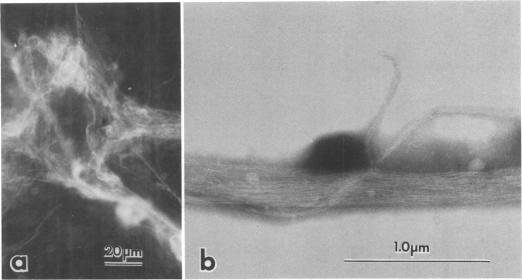
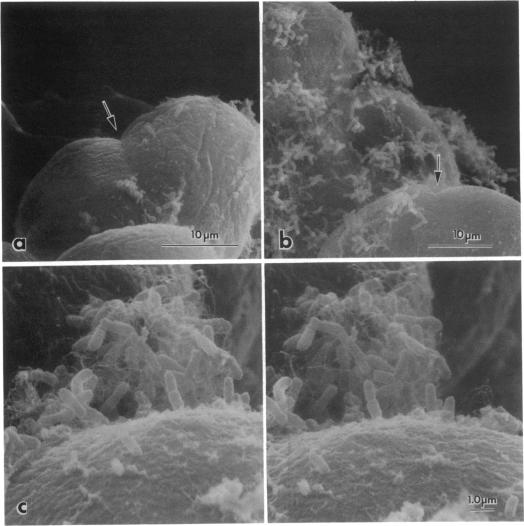
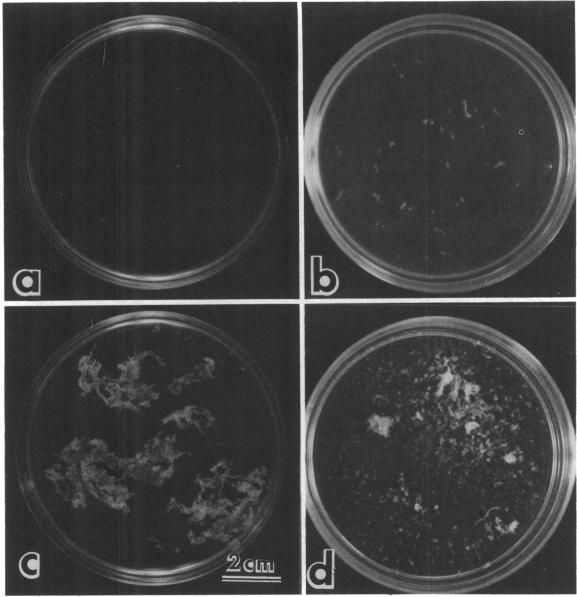
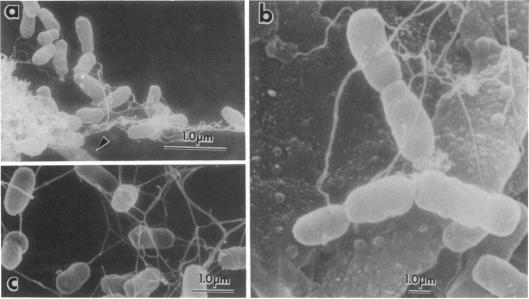
The attachment of virulent strains of Agrobacterium tumefaciens to plant cells is the first step in the bacterial induction of tumors. Binding of A. tumefaciens to carrot tissue culture cells occurred as a two-step process. The initial step was the attachment of the bacteria to the plant cell wall. Living plant cells were not required. Bacterial attachment to heat-killed or glutaraldehyde-fixed carrot cells proceeded with only slightly altered kinetics and unaltered bacterial strain specificity. After the bacteria bound to the carrot cell surface, scanning electron microscopy showed that fibrils developed, surrounded the bacteria, and anchored them to the plant cell surface. These fibrils were synthesized by the bacteria and not by the plant cell since they were also made after the attachment of A. tumefaciens to dead carrot cells and since under some conditions the bacteria synthesized fibrils in the absence of plant cells. Calcofluor staining, acid hydrolysis, enzymatic digestion studies, and infrared spectroscopy showed that the fibrils were composed of cellulose. The formation of these cellulose fibrils occurred during the attachment of virulent strains of A. tumefaciens to plant cells in vitro. The fibrils anchored the bacteria to the plant cell surface and entrapped additional bacteria. The multiplication of entrapped and attached bacteria resulted in the formation of large clusters of bacteria held close to the plant cell wall and plasma membrane by cellulose fibrils. This high concentration of bacteria may facilitate transfer of Ti plasmid deoxyribonucleic acid to the plant cell resulting in the formation of tumors.
根癌土壤杆菌的致病菌株附着于植物细胞是细菌诱导肿瘤形成的第一步。根癌土壤杆菌与胡萝卜组织培养细胞的结合过程分两步进行。第一步是细菌附着在植物细胞壁上。这一步不需要活的植物细胞。细菌附着在经热杀死或经戊二醛固定的胡萝卜细胞上时,其动力学仅有轻微改变,且细菌菌株特异性不变。细菌附着在胡萝卜细胞表面后,扫描电子显微镜显示有纤丝形成,包围细菌并将它们固定在植物细胞表面。这些纤丝是由细菌合成的,而非植物细胞,因为在根癌土壤杆菌附着于死亡的胡萝卜细胞后也会形成纤丝,而且在某些条件下细菌在没有植物细胞的情况下也能合成纤丝。荧光增白剂染色、酸水解、酶消化研究以及红外光谱分析表明,这些纤丝由纤维素组成。这些纤维素纤丝的形成发生在致病型根癌土壤杆菌菌株在体外附着于植物细胞的过程中。纤丝将细菌固定在植物细胞表面,并捕获更多细菌。被捕获和附着的细菌繁殖,导致形成大量细菌簇,这些细菌簇被纤维素纤丝紧紧地固定在植物细胞壁和质膜附近。如此高浓度的细菌可能有助于Ti质粒脱氧核糖核酸转移到植物细胞中,从而导致肿瘤形成。