de Waard-Siebinga I, Creyghton W M, Kool J, Jager M J
Department of Ophthalmology, University Hospital Leiden, The Netherlands.
Br J Ophthalmol. 1995 Sep;79(9):847-55. doi: 10.1136/bjo.79.9.847.
Uveal melanoma is a tumour with a high incidence of metastasis and a high mortality rate. Additional therapies to obtain a better local control or an effective treatment of metastases are necessary. Interferons may be applied.
The effects of human interferon alfa and gamma on proliferation and expression of immunologically important molecules of human uveal melanoma cells in vitro were studied. A propidium iodide assay was used to determine proliferation and immunostaining with monoclonal antibodies was applied to detect changes in antigen expression on two primary uveal melanoma cell lines, Mel 202 and 92-1.
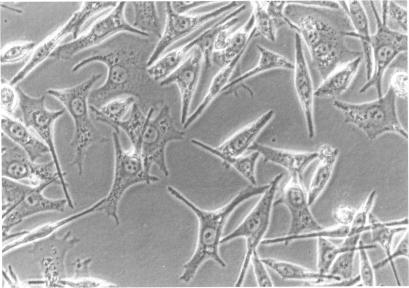
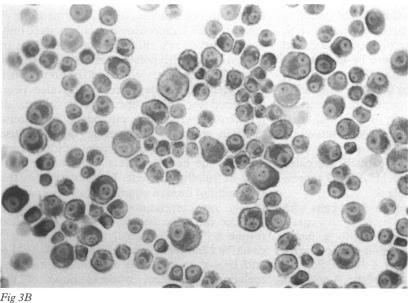
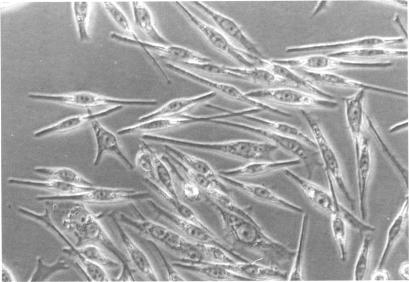
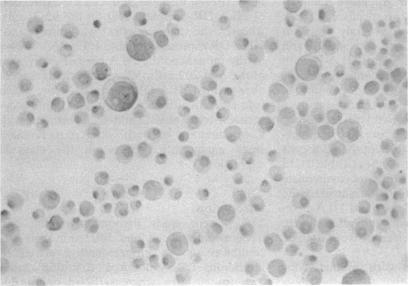
Interferon alfa inhibited proliferation of cell line 92-1 at a concentration of 50 IU/ml, but had no effect on cell line Mel 202, while interferon gamma inhibited growth of both cell lines. Only interferon gamma had a visible effect on cell morphology. With respect to the immunomodulatory effects, interferon alfa increased monomorphic HLA class I expression, but did not affect HLA class II expression. Interferon gamma induced not only HLA class I but also class II expression. The effects on HLA expression were locus-specific with the strongest effects observed for HLA-B and DR products. Small differences were observed with respect to the susceptibility of two different melanoma cell lines to antiproliferative effects and to modulation of antigen expression.
The effects of interferon alfa and gamma on human uveal melanoma cells in vitro suggest a potential role of these cytokines in the treatment of patients with uveal melanoma. In particular, the immunomodulatory effects of these cytokines in vitro imply that treatment of patients with these cytokines might stimulate a beneficial antimelanoma immune response in vivo.
葡萄膜黑色素瘤是一种转移发生率高、死亡率高的肿瘤。需要额外的治疗方法以更好地实现局部控制或有效治疗转移灶。可应用干扰素。
研究了人α干扰素和γ干扰素对人葡萄膜黑色素瘤细胞体外增殖及免疫重要分子表达的影响。采用碘化丙啶法测定增殖情况,应用单克隆抗体免疫染色检测两种原发性葡萄膜黑色素瘤细胞系Mel 202和92 - 1抗原表达的变化。
α干扰素在浓度为50 IU/ml时抑制细胞系92 - 1的增殖,但对细胞系Mel 202无影响,而γ干扰素抑制两种细胞系的生长。只有γ干扰素对细胞形态有明显影响。关于免疫调节作用,α干扰素增加单态性HLA - I类分子的表达,但不影响HLA - II类分子的表达。γ干扰素不仅诱导HLA - I类分子表达,还诱导HLA - II类分子表达。对HLA表达的影响具有基因座特异性,对HLA - B和DR产物的影响最为明显。在两种不同黑色素瘤细胞系对抗增殖作用及抗原表达调节的敏感性方面观察到微小差异。
α干扰素和γ干扰素对人葡萄膜黑色素瘤细胞的体外作用提示这些细胞因子在葡萄膜黑色素瘤患者治疗中具有潜在作用。特别是,这些细胞因子在体外的免疫调节作用意味着用这些细胞因子治疗患者可能在体内激发有益的抗黑色素瘤免疫反应。