Herbarth O
Department of Human Exposure Research and Epidemiology, Centre for Environmental Research Leipzig-Halle, Germany.
Environ Health Perspect. 1995 Sep;103(9):852-6. doi: 10.1289/ehp.95103852.
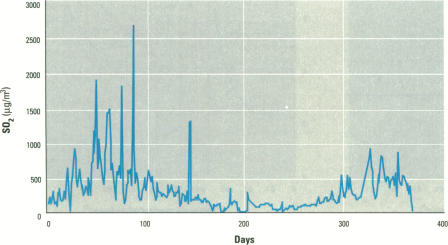
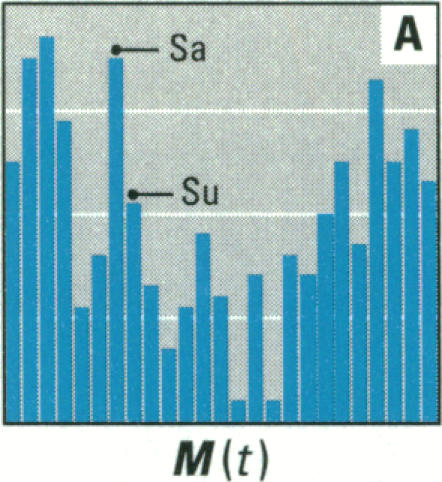
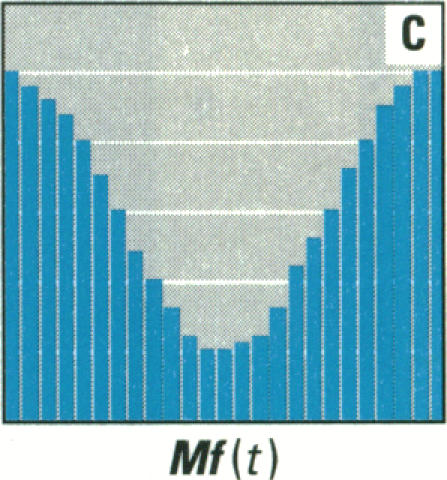
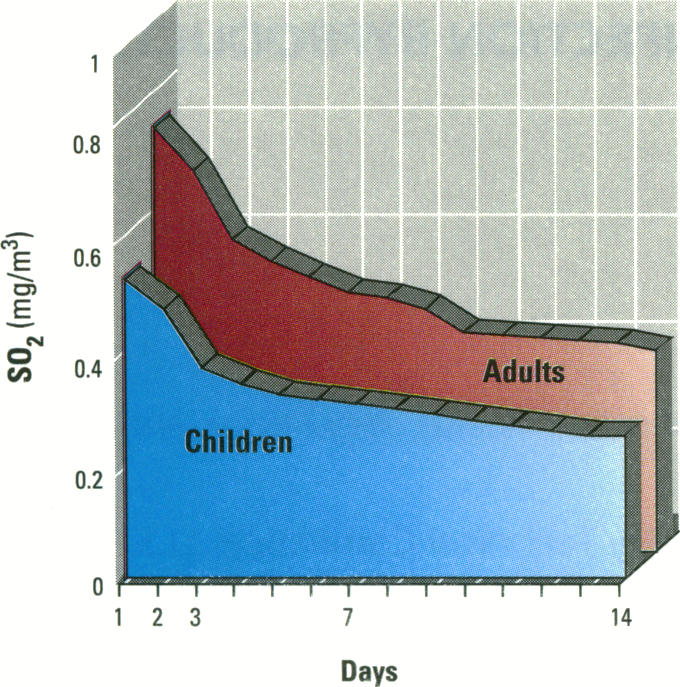
Threshold values are of prime importance in providing a sound basis for public health decisions. A key issue is determining threshold or maximum exposure values for pollutants and assessing their potential health risks. Environmental epidemiology could be instrumental in assessing these levels, especially since the assessment of ambient exposures involves relatively low concentrations of pollutants. This paper presents a statistical method that allows the determination of threshold values as well as the assessment of the associated risk using a retrospective, longitudinal study design with a prospective follow-up. Morbidity data were analyzed using the Fourier method, a time-series analysis that is based on the assumption of a high temporal resolution of the data. This method eliminates time-dependent responses like temporal inhomogeneity and pseudocorrelation. The frequency of calls for respiratory distress conditions to the regional Mobile Medical Emergency Service (MMES) in the city of Leipzig were investigated. The entire population of Leipzig served as a pool for data collection. In addition to the collection of morbidity data, air pollution measurements were taken every 30 min for the entire study period using sulfur dioxide as the regional indicator variable. This approach allowed the calculation of a dose-response curve for respiratory diseases and air pollution indices in children and adults. Significantly higher morbidities were observed above a 24-hr mean value of 0.6 mg SO2/m3 air for children and 0.8 mg SO2/m3 for adults.(ABSTRACT TRUNCATED AT 250 WORDS)
阈值对于为公共卫生决策提供可靠依据至关重要。一个关键问题是确定污染物的阈值或最大暴露值,并评估其潜在的健康风险。环境流行病学在评估这些水平方面可能会发挥作用,特别是因为对环境暴露的评估涉及相对低浓度的污染物。本文提出了一种统计方法,该方法允许使用具有前瞻性随访的回顾性纵向研究设计来确定阈值以及评估相关风险。使用傅里叶方法对发病率数据进行分析,傅里叶方法是一种基于数据具有高时间分辨率假设的时间序列分析。该方法消除了诸如时间不均匀性和伪相关性等随时间变化的响应。对莱比锡市区域移动医疗急救服务(MMES)接到的呼吸窘迫状况呼叫频率进行了调查。莱比锡的全体居民作为数据收集的总体。除了收集发病率数据外,在整个研究期间每30分钟进行一次空气污染测量,使用二氧化硫作为区域指示变量。这种方法使得能够计算儿童和成人呼吸系统疾病与空气污染指数的剂量反应曲线。在儿童空气中二氧化硫24小时平均值高于0.6毫克/立方米以及成人高于0.8毫克/立方米时,观察到发病率显著更高。(摘要截于250字)