Kandimalla E R, Agrawal S
Hybridon, Inc., Worcester, MA 01605, USA.
Nucleic Acids Res. 1995 Mar 25;23(6):1068-74. doi: 10.1093/nar/23.6.1068.
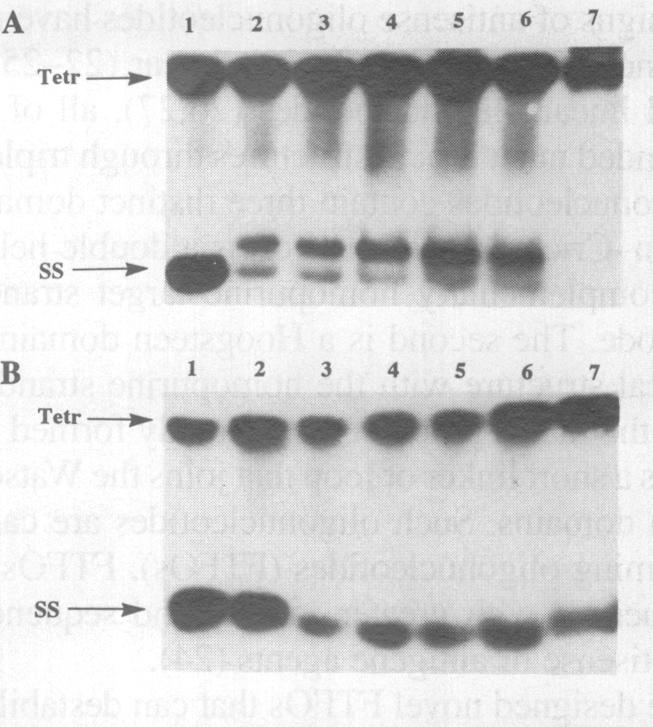
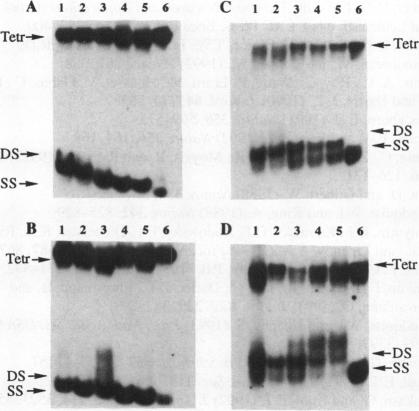
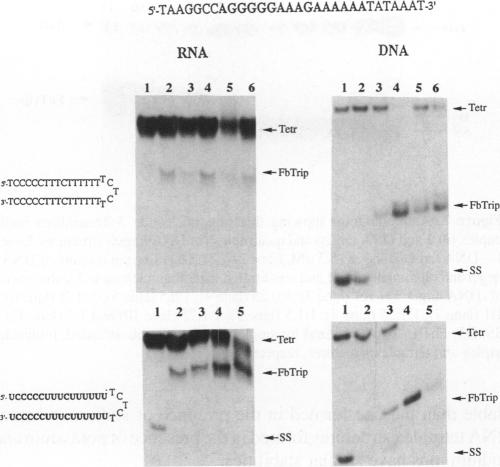
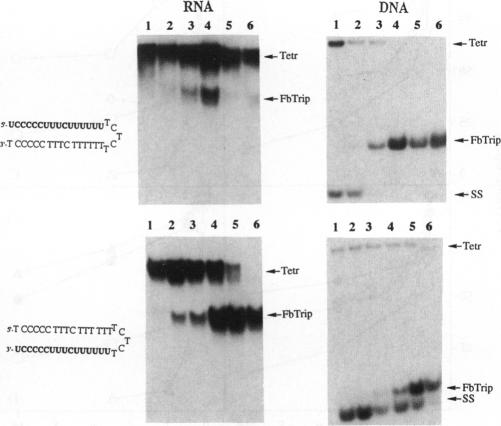
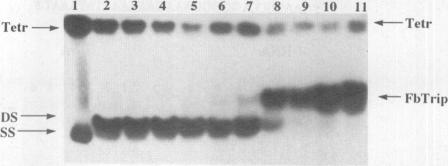
Oligonucleotides that can hybridize to single-stranded complementary polypurine nucleic acid targets by Watson-Crick base pairing as well as by Hoogsteen base pairing, referred to here as foldback triplex-forming oligonucleotides (FTFOs), have been designed. These oligonucleotides hybridize with target nucleic acid sequences with greater affinity than antisense oligonucleotides, which hybridize to the target sequence only by Watson-Crick hydrogen bonding [Kandimalla, E. R. and Agrawal, S. Gene(1994) 149, 115-121 and references cited therein]. FTFOs have been studied for their ability to destabilize quadruplexes formation by RNA or DNA target sequences. The influence of various DNA/RNA compositions of FTFOs on their ability to destabilize RNA and DNA quadruplexes has been examined. The ability of the FTFOs to destabilize quadruplex structures is related to the structurally and thermodynamically stable foldback triplex formed between the FTFO and its target sequence. Antisense oligonucleotides (DNA or RNA) that can form only a Watson-Crick double helix with the target sequence are unable to destabilize quadruplex structures of RNA and DNA target sequences and are therefore limited in their repertoire of target sequences. The quadruplex destabilization ability of FTFOs is dependent on the nature of the cation present in solution. The RNA quadruplex destabilization ability of FTFOs is -20% higher in the presence of sodium ion than potassium ion. The use of FTFOs, which can destabilize quadruplex structure, opens up new areas for development of oligonucleotide-based therapeutics, specifically, targeting guanine-rich sequences that exist at the ends of pro- and eukaryotic chromosomes and dimerization regions of retroviral RNA.
已经设计出了这样的寡核苷酸,它们能够通过沃森-克里克碱基配对以及霍格斯坦碱基配对与单链互补多嘌呤核酸靶标杂交,在此称为折返三链体形成寡核苷酸(FTFO)。这些寡核苷酸与靶核酸序列杂交的亲和力高于反义寡核苷酸,反义寡核苷酸仅通过沃森-克里克氢键与靶序列杂交[坎迪马拉,E.R.和阿格拉瓦尔,S.《基因》(1994年)149,115 - 121及其中引用的参考文献]。人们已经研究了FTFO破坏RNA或DNA靶序列形成四链体的能力。已经研究了FTFO的各种DNA/RNA组成对其破坏RNA和DNA四链体能力的影响。FTFO破坏四链体结构的能力与其与靶序列之间形成的结构和热力学稳定的折返三链体有关。只能与靶序列形成沃森-克里克双螺旋的反义寡核苷酸(DNA或RNA)无法破坏RNA和DNA靶序列的四链体结构,因此其靶序列范围有限。FTFO的四链体破坏能力取决于溶液中存在的阳离子的性质。在钠离子存在下,FTFO对RNA四链体的破坏能力比钾离子存在时高20%。使用能够破坏四链体结构的FTFO为基于寡核苷酸的治疗方法的开发开辟了新领域,具体而言,可靶向原核和真核染色体末端以及逆转录病毒RNA二聚化区域存在的富含鸟嘌呤的序列。