Zeng G, Ariga T, Gu X B, Yu R K
Department of Biochemistry and Molecular Biophysics, Medical College of Virginia, Virginia Commonwealth University, Richmond 23298-0614, USA.
Proc Natl Acad Sci U S A. 1995 Sep 12;92(19):8670-4. doi: 10.1073/pnas.92.19.8670.
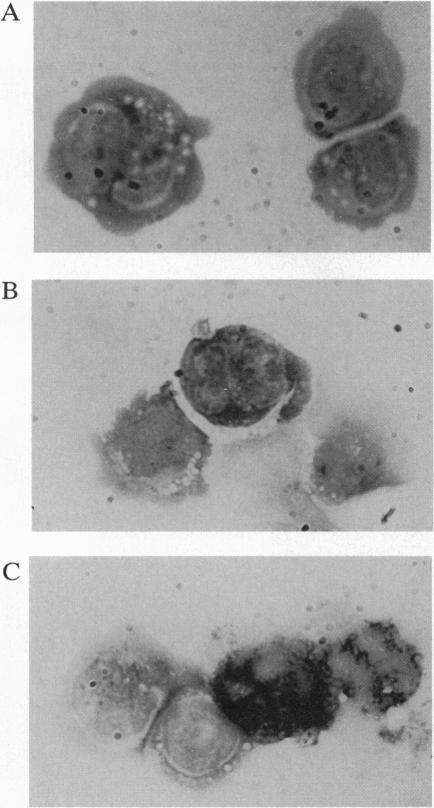
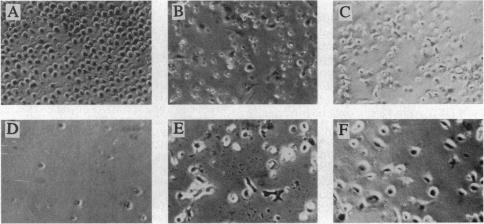
Treatment of the human promyelocytic leukemia cell line HL-60 with antisense oligodeoxynucleotides to UDP-N-acetylgalactosamine:beta-1,4-N-acetylgalactosaminyl-transferase (GM2-synthase; EC 2.4.1.92) and CMP-sialic acid:alpha-2,8-sialyltransferase (GD3-synthase; EC 2.4.99.8) sequences effectively down-regulated the synthesis of more complex gangliosides in the ganglioside synthetic pathways after GM3, resulting in a remarkable increase in endogenous GM3 with concomitant decreases in more complex gangliosides. The treated cells underwent monocytic differentiation as judged by morphological changes, adherent ability, and nitroblue tetrazolium staining. These data provide evidence that the increased endogenous ganglioside GM3 may play an important role in regulating cellular differentiation and that the antisense DNA technique proves to be a powerful tool in manipulating glycolipid synthesis in the cell.
用针对UDP-N-乙酰半乳糖胺:β-1,4-N-乙酰半乳糖胺基转移酶(GM2合酶;EC 2.4.1.92)和CMP-唾液酸:α-2,8-唾液酸转移酶(GD3合酶;EC 2.4.99.8)序列的反义寡脱氧核苷酸处理人早幼粒细胞白血病细胞系HL-60,可有效下调GM3后神经节苷脂合成途径中更复杂神经节苷脂的合成,导致内源性GM3显著增加,同时更复杂神经节苷脂减少。通过形态学变化、贴壁能力和硝基蓝四氮唑染色判断,处理后的细胞发生了单核细胞分化。这些数据证明,内源性神经节苷脂GM3的增加可能在调节细胞分化中起重要作用,并且反义DNA技术被证明是操纵细胞中糖脂合成的有力工具。