Cherney B W, Bhatia K, Tosato G
Laboratory of Immunology, Food and Drug Administration, National Institutes of Health, Bethesda, MD 20892.
Proc Natl Acad Sci U S A. 1994 Dec 20;91(26):12967-71. doi: 10.1073/pnas.91.26.12967.
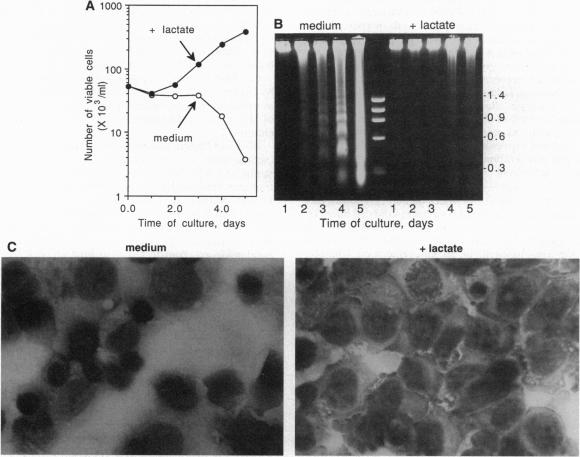
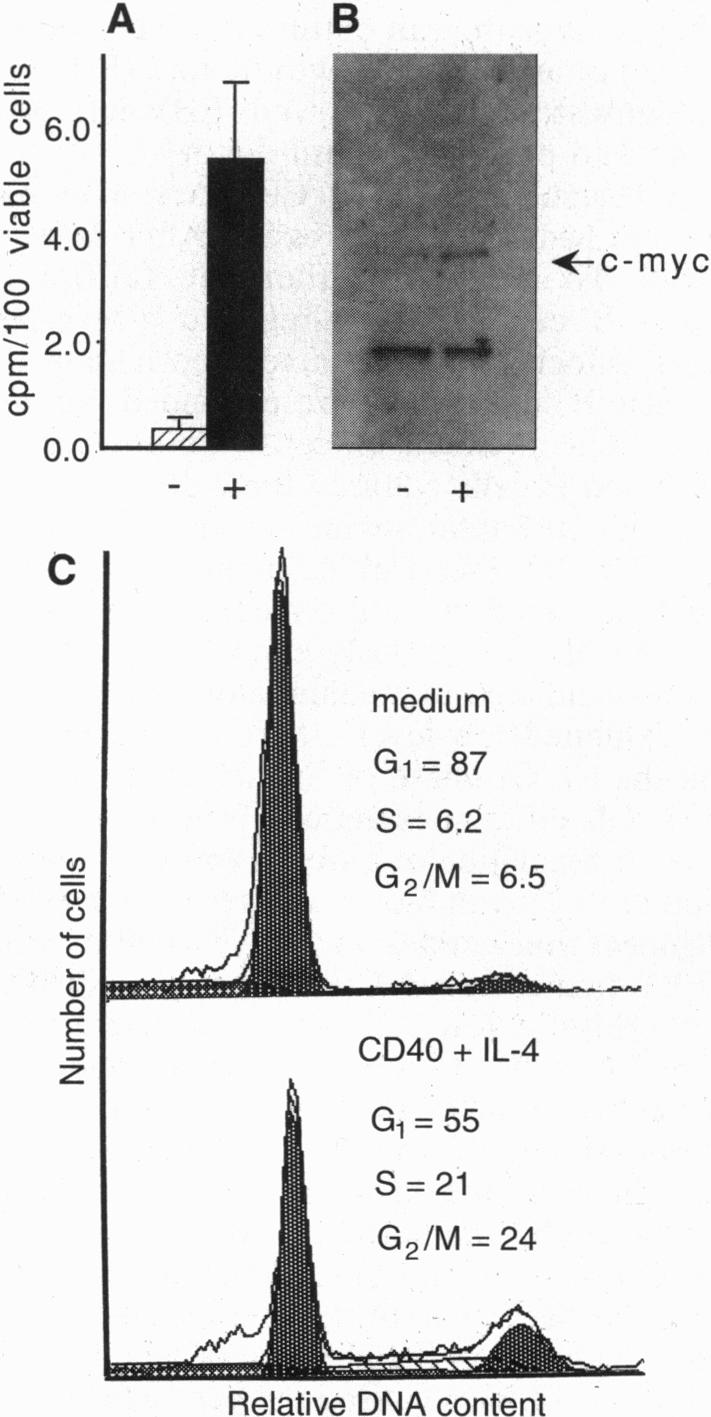
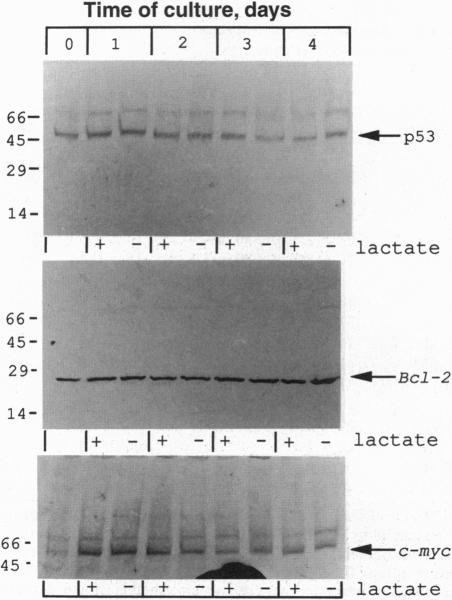
When deprived of autocrine growth factors, Epstein-Barr virus (EBV)-immortalized B cells stop growing and die. In this study, we show that death of EBV-immortalized cells deprived of autocrine growth factors occurred by apoptosis. Cycloheximide, a protein synthesis inhibitor, inhibited apoptosis, suggesting that de novo protein synthesis is required. Because p53, Bcl-2, and c-Myc were previously implicated in the induction or prevention of apoptosis in other systems, we assessed their possible involvement here. Unlike normal cells that respond to growth factor deprivation by down-regulating c-Myc expression, EBV-immortalized cells continued to express c-Myc, p53, and Bcl-2 at levels comparable to those measured prior to starvation. Consistent with data demonstrating that c-Myc expression is sufficient to drive quiescent cells into the cell cycle, autocrine growth factor-deprived EBV-immortalized cells did not undergo growth arrest but rather continued to proliferate until death, which occurred randomly throughout the cell cycle. In contrast to EBV-immortalized B cells, normal peripheral blood B cells activated in vitro with anti-CD40 monoclonal antibody and interleukin 4 rapidly down-regulated c-Myc expression and underwent growth arrest in response to growth factors and serum deprivation. These findings demonstrated that c-Myc expression is deregulated in EBV-immortalized cells. Addition of antisense oligonucleotides to c-Myc specifically promoted the survival of starved EBV-immortalized cells and suppressed growth of nonstarved EBV-immortalized cells. Thus, deregulated expression of c-Myc in EBV-immortalized cells promotes proliferation and apoptosis following autocrine growth factor deprivation.
当被剥夺自分泌生长因子时,爱泼斯坦-巴尔病毒(EBV)永生化的B细胞停止生长并死亡。在本研究中,我们表明,被剥夺自分泌生长因子的EBV永生化细胞的死亡是通过凋亡发生的。蛋白质合成抑制剂环己酰亚胺抑制了凋亡,这表明需要从头合成蛋白质。由于p53、Bcl-2和c-Myc先前在其他系统中与凋亡的诱导或预防有关,我们评估了它们在此处可能的参与情况。与通过下调c-Myc表达来响应生长因子剥夺的正常细胞不同,EBV永生化细胞继续以与饥饿前测量水平相当的水平表达c-Myc、p53和Bcl-2。与证明c-Myc表达足以驱动静止细胞进入细胞周期的数据一致,被剥夺自分泌生长因子的EBV永生化细胞没有经历生长停滞,而是继续增殖直至死亡,死亡在整个细胞周期中随机发生。与EBV永生化B细胞相反,用抗CD40单克隆抗体和白细胞介素4体外激活的正常外周血B细胞迅速下调c-Myc表达,并在响应生长因子和血清剥夺时经历生长停滞。这些发现表明,EBV永生化细胞中c-Myc的表达失调。向c-Myc添加反义寡核苷酸特异性地促进了饥饿的EBV永生化细胞的存活,并抑制了未饥饿的EBV永生化细胞的生长。因此,EBV永生化细胞中c-Myc的表达失调促进了自分泌生长因子剥夺后的增殖和凋亡。