Casavilla A, Ramirez C, Shapiro R, Nghiem D, Miracle K, Bronsther O, Randhawa P, Broznick B, Fung J J, Starzl T
Department of Surgery, Pittsburgh Transplantation Institute, University of Pittsburgh Medical Center, Pennsylvania.
Transplantation. 1995 Jan 27;59(2):197-203. doi: 10.1097/00007890-199501000-00008.
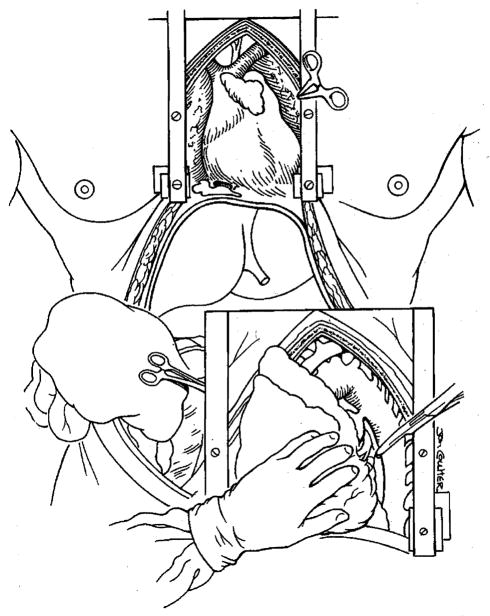
Given the shortage of cadaveric organs, we began a study utilizing NHBD for OLTx and KTx. There were 24 NHBD between January 1989 and September 1993. These donors were divided into 2 groups: uncontrolled NHBD (G1) (n = 14) were patients whose organs were recovered following a period of CPR; and controlled NHBD (G2) (n = 10) were patients whose organs were procured after sustaining cardiopulmonary arrest (CA) following extubation in an operating room setting. Eight kidneys and 5 livers were discarded because of macroscopic or biopsy findings. In G1, 22/27 (81.5%) kidneys were transplanted; 14/22 (64%) developed ATN; 20/22 (95%) recipients were off dialysis at the time of discharge. With a mean follow-up of 32.7 +/- 21.1 months, sixteen (73%) kidneys are still functioning, with a mean serum creatinine of 1.7 +/- 0.6 mg/dl. The one-year actuarial patient and graft survivals are 95% and 86%. In G2, 17/20 (85%) kidneys were transplanted; 13/17 (76%) kidneys experienced ATN. All patients were off dialysis by the time of discharge. With a mean follow-up of 17.6 +/- 15.4 months, twelve (70%) kidneys are still functioning, with a mean serum creatinine of 2.5 +/- 2.1 mg/dl. The one-year actuarial patient and graft survivals are 94% and 82%, respectively. In G1, 6/10 (60%) livers were transplanted; 3/6 (50%) livers functioned, the other 3 patients required ReOLTx in the first week postoperatively because of PNF (n = 2) and inadequate portal flow (n = 1). Two functioning livers were lost due to HAT (n = 1) and CMV hepatitis (n = 1). In G2, 6/7 (85.7%) livers were transplanted. All the livers (100%) functioned. 2 patients required ReOLTx for HAT at 0.9 and 1.0 months. Both patients eventually died. One patient with a functioning liver died 2 months post OLTx. The remaining 3 patients are alive and well at 27 months of follow-up. This study shows that the procurement of kidneys from both uncontrolled and controlled NHBD leads to acceptable graft function despite a high incidence of ATN. The function of liver allografts is adequate in the controlled NHBD but suboptimal in the uncontrolled NHBD, with a high rate of PNF.
鉴于尸体器官短缺,我们开展了一项利用非心脏骤停供体(NHBD)进行肝移植(OLTx)和肾移植(KTx)的研究。1989年1月至1993年9月期间共有24例NHBD。这些供体被分为两组:非控制性NHBD(G1组)(n = 14),其器官是在一段时间的心肺复苏(CPR)后获取的;控制性NHBD(G2组)(n = 10),其器官是在手术室环境中拔管后发生心脏骤停(CA)后获取的。由于宏观或活检结果,8个肾脏和5个肝脏被弃用。在G1组中,27个肾脏中有22个(81.5%)进行了移植;其中14个(64%)发生了急性肾小管坏死(ATN);22个受者中有20个(95%)在出院时停止了透析。平均随访32.7±21.1个月,16个(73%)肾脏仍在发挥功能,平均血清肌酐为1.7±0.6mg/dl。1年的实际患者和移植物存活率分别为95%和86%。在G2组中,20个肾脏中有17个(85%)进行了移植;其中13个(76%)肾脏发生了ATN。所有患者在出院时均停止了透析。平均随访17.6±15.4个月,12个(70%)肾脏仍在发挥功能,平均血清肌酐为2.5±2.1mg/dl。1年的实际患者和移植物存活率分别为94%和82%。在G1组中,10个肝脏中有6个(60%)进行了移植;其中3个(50%)肝脏发挥了功能,另外3例患者在术后第一周因原发性无功能(PNF)(n = 2)和门静脉血流不足(n = 1)需要再次肝移植(ReOLTx)。2个发挥功能的肝脏因肝动脉血栓形成(HAT)(n = 1)和巨细胞病毒肝炎(n = 1)而丧失。在G2组中,7个肝脏中有6个(85.7%)进行了移植。所有肝脏(100%)均发挥了功能。2例患者分别在0.9个月和1.0个月时因HAT需要进行ReOLTx。这两名患者最终均死亡。1例肝脏功能正常的患者在肝移植后2个月死亡。其余3例患者在随访27个月时存活且状况良好。这项研究表明,尽管ATN发生率较高,但从非控制性和控制性NHBD获取肾脏均可带来可接受的移植物功能。在控制性NHBD中,同种异体肝移植的功能足够,但在非控制性NHBD中功能欠佳,PNF发生率较高。