Everett K D, Desiderio D M, Hatch T P
Department of Microbiology and Immunology, University of Tennessee, Memphis 38163.
J Bacteriol. 1994 Oct;176(19):6082-7. doi: 10.1128/jb.176.19.6082-6087.1994.
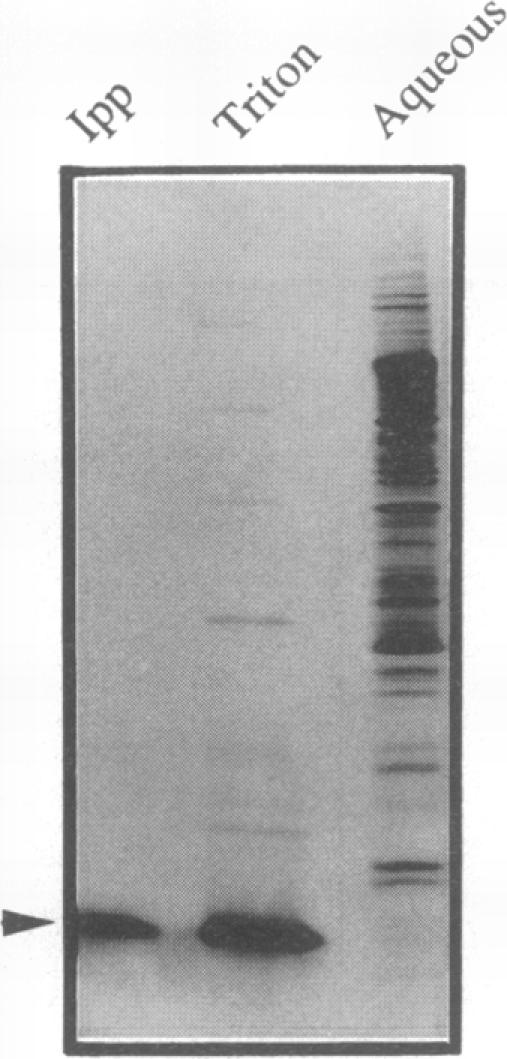
The primary sequence of the small cysteine-rich protein (EnvA) of Chlamydia psittaci 6BC has been shown to possess a potential lipid modification/signal peptidase II-processing site, and the mature protein was labeled by a [3H]palmitic acid precursor. We further characterized the mature EnvA, showing that it lacks the N-terminal methionine of the primary peptide, is hydrophobic despite a peptide sequence that is predicted to be hydrophilic, and appears to be lipid modified at an N-terminal cysteine in a manner analogous to that of murein lipoproteins of gram-negative bacteria. We also report the fatty acid content of the small cysteine-rich proteins of C. psittaci and Chlamydia trachomatis L2 as determined by combined gas chromatography-mass spectrometry.