Mauad T H, van Nieuwkerk C M, Dingemans K P, Smit J J, Schinkel A H, Notenboom R G, van den Bergh Weerman M A, Verkruisen R P, Groen A K, Oude Elferink R P
Department of Pathology (H2), Academic Medical Center, Amsterdam, The Netherlands.
Am J Pathol. 1994 Nov;145(5):1237-45.
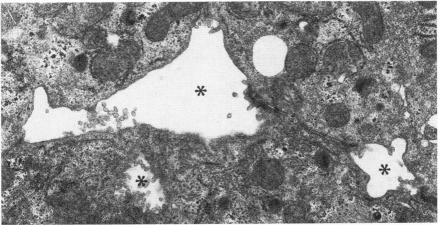
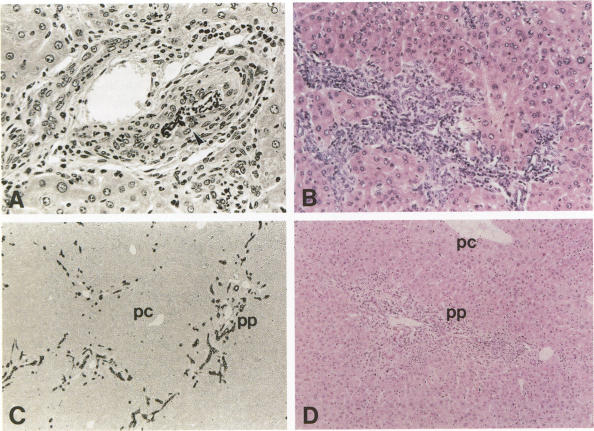
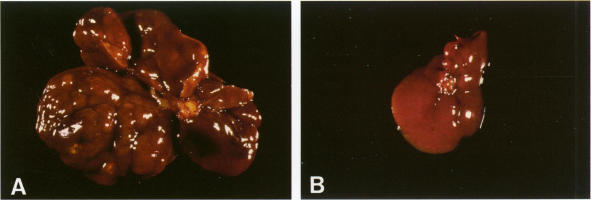
The mouse mdr2 gene (and its human homologue MDR3, also called MDR2) encodes a P-glycoprotein that is present in high concentration in the bile canalicular membrane of hepatocytes. The 129/OlaHsd mice with a homozygous disruption of the mdr2 gene (-/- mice) lack this P-glycoprotein in the canalicular membrane. These mice are unable to secrete phospholipids into bile, showing an essential role for the mdr2 P-glycoprotein in the transport of phosphatidylcholine across the canalicular membrane. The complete absence of phospholipids from bile leads to a hepatic disease, which becomes manifest shortly after birth and shows progression to an end stage in the course of 3 months. The liver pathology is that of a nonsuppurative inflammatory cholangitis with portal inflammation and ductular proliferation, consistent with toxic injury of the biliary system from bile salts unaccompanied by phospholipids. Thus, the mdr2 (-/-) mice can serve as an animal model for studying mechanisms and potential interventions in nonsuppurative inflammatory cholangitis (in a generic sense) in human disease, be it congenital or acquired. When the mice are 4 to 6 months of age, preneoplastic lesions develop in the liver, progressing to metastatic liver cancer in the terminal phase. The mdr2 (-/-) mice therefore also provide a tumor progression model of value for the study of hepatic carcinogenesis. Interestingly, also in this regard, the model mimicks human disease, because chronic inflammation of the biliary system in humans may similarly carry increased cancer risk.
小鼠mdr2基因(及其人类同源基因MDR3,也称为MDR2)编码一种P-糖蛋白,该蛋白在肝细胞胆小管膜中高浓度存在。mdr2基因纯合缺失的129/OlaHsd小鼠(-/-小鼠)在胆小管膜中缺乏这种P-糖蛋白。这些小鼠无法将磷脂分泌到胆汁中,表明mdr2 P-糖蛋白在磷脂酰胆碱跨胆小管膜转运中起重要作用。胆汁中完全缺乏磷脂会导致肝脏疾病,这种疾病在出生后不久就会显现,并在3个月内发展到终末期。肝脏病理表现为非化脓性炎症性胆管炎,伴有门静脉炎症和胆小管增生,这与胆汁盐对胆道系统的毒性损伤一致,且胆汁盐中不伴有磷脂。因此,mdr2(-/-)小鼠可作为动物模型,用于研究人类疾病(无论是先天性还是后天性)中非化脓性炎症性胆管炎(广义上)的发病机制和潜在干预措施。当小鼠4至6个月大时,肝脏会出现癌前病变,并在终末期发展为转移性肝癌。因此,mdr2(-/-)小鼠也为肝癌发生研究提供了一个有价值的肿瘤进展模型。有趣的是,在这方面该模型也模拟了人类疾病,因为人类胆道系统的慢性炎症可能同样会增加患癌风险。