Friedman R D, Merritt A D
Department of Biochemistry, Temple University School of Dentistry, Philadelphia, Pennsylvania 19140.
Am J Hum Genet. 1975 May;27(3):304-14.
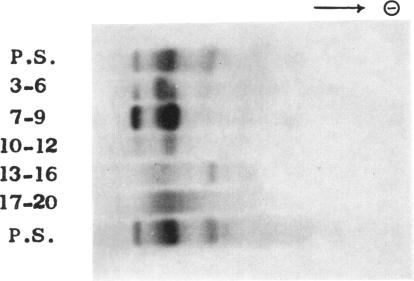
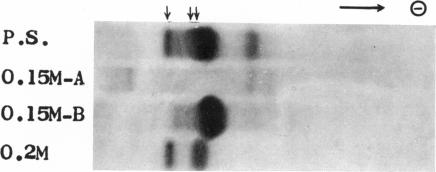
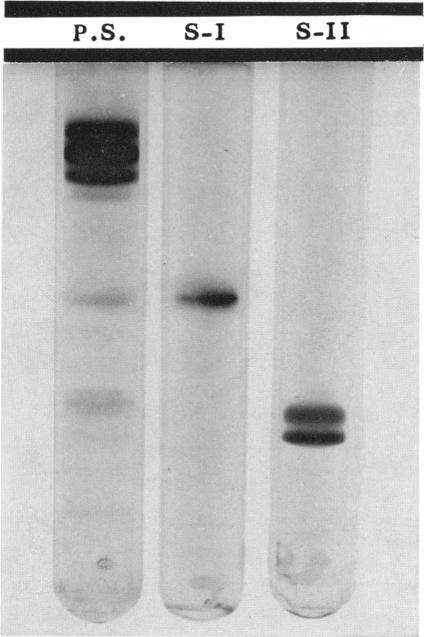
A polymorphic acidic protein (Pa) has been isolated from human parotid saliva by the use of ion-exchange and gel filtration chromatography. Following these purification procedures, analytical anionic polyacrylamide disc gel electrophoresis revealed a single stainable band. Amino acid analysis demonstrated a protein particularly rich in proline, glutamic acid, and glycine, but with reduced amounts of threonine and no tyrosine. Only a very small percentage of carbohydrate was detected. Isoelectric focusing at pH 3-10 verified the acidic character of this protein with an isoelectric point in the range pH 3.9-4.5. Other salivary proteins called Pa-II, possibly related physiologically and genetically to the Pr system, were also partially purified and studied. Differences were noted between Pa and Pa-II proteins in molecular size and amino acid composition.
通过离子交换和凝胶过滤色谱法,从人腮腺唾液中分离出一种多态性酸性蛋白(Pa)。经过这些纯化步骤后,分析性阴离子聚丙烯酰胺圆盘凝胶电泳显示出一条可染色的单一谱带。氨基酸分析表明,该蛋白质富含脯氨酸、谷氨酸和甘氨酸,但苏氨酸含量减少且不含酪氨酸。仅检测到极少量的碳水化合物。在pH 3 - 10范围内进行等电聚焦,证实了该蛋白质的酸性特征,其等电点在pH 3.9 - 4.5范围内。还对其他称为Pa-II的唾液蛋白进行了部分纯化和研究,它们可能在生理和遗传上与Pr系统相关。注意到Pa和Pa-II蛋白在分子大小和氨基酸组成上存在差异。