Friedman R D, Merritt A D, Rivas M L
Department of Biochemistry, Temple University School of Dentistry, Philadelphia, Pennsylvania 19140.
Am J Hum Genet. 1975 May;27(3):292-303.
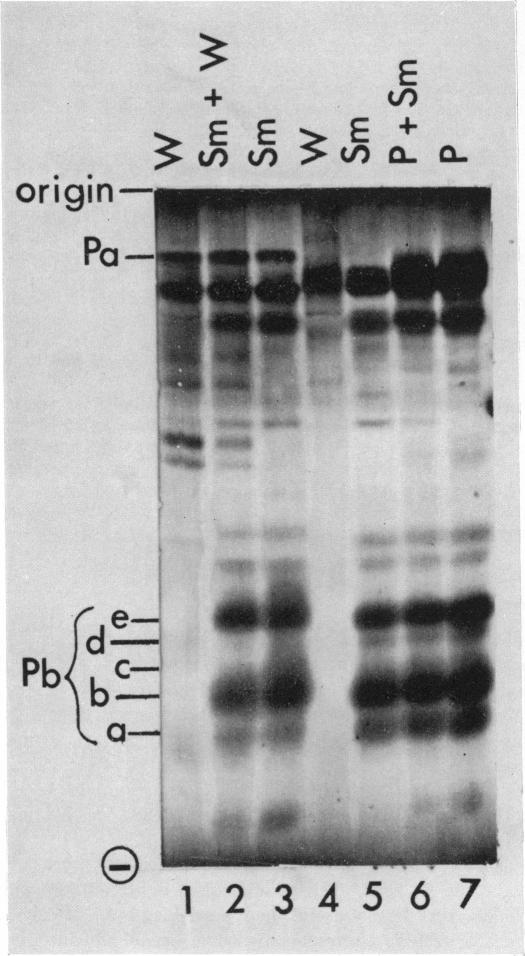
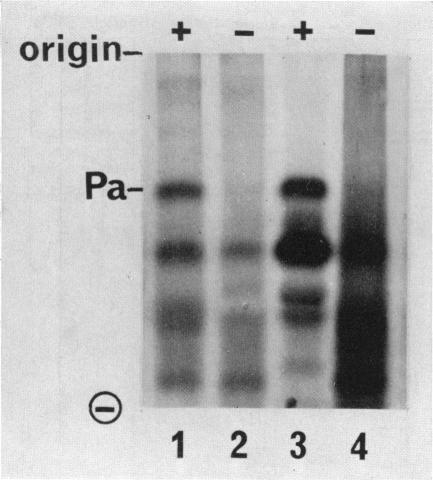
The phenotypic expression of a dominantly inherited human salivary acidic protein (Pa) has been described in acid-urea starch and in Tris-borate acrylamide gel systems. Estimates of the Pa+ allelic frequencies in American Caucasians, American blacks, and Orientals are .21, .14, and .42, respectively. The genetic and biochemical similarities to another series of proline-rich salivary proteins, Pr, and to a pair of similarly staining salivary proteins, Db (double band), are evaluated. It is concluded that either one locus or two (or three) tightly linked loci are viable explanations for this polymorphic system(s). It is suggested that the three factors, Pa, Pr, and Db, be treated as separate loci to allow clarification of their genetic relationships.
一种显性遗传的人类唾液酸性蛋白(Pa)的表型表达已在酸性尿素淀粉和Tris-硼酸丙烯酰胺凝胶系统中得到描述。美国白种人、美国黑人和东方人中Pa+等位基因频率的估计值分别为0.21、0.14和0.42。评估了与另一系列富含脯氨酸的唾液蛋白Pr以及一对染色相似的唾液蛋白Db(双条带)的遗传和生化相似性。得出结论,一个基因座或两个(或三个)紧密连锁的基因座是这个多态系统的可行解释。建议将Pa、Pr和Db这三个因素视为独立的基因座,以便阐明它们的遗传关系。