Eberhard D A, Brown M D, VandenBerg S R
Department of Pathology (Neuropathology), University of Virginia Health Sciences Center, Charlottesville 22908.
Am J Pathol. 1994 Sep;145(3):640-9.
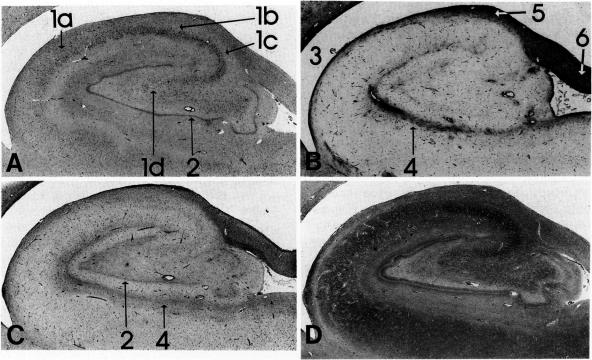
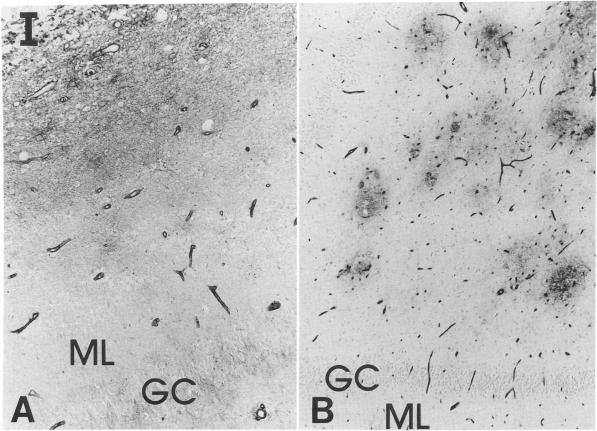
Annexins are Ca(2+)-dependent membrane-binding proteins that are potentially important in Ca(2+)-induced neurotoxicity or neuroprotection. To address the possible involvement of annexins in cellular reactions to brain injury and neurodegenerative disease, we studied the immunohistochemical localization of annexins I, II (p36 and p11), IV, and VI in the adult human hippocampus. Formalin-fixed, paraffin-embedded tissue from autopsy cases representing hypoxic-ischemic injury, seizure disorders, Alzheimer's disease, and age-related controls were examined. Neurons showed cytoplasmic immunoreactivity for annexin I, whereas annexin VI was distributed in patterns suggesting plasma membrane and perisynaptic locations. The cytoarchitectural distribution of annexin VI within neurons was altered in pathological states and annexin VI was strongly associated with neuronal granulovacuolar bodies in Alzheimer's disease. Reactive astrocytes expressed annexins I, II (p36 and p11), and IV, whereas quiescent astrocytes were minimally immunoreactive. Significant annexin immunoreactivity was also detected in oligodendrocytes (annexin IV), ependymocytes (I, II, and IV), choroid plexus (I, IV, and VI), meningothelium (I, II, IV, and VI), and vascular endothelium (II and IV) and smooth muscle (I, IV, and VI). This is the first comparative study of immunoreactivities for multiple annexins in human brain. Neurons and glia display selective and different profiles of annexin protein expression and show immunohistochemical changes in pathological conditions, which suggest involvement of annexins in neuronal and glial reactions to injury.
膜联蛋白是依赖钙离子的膜结合蛋白,在钙离子诱导的神经毒性或神经保护中可能具有重要作用。为了探讨膜联蛋白在细胞对脑损伤和神经退行性疾病反应中的可能作用,我们研究了膜联蛋白I、II(p36和p11)、IV和VI在成人大脑海马体中的免疫组织化学定位。我们检查了来自尸检病例的福尔马林固定、石蜡包埋组织,这些病例代表缺氧缺血性损伤、癫痫疾病、阿尔茨海默病以及年龄相关对照。神经元显示出膜联蛋白I的细胞质免疫反应性,而膜联蛋白VI以提示质膜和突触周围位置的模式分布。在病理状态下,神经元内膜联蛋白VI的细胞结构分布发生改变,并且在阿尔茨海默病中膜联蛋白VI与神经元颗粒空泡体密切相关。反应性星形胶质细胞表达膜联蛋白I、II(p36和p11)和IV,而静止星形胶质细胞的免疫反应性最低。在少突胶质细胞(膜联蛋白IV)、室管膜细胞(I、II和IV)、脉络丛(I、IV和VI)、脑膜上皮(I、II、IV和VI)以及血管内皮(II和IV)和平滑肌(I、IV和VI)中也检测到显著的膜联蛋白免疫反应性。这是首次对人脑中多种膜联蛋白免疫反应性的比较研究。神经元和神经胶质细胞显示出膜联蛋白蛋白表达的选择性和不同模式,并在病理条件下表现出免疫组织化学变化,这表明膜联蛋白参与了神经元和神经胶质细胞对损伤的反应。