Hait W N, Choudhury S, Srimatkandada S, Murren J R
Yale University School of Medicine, Department of Medicine, New Haven, Connecticut 06510.
J Clin Invest. 1993 May;91(5):2207-15. doi: 10.1172/JCI116447.
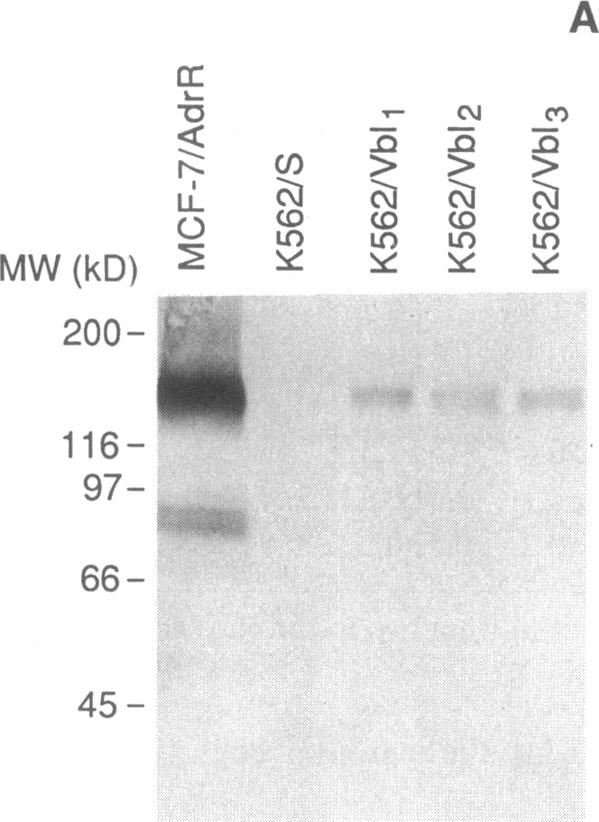
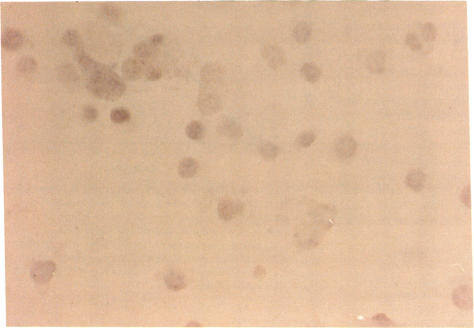
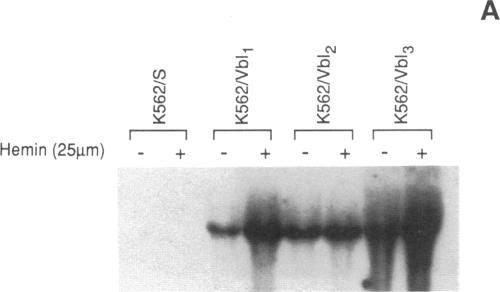
The blast crisis of chronic myelogenous leukemia (CML) is refractory to most forms of cancer chemotherapy, but may be amenable to drugs that differentiate rather than kill leukemic cells. One mechanism implicated in resistance to cytodestructive drugs is overexpression of P-glycoprotein, the MDR1 gene product. While several classes of drugs sensitize multidrug-resistant (MDR) cells by interfering with the function of P-glycoprotein in vitro, few sensitizers have been effective in vivo. We have developed a preclinical model of MDR/CML uncomplicated by other mechanisms of drug resistance to evaluate the effects of MDR1 overexpression on cytodestructive and differentiation therapy and the ability of sensitizers to restore chemosensitivity in this disease. The CML-derived cell line K562 was transfected with a human MDR1 cDNA from the pHaMDR1/A expression vector and selected with vinblastine. Resistant K562 clones were 20-30-fold resistant to vinblastine, were cross-resistant to doxorubicin and etoposide, and remained sensitive to cytosine arabinoside, 6-thioguanine, hydroxyurea, and mechlorethamine. Resistance was associated with decreased cellular accumulation of cytotoxic drug and was reversed by cyclosporin A and trans-flupenthixol. The MDR phenotype did not adversely affect the ability of K562 cells to produce fetal hemoglobin in response to hemin, and was associated with increased responsiveness of cells to differentiate with cytosine arabinoside. Upon differentiation, the resistant clones increased MDR1 mRNA and P-glycoprotein. These studies suggest that the overexpression of the MDR1 gene in CML may not adversely affect the ability to undergo erythroid differentiation and that these resistant K562 cell lines are good models for studying drug resistance mediated by P-glycoprotein in CML.
慢性粒细胞白血病(CML)的急变期对大多数癌症化疗形式均具有耐药性,但可能对那些促使白血病细胞分化而非杀死白血病细胞的药物敏感。与对细胞毒性药物耐药相关的一种机制是P-糖蛋白(MDR1基因产物)的过表达。虽然几类药物在体外通过干扰P-糖蛋白的功能使多药耐药(MDR)细胞致敏,但很少有增敏剂在体内有效。我们已建立了一个未受其他耐药机制影响的MDR/CML临床前模型,以评估MDR1过表达对细胞毒性和分化治疗的影响,以及增敏剂恢复该疾病化疗敏感性的能力。将源自CML的细胞系K562用来自pHaMDR1/A表达载体的人MDR1 cDNA进行转染,并用长春碱进行筛选。耐药的K562克隆对长春碱有20 - 30倍的耐药性,对多柔比星和依托泊苷有交叉耐药性,而对阿糖胞苷、6-硫鸟嘌呤、羟基脲和氮芥仍敏感。耐药与细胞毒性药物的细胞内蓄积减少有关,并可被环孢素A和反式氟奋乃静逆转。MDR表型并未对K562细胞响应氯化血红素产生胎儿血红蛋白的能力产生不利影响,且与细胞对阿糖胞苷分化的反应性增加有关。分化后,耐药克隆的MDR1 mRNA和P-糖蛋白增加。这些研究表明,CML中MDR1基因的过表达可能不会对红系分化能力产生不利影响,并且这些耐药的K562细胞系是研究CML中由P-糖蛋白介导的耐药性的良好模型。