Duetz W A, Marqués S, de Jong C, Ramos J L, van Andel J G
Laboratory for Waste Materials and Emissions, National Institute of Public Health and Environmental Protection, Bilthoven, The Netherlands.
J Bacteriol. 1994 Apr;176(8):2354-61. doi: 10.1128/jb.176.8.2354-2361.1994.
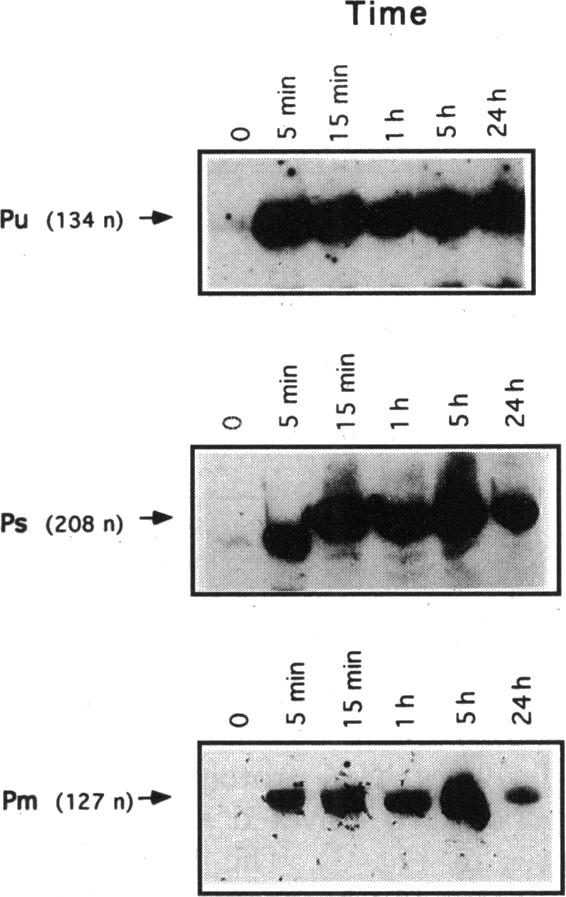
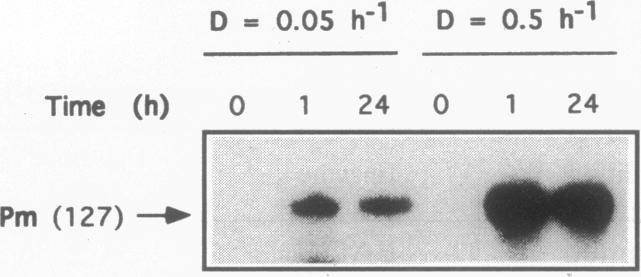
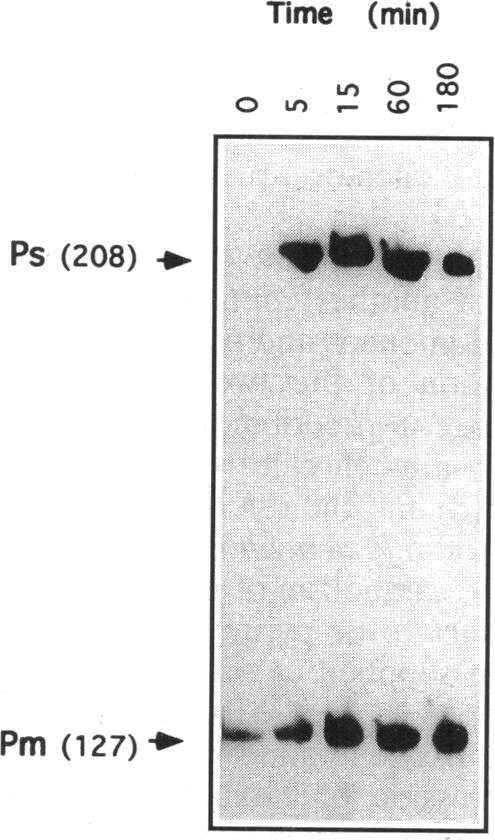
The TOL catabolic genes in Pseudomonas putida (pWW0) are clustered in the upper operon, encoding enzymes for the conversion of toluene and xylenes to benzoate and toluates, and the meta-cleavage operon, encoding enzymes for the conversion of the benzoate and toluates to tricarboxylic acid cycle intermediates. In this study, it was shown that cells growing in a chemostat under succinate growth-limiting conditions express both the upper and meta-cleavage pathways in response to o-xylene, a nonmetabolizable effector of the XylR regulatory protein. The dilution rate maintained in the succinate-limited chemostat cultures influenced the synthesis levels of TOL pathway enzymes, their steady-state levels, and their turnover rates. Cells growing in the presence of nonlimiting concentrations of succinate in continuous culture did not express pathway enzymes in response to the addition of o-xylene, which was due to a blockage at the transcriptional level. Expression of the meta-cleavage pathway in response to 2,3-dimethylbenzoate, a nonmetabolizable effector of the XylS regulatory protein, was 93% lower in cultures exposed to succinate at nonlimiting concentrations than in the succinate-limited chemostats. The mRNA level of xylS during nonlimited growth on succinate was very low compared with that in succinate-limited cultures, suggesting that suppression of expression of the meta-cleavage pathway is regulated mainly by the level of the XylS regulator.
恶臭假单胞菌(pWW0)中的TOL分解代谢基因聚集在上游操纵子中,该操纵子编码将甲苯和二甲苯转化为苯甲酸和甲苯酸盐的酶,以及间位裂解操纵子,该操纵子编码将苯甲酸和甲苯酸盐转化为三羧酸循环中间体的酶。在本研究中,结果表明,在恒化器中琥珀酸生长限制条件下生长的细胞,会响应邻二甲苯(XylR调节蛋白的一种不可代谢效应物)而表达上游和间位裂解途径。在琥珀酸限制的恒化器培养物中维持的稀释率会影响TOL途径酶的合成水平、其稳态水平及其周转率。在连续培养中于非限制浓度的琥珀酸存在下生长的细胞,不会因添加邻二甲苯而表达途径酶,这是由于转录水平的阻断所致。与琥珀酸限制的恒化器相比,在非限制浓度的琥珀酸存在下培养的细胞中,响应2,3-二甲基苯甲酸(XylS调节蛋白的一种不可代谢效应物)的间位裂解途径的表达降低了93%。与琥珀酸限制培养物相比,在琥珀酸非限制生长期间xylS的mRNA水平非常低,这表明间位裂解途径表达的抑制主要受XylS调节因子水平的调控。