Meek R L, Urieli-Shoval S, Benditt E P
Department of Pathology, University of Washington, Seattle 98195.
Proc Natl Acad Sci U S A. 1994 Apr 12;91(8):3186-90. doi: 10.1073/pnas.91.8.3186.
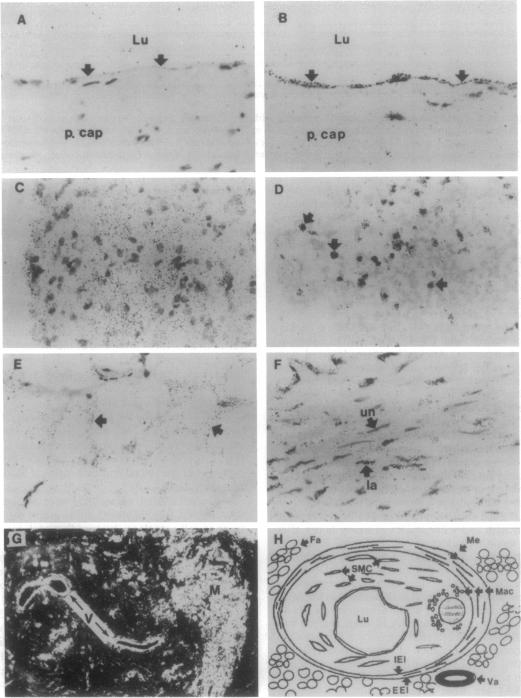
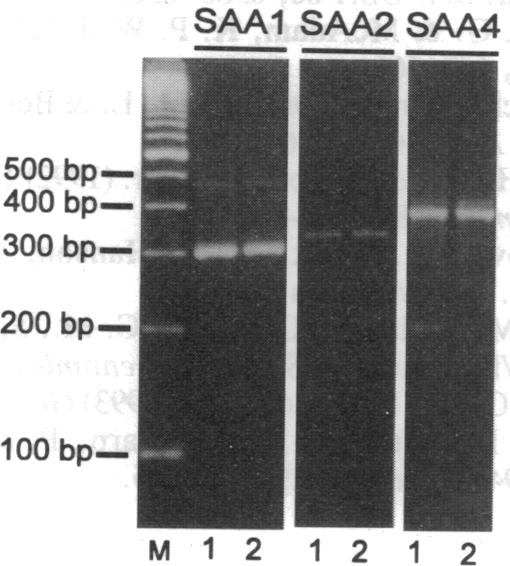
Altered lipoprotein metabolism and vascular injury are considered to be major parts of the pathogenesis of atherosclerotic lesions. Serum amyloid A (SAA) is a family of acute-phase reactants found residing mainly on high density lipoproteins (HDL) in the circulation. Several functions for the SAAs have been proposed that could be important in atherosclerosis. These include involvement in cholesterol metabolism, participation in detoxification, depression of immune responses, and interference with platelet functions. Like other acute-phase reactants, the liver is a major site of SAA synthesis. However, studies in the mouse have revealed that several cell types including macrophages express SAA. Furthermore, we recently found that SAA mRNA expression can be induced in the human monocyte/macrophage cell line, THP-1. In the present study, human atherosclerotic lesions of coronary and carotid arteries were examined for expression of SAA mRNA by in situ hybridization. Surprisingly, SAA mRNA was found in most endothelial cells and some smooth muscle cells as well as macrophage-derived "foam cells," adventitial macrophages, and adipocytes. In addition, cultured smooth muscle cells expressed SAA1, SAA2, and SAA4 mRNAs when treated with interleukin 1 or 6 (IL-1 or IL-6) in the presence of dexamethasone. These findings give further credence to the notion that the SAAs are involved in lipid metabolism or transport at sites of injury and in atherosclerosis or may play a role in defending against viruses or other injurious agents such as oxidized lipids. Furthermore, expression of SAAs by endothelial cells is compatible with the evidence that SAA modulates platelet aggregation and function and possibly adhesion at the endothelial cell surface.
脂蛋白代谢改变和血管损伤被认为是动脉粥样硬化病变发病机制的主要部分。血清淀粉样蛋白A(SAA)是一类急性期反应物,主要存在于循环中的高密度脂蛋白(HDL)上。已提出SAA的几种功能可能在动脉粥样硬化中起重要作用。这些功能包括参与胆固醇代谢、参与解毒、抑制免疫反应以及干扰血小板功能。与其他急性期反应物一样,肝脏是SAA合成的主要部位。然而,对小鼠的研究表明,包括巨噬细胞在内的几种细胞类型都能表达SAA。此外,我们最近发现,人单核细胞/巨噬细胞系THP-1中可诱导SAA mRNA表达。在本研究中,通过原位杂交检测了冠状动脉和颈动脉的人类动脉粥样硬化病变中SAA mRNA的表达。令人惊讶的是,在大多数内皮细胞、一些平滑肌细胞以及巨噬细胞衍生的“泡沫细胞”、外膜巨噬细胞和脂肪细胞中都发现了SAA mRNA。此外,培养的平滑肌细胞在存在地塞米松的情况下用白细胞介素1或6(IL-1或IL-6)处理时,会表达SAA1、SAA2和SAA4 mRNA。这些发现进一步证实了SAA参与损伤部位的脂质代谢或转运以及动脉粥样硬化的观点,或者可能在抵御病毒或其他损伤因子(如氧化脂质)方面发挥作用。此外,内皮细胞表达SAA与SAA调节血小板聚集和功能以及可能在内皮细胞表面的黏附这一证据相符。