Shimazaki T, Okazawa H, Fujii H, Ikeda M, Tamai K, McKay R D, Muramatsu M, Hamada H
Department of Biochemistry, Faculty of Medicine, University of Tokyo, Japan.
EMBO J. 1993 Dec;12(12):4489-98. doi: 10.1002/j.1460-2075.1993.tb06138.x.
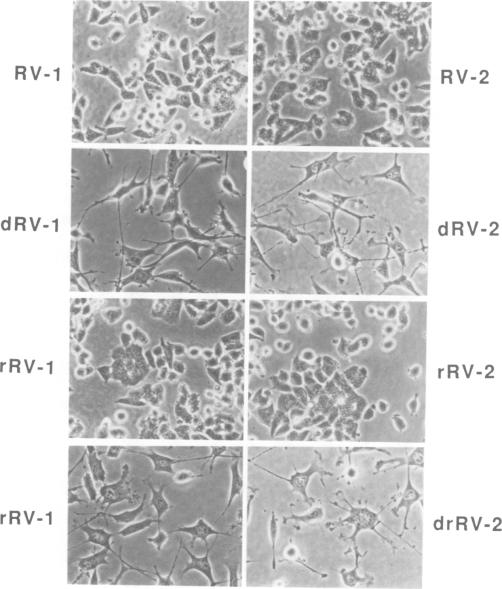
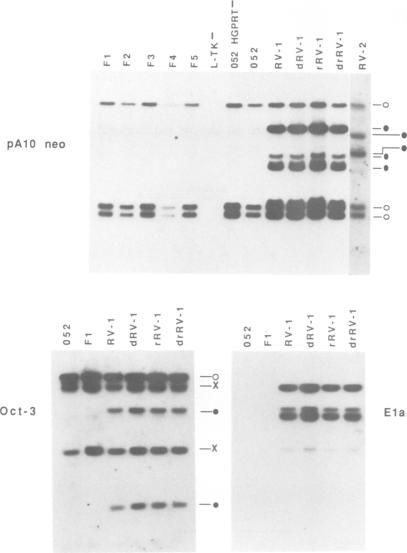
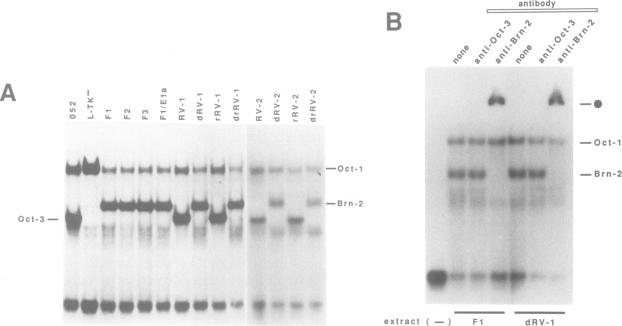
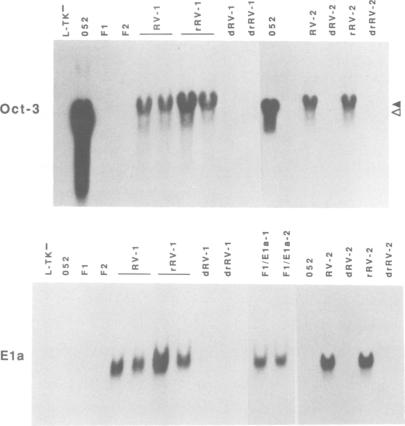
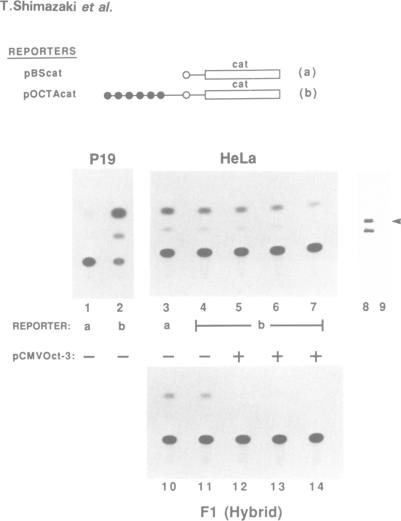
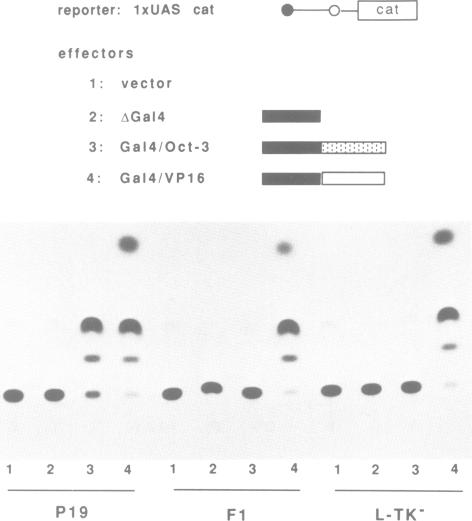
The Oct-3 gene is expressed in highly undifferentiated cells and is implicated in mammalian early embryogenesis. We have generated a series of hybrid cells between pluripotent embryonal carcinoma cells (Oct-3+) and fibroblasts (Oct-3-), and have studied the regulation and function of Oct-3. Upon fusion, the hybrid cells differentiated to nestin+/Brn-2+ cells resembling neuroepithelial stem cells. Expression of Oct-3 was extinguished at the transcriptional level in all the hybrid cells examined. The Oct-3 modulating activity required for the Oct-3-mediated enhancer activation was also extinguished. When the Oct-3 transactivating function was introduced into the hybrid cells, they transformed into morphologically distinct nestin-/Brn-2- cells ('revertants'). When the 'revertant' cells subsequently lost Oct-3 expression, they differentiated back to nestin+/Brn-2+ cells. The close correlation between the phenotypic changes and the gain/loss of Oct-3 function indicates that Oct-3 can induce dedifferentiation of the neural cells.
Oct-3基因在高度未分化的细胞中表达,并与哺乳动物早期胚胎发育有关。我们已在多能胚胎癌细胞(Oct-3+)和成纤维细胞(Oct-3-)之间产生了一系列杂交细胞,并研究了Oct-3的调控和功能。融合后,杂交细胞分化为类似于神经上皮干细胞的巢蛋白+/Brn-2+细胞。在所检测的所有杂交细胞中,Oct-3的表达在转录水平上被消除。Oct-3介导的增强子激活所需的Oct-3调节活性也被消除。当将Oct-3反式激活功能引入杂交细胞时,它们转变为形态上不同的巢蛋白-/Brn-2-细胞(“回复细胞”)。当“回复细胞”随后失去Oct-3表达时,它们又分化回巢蛋白+/Brn-2+细胞。表型变化与Oct-3功能的获得/丧失之间的密切相关性表明,Oct-3可诱导神经细胞去分化。