Sandgren E P, Luetteke N C, Qiu T H, Palmiter R D, Brinster R L, Lee D C
Laboratory of Reproductive Physiology, School of Veterinary Medicine, University of Pennsylvania, Philadelphia 19104.
Mol Cell Biol. 1993 Jan;13(1):320-30. doi: 10.1128/mcb.13.1.320-330.1993.
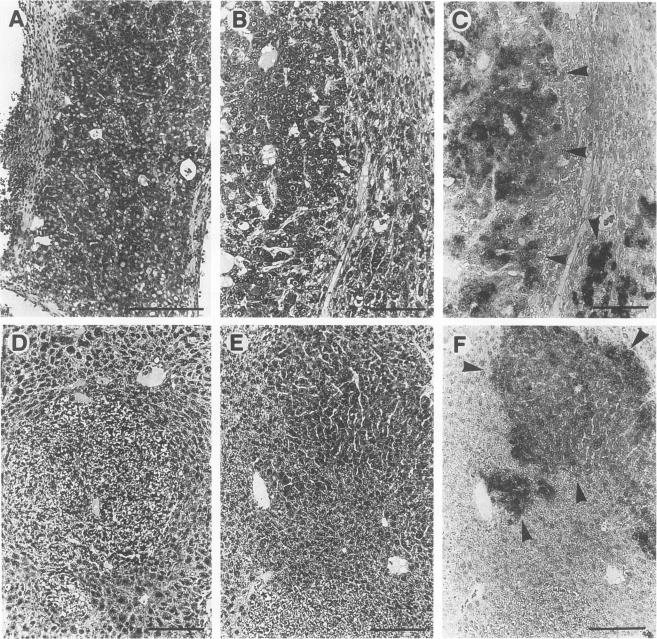
To characterize the effect(s) of transforming growth factor alpha (TGF alpha) during multistage carcinogenesis, we examined tumor development in pancreas and liver of transgenic mice that coexpressed TGF alpha with either viral (simian virus 40 T antigens [TAg]) or cellular (c-myc) oncogenes. In pancreas, TGF alpha itself was not oncogenic, but it nevertheless dramatically accelerated growth of tumors induced by either oncogene alone, thereby reducing the host life span up to 60%. Coexpression of TGF alpha and TAg produced an early synergistic growth response in the entire pancreas together with the more rapid appearance of preneoplastic foci. Coexpression of TGF alpha and c-myc also accelerated tumor growth in situ and produced transplantable acinar cell carcinomas whose rate of growth was TGF alpha dependent. In liver, expression of TGF alpha alone increased the incidence of hepatic cancer in aged mice. However, coexpression of TGF alpha with c-myc or TAg markedly reduced tumor latency and accelerated tumor growth. Significantly, expression of the TGF alpha and myc transgenes in hepatic tumors was induced up to 20-fold relative to expression in surrounding nonneoplastic liver, suggesting that high-level overexpression of these proteins acts as a major stimulus for tumor development. Finally, in both pancreas and liver, combined expression of TGF alpha and c-myc produced tumors with a more malignant (less differentiated) appearance than did expression of c-myc alone, consistent with an influence of TGF alpha upon the morphological character of c-myc-induced tumor progression. These findings demonstrate the importance of TGF alpha expression during multistage carcinogenesis in vivo and point to a major role for this growth factor as a potent stimulator of tumor growth.
为了描述转化生长因子α(TGFα)在多阶段致癌过程中的作用,我们检测了共表达TGFα与病毒(猿猴病毒40大T抗原[TAg])或细胞(c-myc)癌基因的转基因小鼠胰腺和肝脏中的肿瘤发生情况。在胰腺中,TGFα本身不具有致癌性,但它能显著加速单独由任一癌基因诱导的肿瘤生长,从而使宿主寿命缩短达60%。TGFα和TAg的共表达在整个胰腺中产生早期协同生长反应,并伴有癌前病灶更快出现。TGFα和c-myc的共表达也加速了原位肿瘤生长,并产生了可移植的腺泡细胞癌,其生长速度依赖于TGFα。在肝脏中,单独表达TGFα增加了老年小鼠肝癌的发生率。然而,TGFα与c-myc或TAg的共表达显著缩短了肿瘤潜伏期并加速了肿瘤生长。值得注意的是,相对于周围非肿瘤性肝脏中的表达,肝肿瘤中TGFα和myc转基因的表达诱导高达20倍,这表明这些蛋白的高水平过表达是肿瘤发生的主要刺激因素。最后,在胰腺和肝脏中,TGFα和c-myc的联合表达产生的肿瘤比单独表达c-myc的肿瘤具有更恶性(分化程度更低)的外观,这与TGFα对c-myc诱导的肿瘤进展形态特征的影响一致。这些发现证明了TGFα表达在体内多阶段致癌过程中的重要性,并指出该生长因子作为肿瘤生长的有效刺激物发挥主要作用。