Zhou M D, Goswami S K, Martin M E, Siddiqui M A
Department of Anatomy and Cell Biology, State University of New York Health Science Center, Brooklyn 11203.
Mol Cell Biol. 1993 Feb;13(2):1222-31. doi: 10.1128/mcb.13.2.1222-1231.1993.
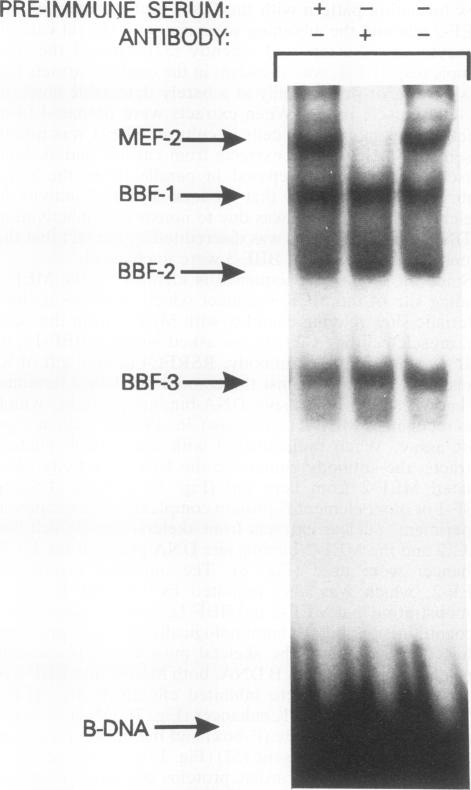
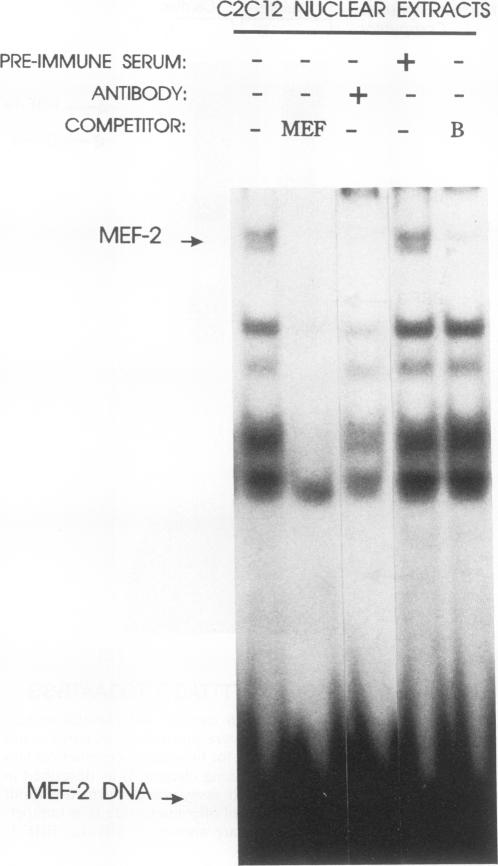
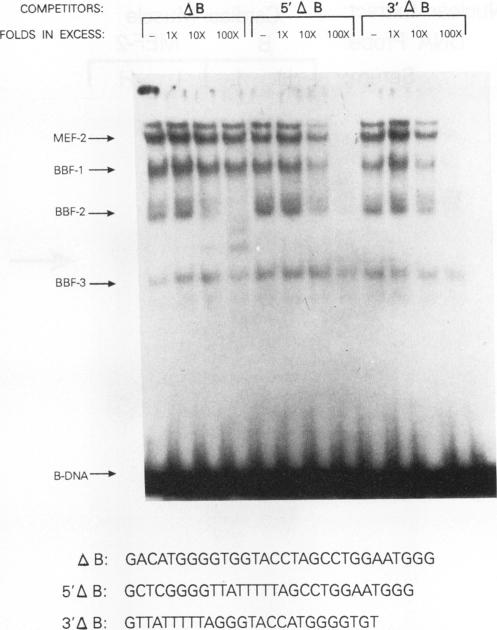
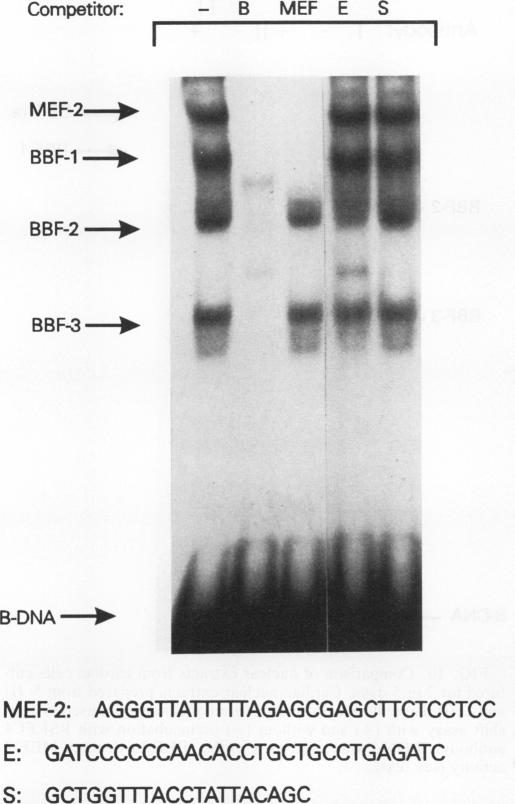
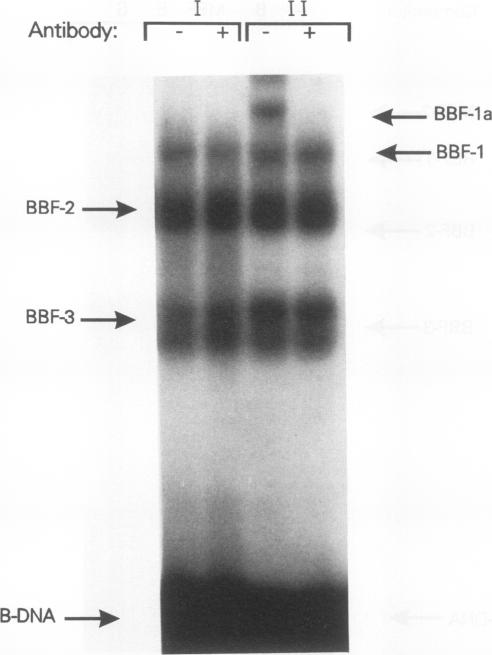
We have identified a serum-responsive, cardiac tissue-specific transcription factor, BBF-1, that recognizes an AT-rich sequence (element B), identical to the myocyte enhancer factor (MEF-2) target site, in the cardiac myosin light chain-2 (MLC-2) promoter. Deletion of the element B sequence alone from the cardiac MLC-2 promoter causes, as does that of the MEF-2 site from other promoters and the enhancer of skeletal muscle genes, a marked reduction of transcription. BBF-1 is distinguishable from cardiac MEF-2 on the basis of immunoprecipitation with an antibody which recognizes MEF-2 but not BBF-1. Unlike MEF-2, BBF-1 is present exclusively in nuclear extracts from cardiac muscle cells cultured in a medium containing a high concentration of serum. Removal of serum from culture medium abolishes BBF-1 activity selectively with a concomitant loss of the positive regulatory effect of element B on MLC-2 gene transcription, indicating that there is a correlation between the BBF-1 binding activity and the tissue-specific role of the element B (MEF-2 site) sequence. The loss of element B-mediated activation of transcription is reversed following the refeeding of cells with serum-containing medium. These data demonstrate that cardiac muscle cells contain two distinct protein factors, MEF-2 and BBF-1, which bind to the same target site but that, unlike MEF-2, BBF-1 is serum inducible and cardiac tissue specific. BBF-1 thus appears to be a crucial member of the MEF-2 family of proteins which will serve as an important tool in understanding the regulatory mechanism(s) underlying cardiogenic differentiation.
我们已经鉴定出一种血清反应性、心脏组织特异性转录因子BBF-1,它能识别心肌肌球蛋白轻链-2(MLC-2)启动子中一个富含AT的序列(元件B),该序列与肌细胞增强因子(MEF-2)的靶位点相同。仅从心脏MLC-2启动子中删除元件B序列,就会像从其他启动子和骨骼肌基因增强子中删除MEF-2位点一样,导致转录显著减少。基于用识别MEF-2但不识别BBF-1的抗体进行免疫沉淀,BBF-1与心脏MEF-2可区分开来。与MEF-2不同,BBF-1仅存在于在含有高浓度血清的培养基中培养的心肌细胞的核提取物中。从培养基中去除血清会选择性地消除BBF-1活性,同时元件B对MLC-2基因转录的正调控作用也会丧失,这表明BBF-1结合活性与元件B(MEF-2位点)序列的组织特异性作用之间存在相关性。在用含血清的培养基重新培养细胞后,元件B介导的转录激活丧失得以逆转。这些数据表明,心肌细胞含有两种不同的蛋白质因子,MEF-2和BBF-1,它们结合到相同的靶位点,但与MEF-2不同,BBF-1是血清诱导型且具有心脏组织特异性。因此,BBF-1似乎是MEF-2蛋白家族的一个关键成员,它将成为理解心脏发生分化潜在调控机制的重要工具。